What is gestational diabetes and when does it typically develop?
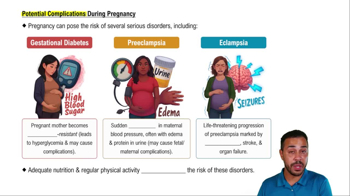
Gestational diabetes is a type of diabetes that first arises during pregnancy, where the mother becomes insulin resistant.
What are the main risks associated with gestational diabetes for the fetus?
Gestational diabetes increases the risk of delivering high birth weight babies and raises the risk of obesity and type 2 diabetes later in life for the child.
How does gestational diabetes affect the mother in the long term?
It increases the mother's risk of developing obesity and type 2 diabetes later in life.
What is preeclampsia and what are its main symptoms?
Preeclampsia is a pregnancy disorder characterized by a sudden increase in maternal blood pressure, edema (swelling), and protein in the urine.
What are the potential complications of preeclampsia for the fetus?
Preeclampsia can cause low birth weight and preterm birth in the fetus.
What is the relationship between preeclampsia and eclampsia?
Eclampsia is a severe, life-threatening progression of preeclampsia.
What are the defining features of eclampsia?
Eclampsia is marked by seizures, stroke, and organ failure.
What is the only definitive cure for gestational diabetes, preeclampsia, and eclampsia?
The only definitive cure for these disorders is delivery of the baby.
How does proper nutrition impact the risk of pregnancy complications?
Proper nutrition significantly decreases the risk of gestational diabetes, preeclampsia, and eclampsia.
Why is regular physical activity important during pregnancy?
Regular physical activity helps reduce the risk of developing serious pregnancy complications.
What is hyperglycemia and how is it related to gestational diabetes?
Hyperglycemia is high blood sugar, which can result from insulin resistance in gestational diabetes.
What does the presence of protein in the urine indicate during pregnancy?
Protein in the urine is a sign of organ dysfunction, often associated with preeclampsia.
Can gestational diabetes resolve after pregnancy?
Yes, gestational diabetes usually resolves on its own after giving birth.
What are some signs of edema in preeclampsia?
Edema in preeclampsia often presents as swelling in the hands and feet.
Why is prenatal care critical in preventing adverse pregnancy outcomes?
Prenatal care helps monitor and manage risk factors, reducing the likelihood of serious complications for both mother and fetus.
 Back
Back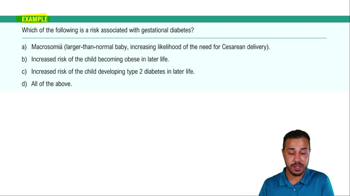
 00:56
00:56