Skip to main content
Nutrition
My Course
Learn
Exam Prep
AI Tutor
Study Guides
Flashcards
Try the app
My Course
Learn
Exam Prep
AI Tutor
Study Guides
Flashcards
Try the app
Back
The Gut Microbiome exam
You can tap to flip the card.
Gut Microbiome
You can tap to flip the card.
👆
Gut Microbiome
The ecosystem of trillions of mostly bacteria and other microorganisms living primarily in the large intestine.
Track progress
Control buttons has been changed to "navigation" mode.
1/29
Related flashcards
Related practice
Recommended videos
The Gut Microbiome definitions
The Gut Microbiome
15 Terms
The Gut Microbiome quiz
The Gut Microbiome
15 Terms
The Gut Microbiome
3. The Human Body & Digestion
10 problems
Topic
Disorders of the Digestive System
3. The Human Body & Digestion
10 problems
Topic
3. The Human Body & Digestion
7 topics
15 problems
Chapter
04:56
Gut Microbiome
381
views
5
rank
01:33
The Gut Microbiome Example 1
269
views
5
rank
Terms in this set (29)
Hide definitions
Gut Microbiome
The ecosystem of trillions of mostly bacteria and other microorganisms living primarily in the large intestine.
What is the main location of the gut microbiome?
The large intestine (colon).
Prebiotics
Non-digestible food components, mainly fiber, that feed beneficial gut bacteria.
What is the primary role of gut bacteria in digestion?
Fermenting undigestible carbohydrates (fiber) for energy.
Probiotics
Live beneficial bacteria found in certain foods or supplements that add to the gut microbiome.
What vitamins are produced by gut bacteria?
Vitamin K and some B vitamins.
Inulin
A type of prebiotic fiber found especially in root vegetables like onions.
How do gut bacteria inhibit harmful bacteria?
By occupying space and resources, making it harder for harmful bacteria to thrive.
Fermented Foods
Foods like yogurt, kimchi, and sauerkraut that contain live beneficial bacteria (probiotics).
What is the effect of a diverse gut microbiome on inflammation?
It helps reduce inflammation in the large intestine.
Resistant Starches
Types of starches that resist digestion and act as prebiotics for gut bacteria.
What is the difference between prebiotics and probiotics?
Prebiotics are food for gut bacteria; probiotics are live beneficial bacteria added to the gut.
Gut Flora
Another term for the gut microbiome, referring to the microorganisms in the intestines.
How does fiber benefit the gut microbiome?
It serves as a primary food source for beneficial gut bacteria.
What is a common byproduct of bacterial fermentation in the gut?
Gas, which is passed as flatulence.
Why is it important to maintain a diverse gut microbiome?
To support immune function and overall digestive health.
What is the main source of most vitamin absorption in the body?
The small intestine.
How can diet influence the gut microbiome?
By providing prebiotics (fiber) and probiotics (fermented foods) to support beneficial bacteria.
What is the function of probiotics in the diet?
To introduce additional beneficial bacteria into the gut.
What is the role of the gut microbiome in immune function?
It stimulates the immune system in positive ways.
Which type of food is especially high in inulin?
Root vegetables, such as onions.
What happens if harmful bacteria enter the large intestine?
A healthy gut microbiome can inhibit their growth by occupying available space.
What is the process called when bacteria break down fiber in the gut?
Fermentation.
Why is eating a variety of fibers important for gut health?
Different bacteria prefer different types of fiber, supporting a diverse microbiome.
What is the effect of probiotics on digestive tract health?
They have positive effects, such as improving gut health and balance.
What is the main difference between the bacteria in probiotics and the existing gut microbiome?
Probiotics usually contain a single or few types of bacteria, while the gut microbiome is highly diverse.
What is the significance of resistant starches in the diet?
They act as prebiotics, feeding beneficial gut bacteria.
How does the gut microbiome contribute to vitamin production?
By producing small amounts of vitamin K and B vitamins as a byproduct of fermentation.
What is the best way to support a healthy gut microbiome?
Eat a diet rich in various fibers and include fermented foods.
 BackBack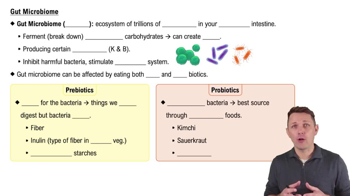
 04:56
04:56