Skip to main content
Nutrition
My Course
Learn
Exam Prep
AI Tutor
Study Guides
Flashcards
Try the app
My Course
Learn
Exam Prep
AI Tutor
Study Guides
Flashcards
Try the app
Back
Why Do We Need Protein? exam
You can tap to flip the card.
What percentage of daily energy intake should come from protein?
You can tap to flip the card.
👆
What percentage of daily energy intake should come from protein?
10-35% of total daily energy intake should come from protein.
Track progress
Control buttons has been changed to "navigation" mode.
1/26
Related flashcards
Related practice
Recommended videos
Why Do We Need Protein? definitions
Why Do We Need Protein?
15 Terms
Why Do We Need Protein? quiz
Why Do We Need Protein?
15 Terms
Why Do We Need Protein?
6. Proteins
10 problems
Topic
Protein Digestion
6. Proteins
10 problems
Topic
6. Proteins
7 topics
15 problems
Chapter
Guided course
05:22
Proteins Are Required in Our Diet
308
views
4
rank
Guided course
01:49
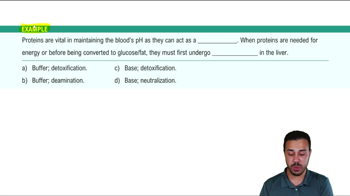
Why Do We Need Protein? Example 1
214
views
1
rank
Terms in this set (26)
Hide definitions
What percentage of daily energy intake should come from protein?
10-35% of total daily energy intake should come from protein.
Enzyme
A protein that speeds up chemical reactions in the body.
What is the main structural protein in the human body?
Collagen is the most abundant structural protein.
Antibody
A protein that helps the immune system by binding and neutralizing pathogens.
Why are proteins important for fluid balance?
Proteins in blood draw fluid back into the bloodstream, preventing edema.
Hormone
A chemical messenger, often made of protein, that regulates body processes.
What is deamination?
The removal of the amine group from an amino acid before it is used for energy.
Transport protein
A protein that moves substances like nutrients and gases across membranes or in blood.
How do proteins help with acid-base balance?
Proteins act as buffers to regulate blood pH.
Growth and repair
Proteins are needed for tissue growth and repair throughout life.
What is the function of hemoglobin?
Hemoglobin transports oxygen in the blood.
Neurotransmitter
A molecule, sometimes protein-based, that transmits signals between neurons.
What happens if you don't consume enough protein?
The body may not produce enough enzymes, hormones, or antibodies, affecting health.
Sodium-potassium pump
A protein in cell membranes that maintains sodium and potassium gradients.
Why are proteins considered a last-resort energy source?
Proteins are used for energy only when carbohydrates and fats are insufficient.
Blood clotting factors
Proteins that help form blood clots to prevent excessive bleeding.
What is the energy yield of protein per gram?
Proteins provide 4 kilocalories of energy per gram.
Actin and myosin
Proteins in muscles that enable movement and contraction.
How do proteins support immunity?
By forming antibodies that neutralize harmful pathogens.
Keto acid
A compound formed after deamination of an amino acid, used for energy or converted to glucose/fat.
What role do proteins play in electrolyte balance?
Protein pumps regulate sodium and potassium gradients, crucial for nerve and muscle function.
Why is adequate protein intake important for disease prevention?
It supports immune function, tissue repair, and overall health.
What are the main biological compounds formed by proteins?
Enzymes, hormones, transport proteins, neurotransmitters, and blood clotting factors.
Edema
Swelling caused by fluid accumulation, which proteins help prevent by maintaining fluid balance.
How do proteins contribute to structural support?
They form collagen and other proteins that support skin, bones, ligaments, and muscles.
What is the function of insulin and glucagon?
They are protein hormones that regulate blood glucose levels.
 BackBack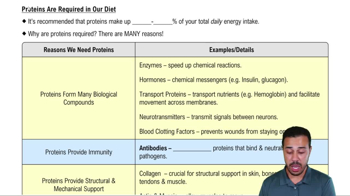
 05:22
05:22