Skip to main content
Organic Chemistry
My Course
Learn
Exam Prep
AI Tutor
Study Guides
Textbook Solutions
Flashcards
Explore
Try the app
My Course
Learn
Exam Prep
AI Tutor
Study Guides
Textbook Solutions
Flashcards
Explore
Try the app
Back
Good Leaving Groups definitions
You can tap to flip the card.
Leaving Group
You can tap to flip the card.
👆
Leaving Group
An atom or group that departs with an electron pair, enabling bond breaking in substitution reactions.
Track progress
Control buttons has been changed to "navigation" mode.
1/13
Related flashcards
Related practice
Recommended videos
Good Leaving Groups quiz #1
Leaving Groups
10 Terms
Good Leaving Groups
7. Substitution Reactions
7 problems
Topic
Johnny
SN2 Reaction
7. Substitution Reactions
7 problems
Topic
Johnny
7. Substitution Reactions
5 topics
15 problems
Chapter
Johnny
00:50
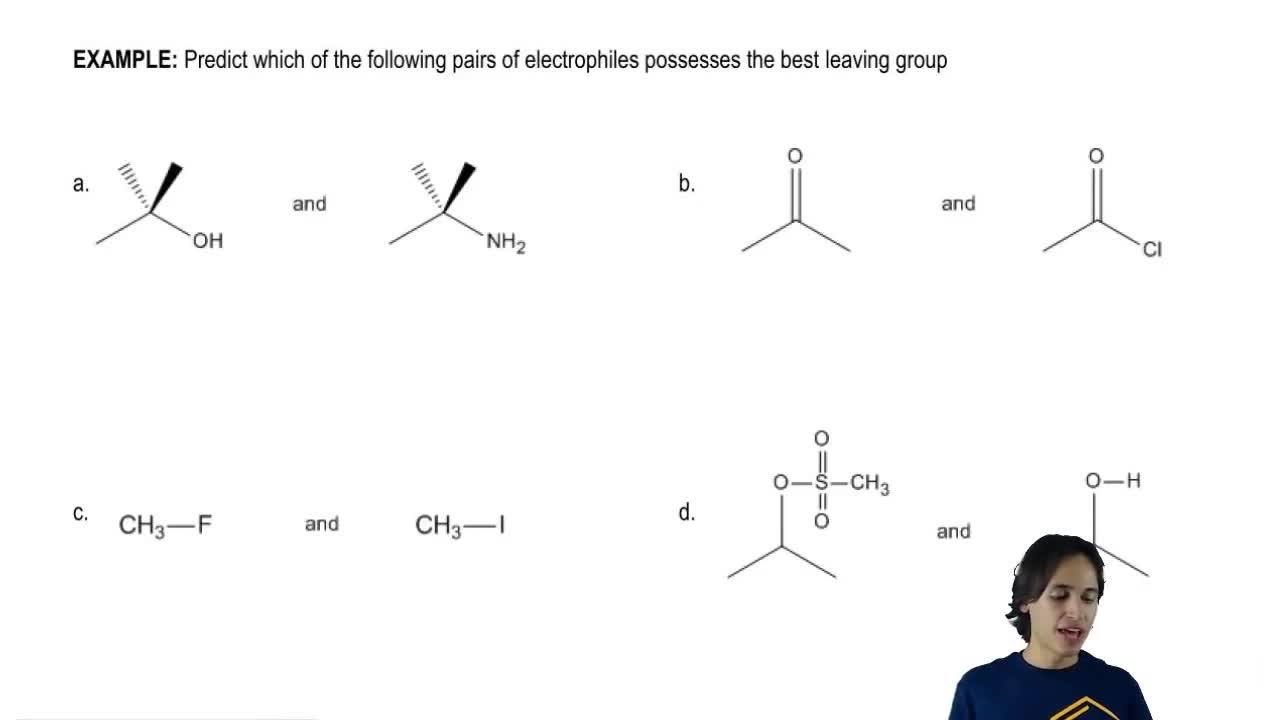
Predict the best leaving group
4875
views
49
rank
3
comments
01:12
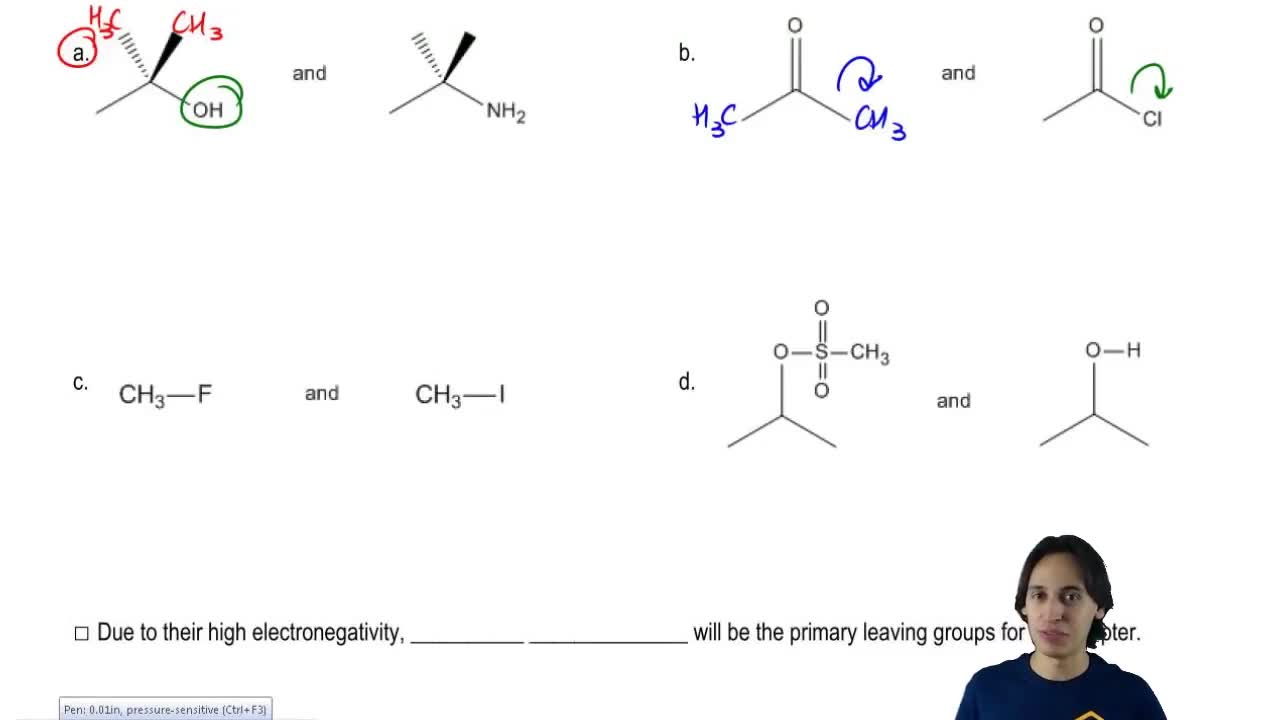
Predict the best leaving group
5616
views
50
rank
6
comments
00:36
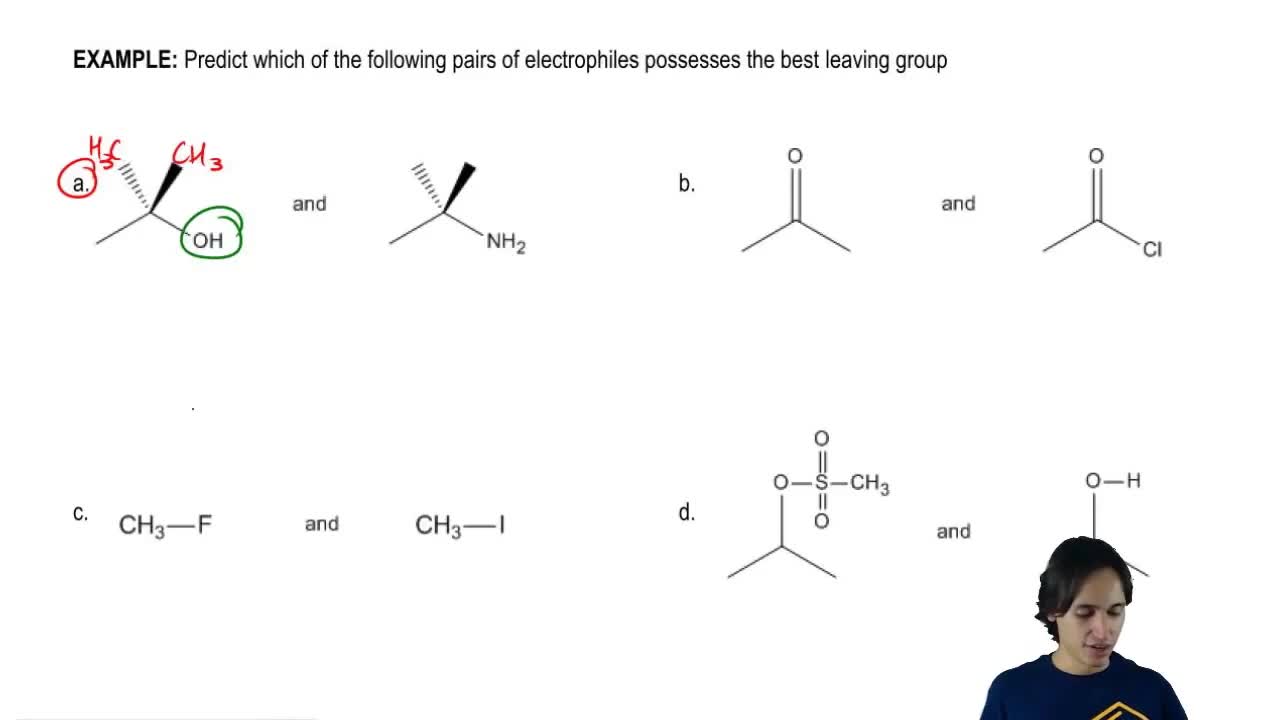
Predict the best leaving group
4887
views
36
rank
5
comments
Terms in this set (13)
Hide definitions
Leaving Group
An atom or group that departs with an electron pair, enabling bond breaking in substitution reactions.
Substitution Reaction
A process where one atom or group replaces another, requiring a departing group to make space for the new bond.
Electrophile
A species lacking an empty orbital, necessitating bond breaking for new bond formation.
Conjugate Base
A species formed after an acid donates a proton, valued for its stability after gaining electrons.
Element Effect
A trend using periodic table position to predict how well an atom stabilizes extra electrons after bond breaking.
Electronegativity
A measure of an atom's tendency to attract electrons, influencing its ability to stabilize negative charge.
Size Trend
A periodic trend where larger atoms more easily accommodate extra electrons, enhancing stability.
Iodine
A halogen considered among the best at stabilizing extra electrons, making it a top departing group.
Inductive Effect
An influence where electron-withdrawing atoms stabilize negative charge through sigma bonds.
Resonance Effect
A stabilizing factor where electron delocalization across multiple atoms spreads out negative charge.
Acidity
A property reflecting how easily a molecule donates a proton, linked to the stability of its conjugate base.
Stability
A measure of how well a species tolerates extra electrons after bond cleavage, crucial for departing groups.
Negative Charge
An excess of electrons on an atom or group, whose stabilization is key for effective bond departure.
 BackBack
 00:50
00:50