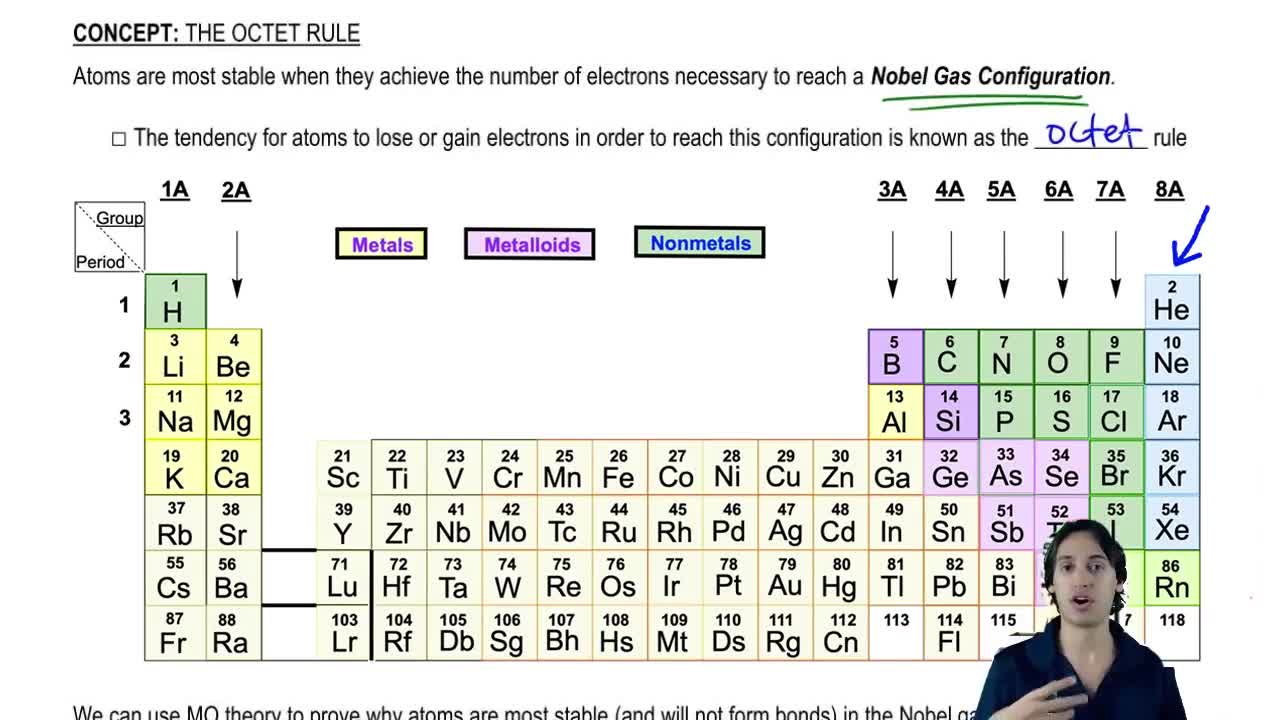
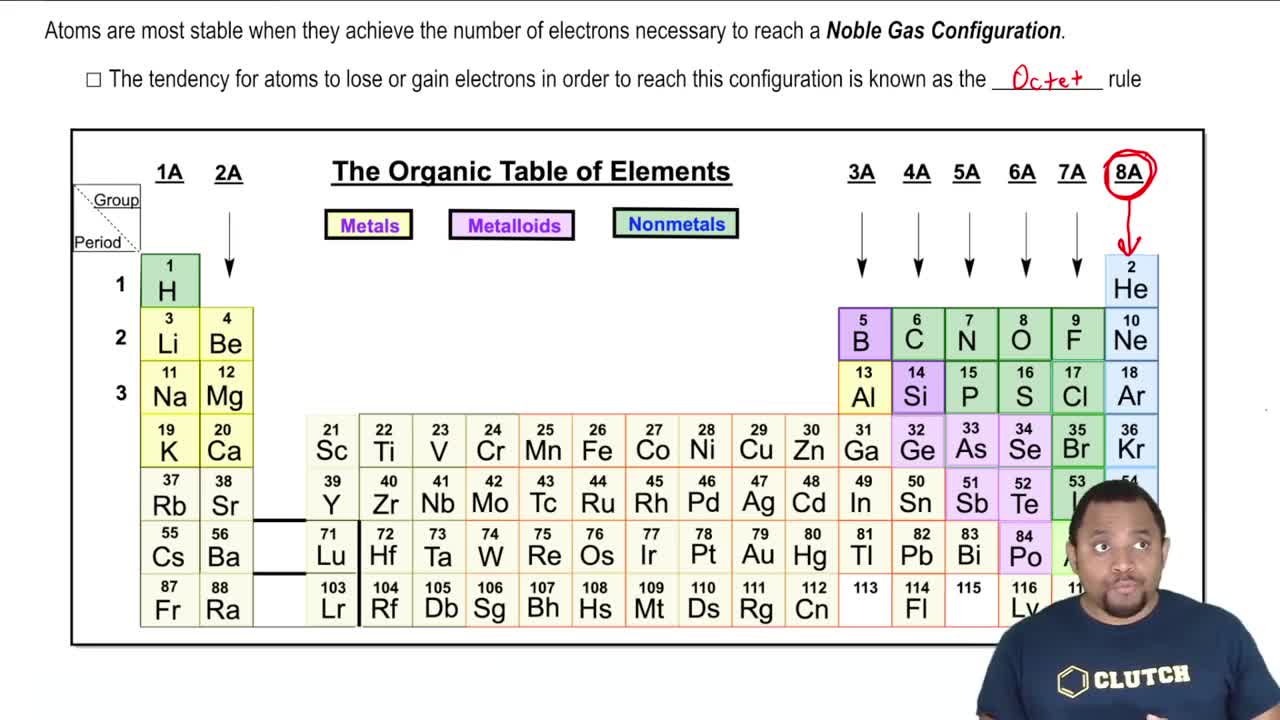
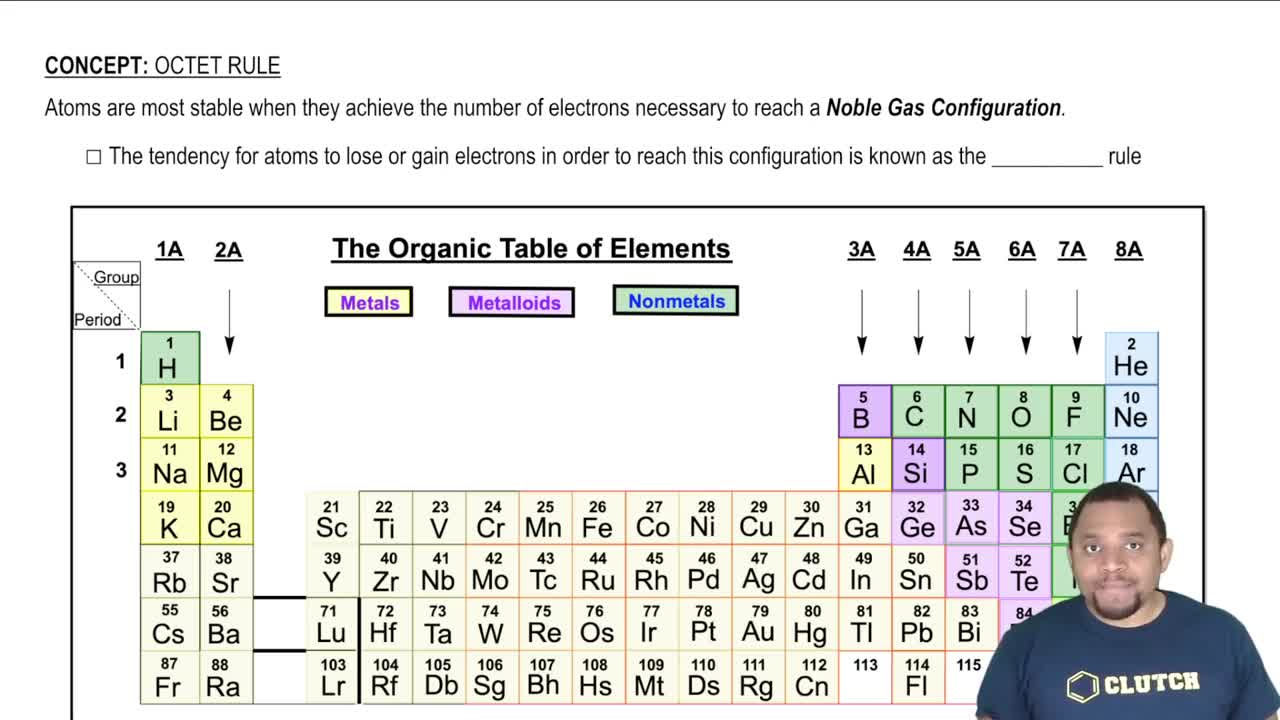
The octet rule states that atoms tend to gain, lose, or share electrons to achieve a stable electron configuration similar to that of noble gases, with a complete outer shell of eight electrons.
How do covalently-bound atoms obey the octet rule?
Covalently-bound atoms obey the octet rule by sharing electrons through chemical bonds, allowing each atom to achieve a stable configuration with eight electrons in its outer shell.
What is an octet in the context of atomic electron configuration?
An octet refers to a set of eight electrons in the outermost shell of an atom, which is associated with maximum stability and is the electron configuration of noble gases.
Which elements commonly violate the octet rule, and how?
Elements such as beryllium and boron commonly violate the octet rule by preferring four and six electrons, respectively, in their outer shells instead of eight. Third-row elements like phosphorus and sulfur can also violate the rule by accommodating more than eight electrons (expanded octet).
What are the main exceptions to the octet rule?
The main exceptions to the octet rule are: (1) first-row elements like hydrogen, helium, and lithium, which follow the duet rule and prefer two electrons; (2) beryllium and boron, which prefer four and six electrons, respectively; and (3) third-row elements such as phosphorus and sulfur, which can have expanded octets with more than eight electrons.
How can atoms achieve a stable octet configuration?
Atoms can achieve a stable octet configuration by forming chemical bonds (sharing electrons) or by possessing lone pairs of electrons, thereby reaching eight electrons in their outer shell.
Which types of atoms can form expanded octets, and why?
Third-row elements such as phosphorus and sulfur can form expanded octets because they have available d orbitals that allow them to accommodate more than eight electrons in their outer shell.
Why do noble gases generally not form chemical bonds with other elements?
Noble gases do not form chemical bonds because their outermost electron shells are already completely filled, making them highly stable. As a result, they have no tendency to gain, lose, or share electrons.
What is the duet rule and which elements does it apply to?
The duet rule states that certain elements, specifically hydrogen, helium, and lithium, are most stable with only two electrons in their outer shell. This is because their only available orbital is the 1s orbital, which can hold a maximum of two electrons.
How do d orbitals enable third-row elements like phosphorus and sulfur to have expanded octets?
Third-row elements such as phosphorus and sulfur can use their available d orbitals to accommodate more than eight electrons in their valence shell. This allows them to form expanded octets, with phosphorus holding up to 10 and sulfur up to 12 electrons.