Primary Protein Structure quiz Flashcards

Primary Protein Structure quiz
Control buttons has been changed to "navigation" mode.
1/10
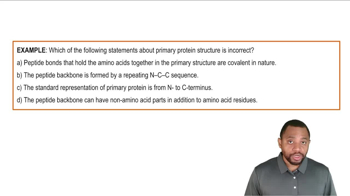
  • The primary structure of a protein is formed by which type of bond?
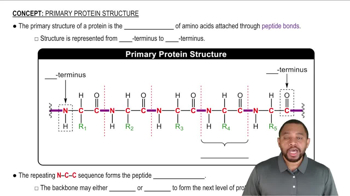
    The primary structure of a protein is formed by peptide bonds linking amino acids.
  • Which levels of protein structure are stabilized by hydrogen bonds?
    Secondary and tertiary structures of proteins are stabilized by hydrogen bonds.
  • What is the significance of the N terminus in a protein's primary structure?
    The N terminus marks the beginning of the amino acid sequence in a protein's primary structure.
  • What does the C terminus represent in a protein's primary structure?
    The C terminus represents the end of the amino acid sequence in a protein's primary structure.
  • How is the peptide backbone characterized in the primary structure of a protein?
    The peptide backbone is characterized by repeating N-C-C units in the primary structure of a protein.
  • What role do residues play in the primary structure of a protein?
    Residues are individual amino acids within the sequence that form the primary structure of a protein.
  • Why is understanding the primary structure of a protein important?
    Understanding the primary structure is crucial for studying protein function and interactions.
  • What does the sequence of amino acids in a protein determine?
    The sequence of amino acids determines the protein's primary structure and influences its function.
  • What might the peptide backbone do to form higher-level protein structures?
    The peptide backbone might coil or bend to form higher-level protein structures.
  • What is the relationship between peptide bonds and residues in a protein's primary structure?
    Peptide bonds connect residues, forming the sequence that constitutes a protein's primary structure.