Back

Advanced Study Notes: NMR Spectroscopy, Alcohols, Ethers, Epoxides, Conjugated Systems, and Aromaticity

Study Guide - Learn with Videos

Curated lessons matched to your uploaded material – learn every topic step by step.

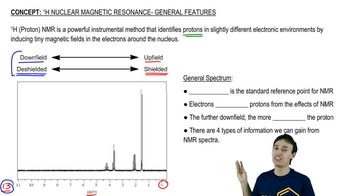
1H Nuclear Magnetic Resonance - General Features

  • General NMR Features
    10:06

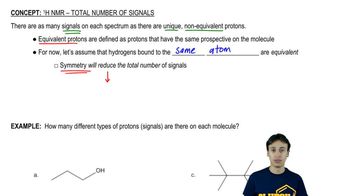
1H NMR - Total Number of Signals

  • General Assumption for 1H NMR Signals
    04:35
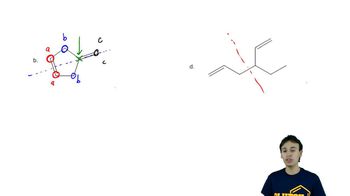
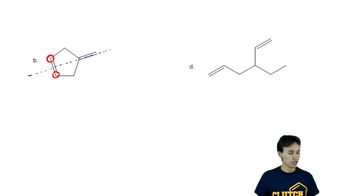
  • Identifying Proton Signals
    02:02
  • Identifying Proton Signals
    01:55

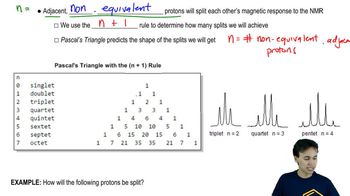
1H NMR - Spin-Splitting without J-Values

  • Splitting without J-values
    12:21
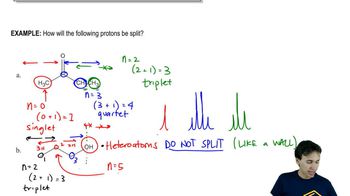
  • Proton Splitting
    03:

1H NMR Spin-Splitting - Common Patterns

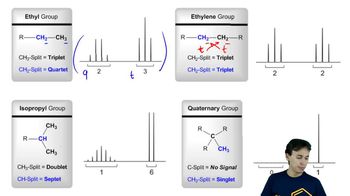
  • Common Splitting Patterns
    08:06

1H NMR - Integration

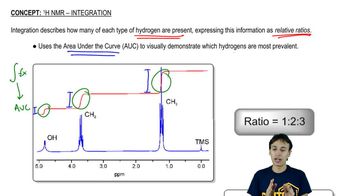
  • 1H NMR Integration
    06:46
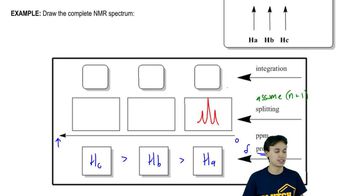
  • Draw Complete NMR Spectrum
    04:29

NMR Practice

    13C NMR - General Features

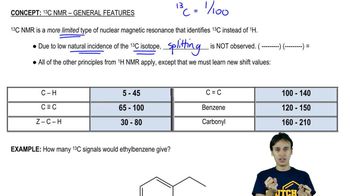
    • 13C NMR General Features
      04:00
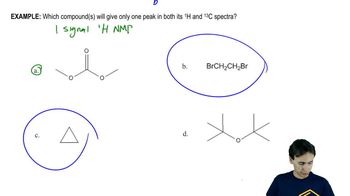
    • 1H and 13C Joint Problem
      01:10
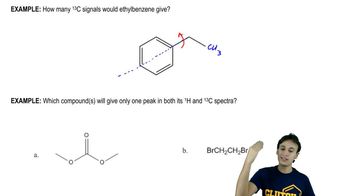
    • Identifying 13C Signals
      02:12

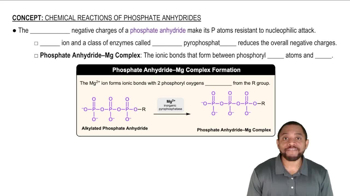
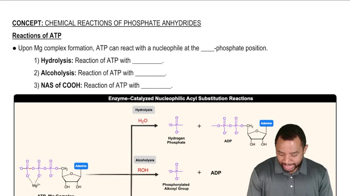
    Chemical Reactions of Phosphate Anhydrides

    • Guided course
      Chemical Reactions of Phosphate Anhydrides Example 2
      1:54
    • Guided course
      Chemical Reactions of Phosphate Anhydrides Concept 1
      3:11
    • Guided course
      Chemical Reactions of Phosphate Anhydrides Concept 3
      3:20

    Synthesis of Alcohols Overview

    • Forming alcohols through SN2 reactions.
      01:44
    • Forming alcohols through Acid-Catalyzed Hydration.
      02:02
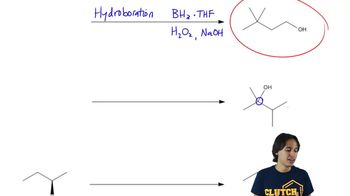
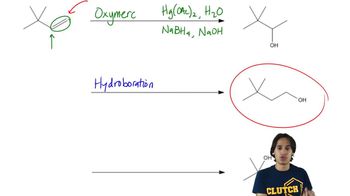
    • Forming alcohols through Hydroboration-Oxidation.
      01:37

    Oxidation

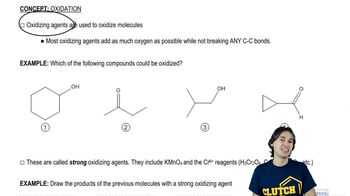
    • Reagents
      01:52
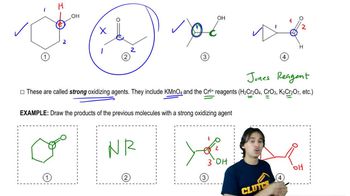
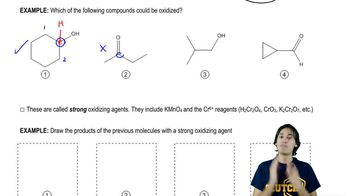
    • Strong oxidizing agents
      05:53
    • Strong oxidizing agents
      03:40

    Use of Protecting Groups

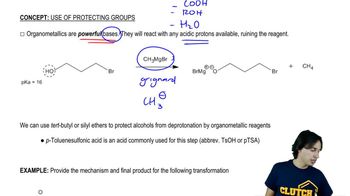
    • Use of Protecting Groups
      04:34
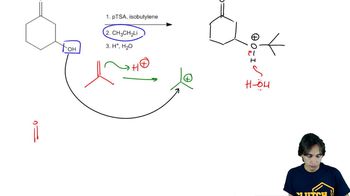
    • Provide mechanism and final product of transformation.
      04:45

    Reactions of Organometallics

    • Reactions of Organometallics
      13:40

    Retrosynthesis

    • Intro
      01:07

    Epoxide Ring Opening

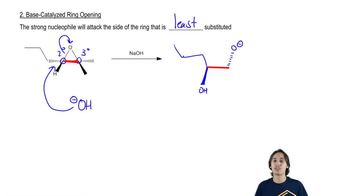
    • Base-Catalyzed Epoxide Ring-Opening
      04:44
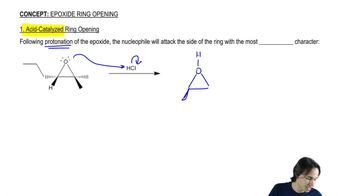
    • Acid-Catalyzed Epoxide Ring-Opening
      04:34

    Electrophilic Aromatic Substitution – General Mechanism

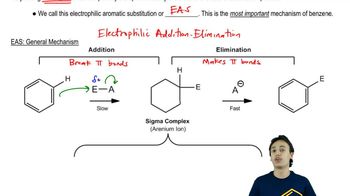
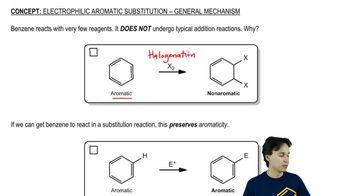
    • EAS General Mechanism
      06:52
    • EAS Review
      03:07

    Electrophilic Aromatic Substitution – Reactions

    • EAS Reactions Overview
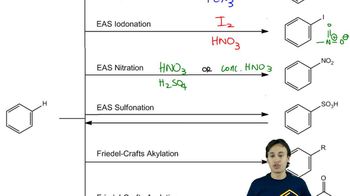
      11:50

    Generating Electrophiles – EAS Halogenation

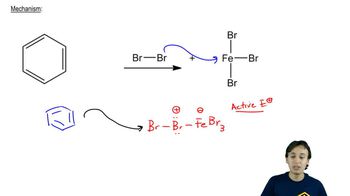
    • EAS Halogenation
      06:26

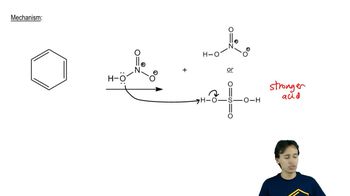
    Generating Electrophiles – EAS Nitration

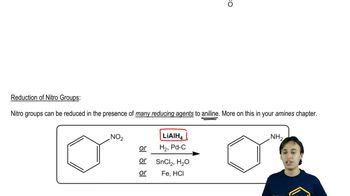
    • Reduction of Nitro Groups
      03:23
    • EAS Nitration
      06:09

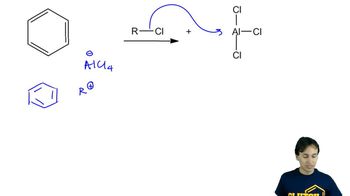
    Generating Electrophiles – Friedel-Crafts Alkylation

    • Friedel-Crafts Alkylation
      06:30

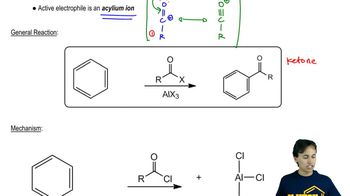
    Generating Electrophiles – Friedel-Crafts Acylation

    • Friedel-Crafts Acylation
      05:20

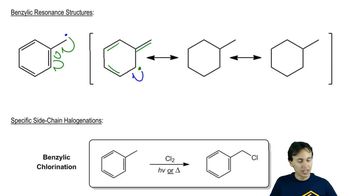
    Side-Chain Halogenation

    • Side-Chain Halogenations
      06:14

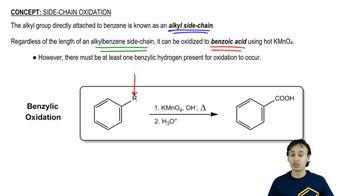
    Side-Chain Oxidation

    • Benzylic Oxidation
      03:20
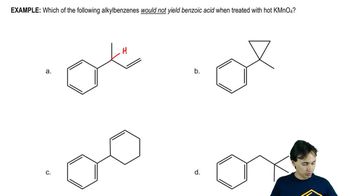
    • Which alkylbenzene would NOT yield benzoic acid, treated with KMnO4
      00:49

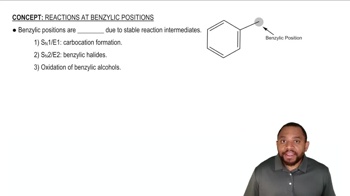
    Reactions at Benzylic Positions

    • Guided course
      Reactions at Benzylic Positions Example 3
      1:12
    • Guided course
      Reactions at Benzylic Positions Example 2
      2:03
    • Guided course
      Reactions at Benzylic Positions Concept 1
      1:01

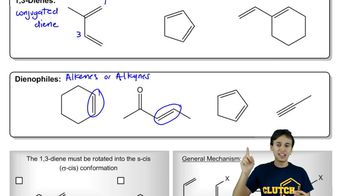
    Diels-Alder Reaction - General Features

    • General Features
      09:48

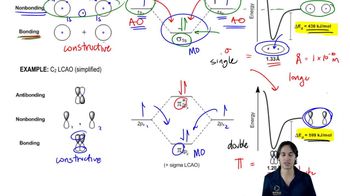
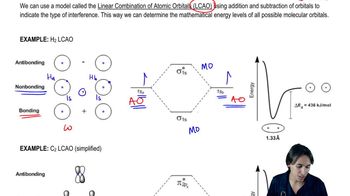
    Molecular Orbitals

    • Sigma bond vs. pi bond, which is stronger?
      03:25
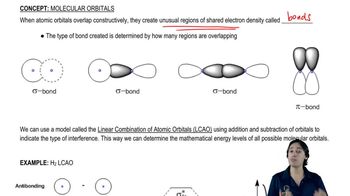
    • What’s the difference between sigma and pi bonds?
      02:19
    • What’s the difference between atomic and molecular orbitals?
      11:25

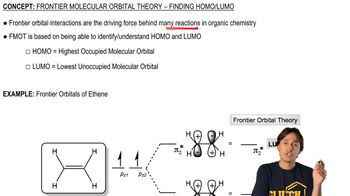
    Frontier Molecular Orbital Theory - Finding HOMO/LUMO

    • HOMO vs. LUMO
      02:35