 Back
BackAldehydes and Ketones: Structure, Nomenclature, Properties, and Reactions
Study Guide - Smart Notes
 Tailored notes based on your materials, expanded with key definitions, examples, and context.
The Chemistry of Aldehydes and Ketones
Structure and Bonding in Aldehydes and Ketones
Aldehydes and ketones are organic compounds containing the carbonyl group (C=O). The carbonyl carbon is sp2-hybridized, resulting in a planar structure and significant polarity due to the electronegativity difference between carbon and oxygen.
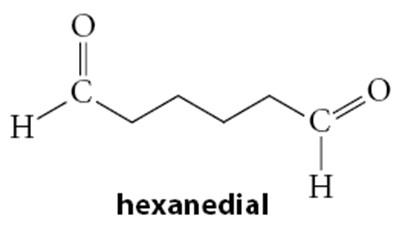
Aldehydes: The carbonyl group is bonded to at least one hydrogen atom.
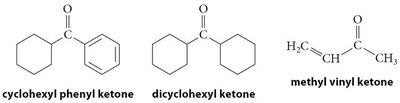
Ketones: The carbonyl group is bonded to two carbon atoms.
Bonding: The C=O bond is highly polarized, making the carbonyl carbon electrophilic and susceptible to nucleophilic attack.
Nomenclature of Aldehydes and Ketones
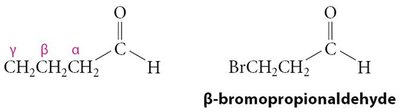
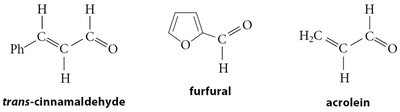
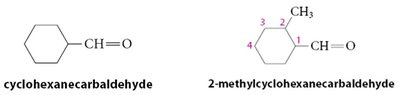
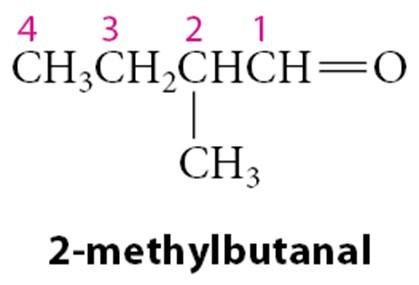
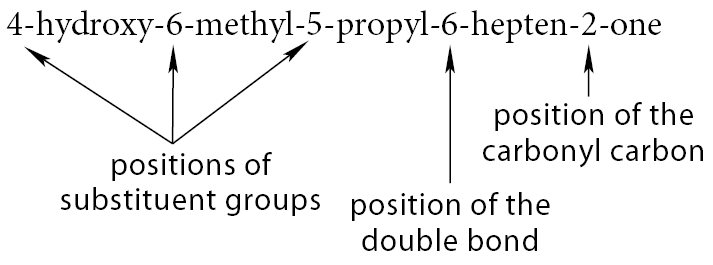
The systematic naming of aldehydes and ketones follows IUPAC rules, but many compounds are also known by common names. The position and nature of substituents are indicated using Greek letters or numbers.
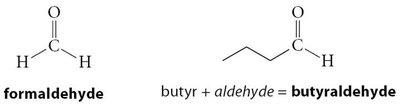
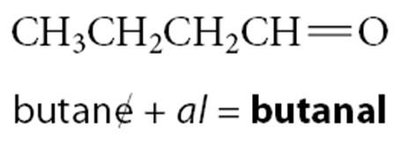
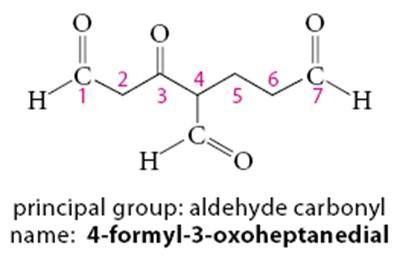
Aldehydes: Named by replacing the terminal '-e' of the parent alkane with '-al'. For example, butane becomes butanal.
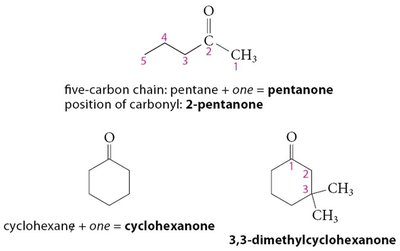
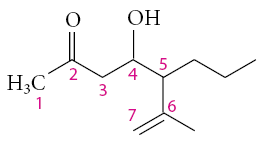
Ketones: Named by replacing the terminal '-e' of the parent alkane with '-one'. The position of the carbonyl group is specified by a number.
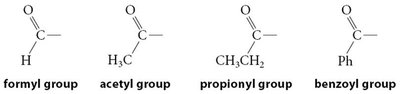
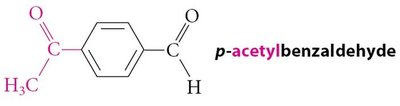
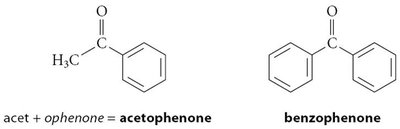
Common Names: Often use prefixes (form-, acet-, propion-, butyr-, benz-) and suffixes (-aldehyde, -one).
Polyfunctional Compounds: When multiple functional groups are present, the carbonyl group receives higher priority than alcohol (-OH) or thiol (-SH) groups.
Greek Letters: Used to indicate the position of substituents relative to the carbonyl group (α, β, γ, etc.).

Physical Properties of Aldehydes and Ketones
Aldehydes and ketones exhibit unique physical properties due to the polar nature of the carbonyl group.
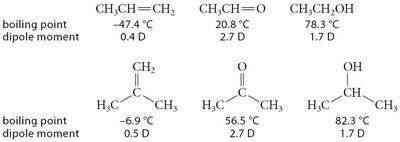
Boiling Points: Lower than corresponding alcohols because they cannot donate hydrogen bonds, but higher than alkanes due to dipole-dipole interactions.
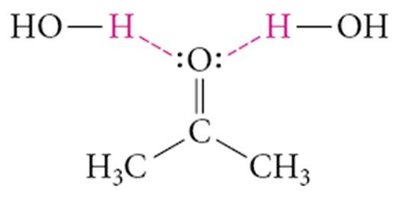
Solubility: Small aldehydes and ketones (up to four carbons) are soluble in water due to their ability to accept hydrogen bonds.
Polarity: The C=O bond creates a significant dipole moment.
Spectroscopy of Aldehydes and Ketones
Spectroscopic techniques are essential for identifying and characterizing carbonyl compounds.
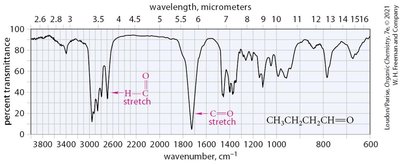
IR Spectroscopy: Strong C=O stretch near 1700 cm-1 for both aldehydes and ketones. Aldehydes show C-H stretching near 2710 cm-1.
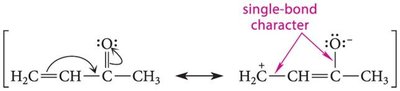
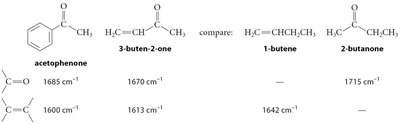
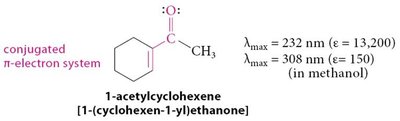
Conjugation: Conjugation with π bonds lowers the absorption frequency.
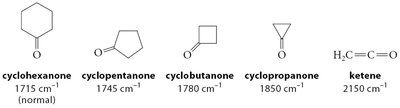
Ring Size: The C=O stretching frequency in small-ring ketones is affected by ring size.
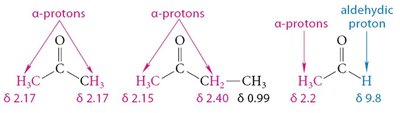
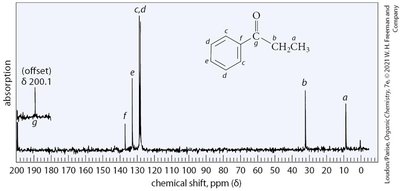
NMR Spectroscopy: Aldehydic protons appear at δ 9–10 in 1H NMR. Carbonyl carbons appear at δ 190–220 in 13C NMR.
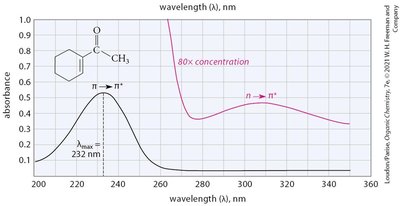
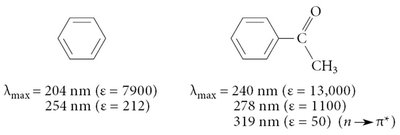
UV–Vis Spectroscopy: Conjugated systems absorb strongly in the UV region. n → π* transitions occur at 260–290 nm.
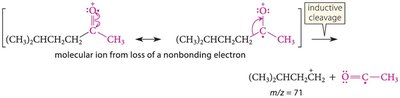
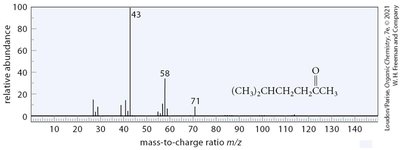
Mass Spectrometry: Peaks arise from inductive and alpha cleavage. The McLafferty rearrangement is a characteristic fragmentation for carbonyl compounds with γ-hydrogen.

Synthesis of Aldehydes and Ketones
Aldehydes and ketones can be synthesized by several methods:
Oxidation of Alcohols: Primary alcohols yield aldehydes; secondary alcohols yield ketones.
From Alkynes: Hydration of alkynes produces ketones.
Friedel–Crafts Acylation: Aromatic ketones are formed by acylation of aromatic rings.
Ozonolysis of Alkenes: Cleavage of alkenes produces aldehydes and ketones.
Periodate Cleavage of Glycols: Cleavage of vicinal diols yields carbonyl compounds.
Reactions of Aldehydes and Ketones
Aldehydes and ketones undergo a variety of addition and reduction reactions due to the electrophilic nature of the carbonyl carbon.
Reversible Addition Reactions: Nucleophiles add to the carbonyl carbon, forming tetrahedral intermediates.
Reduction to Alcohols: Metal hydride reagents (NaBH4, LiAlH4) reduce aldehydes to primary alcohols and ketones to secondary alcohols.
Grignard and Organolithium Addition: These reagents add to carbonyl groups, forming new C–C bonds and alcohols.
Acetal Formation: Aldehydes and ketones react with alcohols to form hemiacetals and acetals, which can be used as protecting groups.
Reactions with Amines: Primary amines form imines (Schiff bases); secondary amines form enamines.
Reduction to Methylene Groups: Wolff–Kishner and Clemmensen reductions convert carbonyl groups to methylene (–CH2–).
Wittig Alkene Synthesis: Converts carbonyl compounds to alkenes using phosphorous ylides.
Oxidation of Aldehydes: Aldehydes are easily oxidized to carboxylic acids; ketones are more resistant.
Equilibria and Reactivity in Carbonyl-Addition Reactions
The equilibrium and rate of addition reactions depend on the structure and electronic effects of substituents attached to the carbonyl group.
Electron-Withdrawing Groups: Increase reactivity and favor addition (larger Keq).
Electron-Donating Groups: Decrease reactivity and make addition less favorable (smaller Keq).
Steric Effects: Bulky groups decrease reactivity due to steric hindrance.
Conjugation: Conjugation with the carbonyl group stabilizes the compound and lowers reactivity.
Summary Table: Functional Group Priority
Functional Group | Priority |
|---|---|
Aldehyde | Highest |
Ketone | High |
Alcohol (-OH) | Medium |
Thiol (-SH) | Lower |
*Additional info: This summary covers the structure, nomenclature, physical properties, spectroscopic identification, synthesis, and reactivity of aldehydes and ketones, including relevant images and tables for visual reinforcement.*
