 Back
BackAliphatic Chemistry: Foundations and Bonding in Organic Molecules
Study Guide - Smart Notes
 Tailored notes based on your materials, expanded with key definitions, examples, and context.
BONDING AND ATOMIC STRUCTURE
Atoms and Subatomic Particles
Atoms are the fundamental units of matter, composed of protons, neutrons, and electrons. Protons and neutrons reside in the nucleus and have significant mass, while electrons are much lighter and occupy shells around the nucleus.
Atomic number: Number of protons in the nucleus.
Mass number: Total number of protons and neutrons.
Isotopes: Atoms with the same atomic number but different mass numbers.
Elements: Substances with only one type of atom (e.g., O2, N2).
Compounds: Substances formed from two or more elements (e.g., NaCl, H2O).
Atomic Structure and Electron Configuration
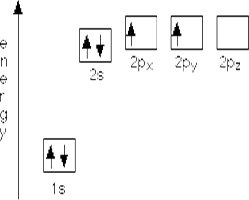
Electrons are arranged in shells and subshells (orbitals) around the nucleus. The distribution of electrons determines chemical bonding and reactivity.
Shells: Each shell can hold up to 2n2 electrons.
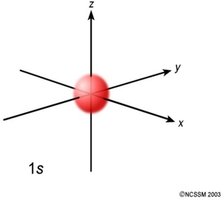
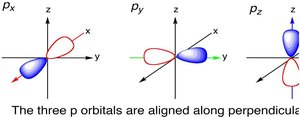
Orbitals: s, p, d, and f orbitals have distinct shapes and energies.
Valence electrons: Electrons in the outermost shell, involved in bonding.
Core electrons: Electrons in inner shells, not involved in bonding.
Valence shell: The outermost electron shell.
Noble gas configuration: Stable electron arrangement with a filled valence shell.
LEWIS THEORY AND BONDING
Lewis Theory and the Octet Rule
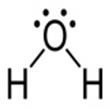
Atoms gain, lose, or share electrons to achieve a stable octet (eight electrons in the valence shell), similar to noble gases. Lewis structures help visualize valence electrons and predict bonding.
Single bond: Two atoms share one pair of electrons (σ bond).
Double bond: Two pairs shared (one σ, one π bond).
Triple bond: Three pairs shared (one σ, two π bonds).
Bonding electrons: Shared electrons, shown as lines.
Lone pairs: Nonbonding electrons, shown as dots.
Radicals: Species with unpaired electrons.
Ionic and Covalent Bonds
Bonds form through electron transfer (ionic) or sharing (covalent). Covalent bonds are prevalent in organic molecules.
Ionic bond: Formed by transfer of electrons from one atom to another.
Covalent bond: Formed by sharing electrons between atoms.
Bond polarity: Arises from differences in electronegativity between bonded atoms.
Electronegativity and Bond Polarity
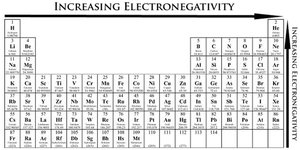
Electronegativity is the ability of an atom to attract electrons in a bond. The greater the difference, the more polar the bond.
Electronegativity trend: Increases from left to right and bottom to top in the periodic table.
Bond polarity: Measured by electronegativity difference.
INTERMOLECULAR FORCES
Types of Intermolecular Forces
Intermolecular forces influence physical properties such as boiling and melting points.
Dipole–dipole interactions: Attraction between polar molecules.
Van der Waals forces: Weak attractions between all molecules, stronger with increased molecular weight.
Hydrogen bonding: Strong dipole-dipole interaction involving hydrogen bonded to N, O, or F.
BONDING IN ORGANIC COMPOUNDS
Carbon and Its Bonding
Organic compounds are defined by carbon-hydrogen bonds. Carbon forms four covalent bonds, allowing for chains and rings, and a vast diversity of compounds.
Orbitals: s (spherical) and p (dumbbell-shaped) orbitals are most relevant in organic chemistry.
Electron configuration: Follows Aufbau, Pauli Exclusion, and Hund’s rules.
Valence Bond Theory and Molecular Orbital Theory
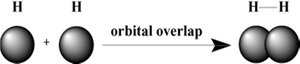
Valence Bond Theory explains covalent bond formation as overlap of singly occupied orbitals. Molecular Orbital Theory describes electrons as belonging to the molecule as a whole.
Valence Bond Theory: Overlap of atomic orbitals forms bonds.
Molecular Orbital Theory: Atomic orbitals combine to form molecular orbitals.
Hybridization of Atomic Orbitals
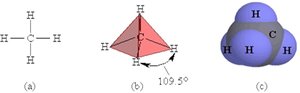
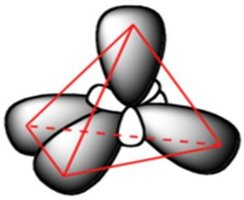
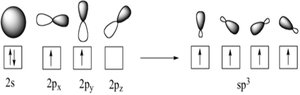
Hybridization is the mixing of atomic orbitals to form new, equivalent orbitals. In carbon, sp3 hybridization leads to tetrahedral geometry (109.5° bond angles).
sp3 hybridization: One s and three p orbitals combine.
Result: Four equivalent orbitals oriented tetrahedrally.
Bond strength: sp3 hybrids form stronger bonds than unhybridized orbitals.
ORGANIC REACTIONS OVERVIEW
Types of Organic Reactions
Organic reactions are classified as addition, elimination, substitution, and rearrangement.
Addition: Two reactants combine to form one product.
Elimination: One reactant splits into two products.
Substitution: Exchange of parts between two reactants.
Rearrangement: Reorganization of bonds to yield isomers.
Reaction Mechanisms
Mechanisms describe the stepwise process of bond breaking and formation. Bonds can break homolytically (one electron to each fragment) or heterolytically (both electrons to one fragment).
Homolytic cleavage: Produces radicals.
Heterolytic cleavage: Produces ions.
HYDROCARBONS: ALKANES, ALKENES, AND ALKYNES
Alkanes and Cycloalkanes
Alkanes are saturated hydrocarbons with only single bonds. Cycloalkanes are ring structures with the general formula CnH2n.
Nomenclature: Based on chain length and branching; substituents are numbered and named.
Isomerism: Structural isomers have the same molecular formula but different structures.
Physical properties: Boiling and melting points increase with molecular weight; branching lowers boiling point.
Alkenes
Alkenes contain at least one carbon-carbon double bond, making them more reactive than alkanes. The double bond consists of one σ and one π bond.
Nomenclature: Longest chain with double bond; position indicated by number.
Preparation: Elimination reactions from alcohols or alkyl halides.
Reactivity: Undergo electrophilic addition reactions.
Markovnikov's Rule: In addition of HX, H attaches to less substituted carbon.
Alkynes
Alkynes contain a carbon-carbon triple bond. Terminal alkynes are more reactive and acidic than internal alkynes.
Nomenclature: Suffix -yne; numbering as in alkenes.
Preparation: Dehydrohalogenation of dihalides, alkylation of acetylides.
Reactivity: Addition of HX, halogenation, hydration, reduction.
ALKYL HALIDES, ALCOHOLS, THIOLS, AND ETHERS
Alkyl Halides
Alkyl halides are hydrocarbons with halogen substituents. They undergo substitution (SN1, SN2) and elimination (E1, E2) reactions.
Nomenclature: Based on alkane rules; halogens listed alphabetically.
Preparation: From alkanes, alkenes, alcohols.
Reactivity: Electrophilic; undergo substitution and elimination.
Alcohols
Alcohols contain an -OH group bonded to an sp3 carbon. Classified as primary, secondary, or tertiary.
Nomenclature: Replace -e with -ol; number chain from -OH group.
Properties: Higher boiling points due to hydrogen bonding.
Preparation: Reduction of carbonyl compounds, hydration of alkenes.
Reactions: Oxidation, dehydration, conversion to ethers.
Thiols
Thiols are sulfur analogs of alcohols, named with the suffix -thiol. They are weakly acidic and have strong odors.
Ethers
Ethers have two organic groups bonded to oxygen. Prepared by Williamson ether synthesis or alkoxymercuration of alkenes.
Nomenclature: Name substituents and add -ether.
Reactivity: Generally unreactive; undergo acidic cleavage.
CARBONYL COMPOUNDS AND DERIVATIVES
Aldehydes and Ketones
Carbonyl compounds contain a C=O group. Aldehydes have the group at the end of the chain; ketones have it within the chain.
Nomenclature: Aldehydes: -al; ketones: -one.
Reactions: Reduction, oxidation, nucleophilic addition.
Carboxylic Acids and Derivatives
Carboxylic acids contain a -COOH group. Derivatives include esters, amides, acid halides, and anhydrides.
Nomenclature: -oic acid; derivatives named by functional group.
Reactions: Esterification, amide formation, nucleophilic acyl substitution.
AMINES
Aliphatic Amines
Amines are derivatives of ammonia, classified as primary, secondary, or tertiary based on the number of organic groups attached to nitrogen.
Nomenclature: Suffix -amine; N-substituted for secondary/tertiary.
Reactivity: Alkylation, acylation, Hofmann elimination.
ADDITIONAL INFO
For further reading, refer to recommended textbooks such as J.E. McMurry's Organic Chemistry, J.G. Smith's Organic Chemistry, and L.G. Wade's Organic Chemistry.
