 Back
BackAlkyl Halides and Nucleophilic Substitution: Structure, Properties, and Mechanisms
Study Guide - Smart Notes
 Tailored notes based on your materials, expanded with key definitions, examples, and context.
Alkyl Halides and Nucleophilic Substitution
Introduction to Alkyl Halides
Alkyl halides are organic compounds in which a halogen atom (F, Cl, Br, or I) is bonded to an sp3 hybridized carbon atom. These compounds are important intermediates in organic synthesis and participate in a variety of substitution and elimination reactions.
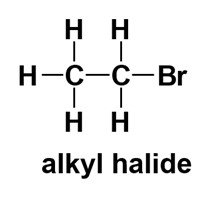
Alkyl halides: Halogen bonded to an sp3 carbon.
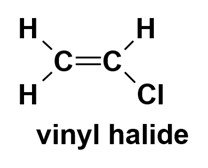
Vinyl halides: Halogen bonded to an sp2 carbon of an alkene.
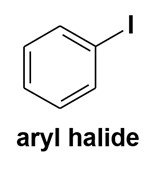
Aryl halides: Halogen bonded to an sp2 carbon on a benzene ring.
Polarity and Reactivity of Alkyl Halides
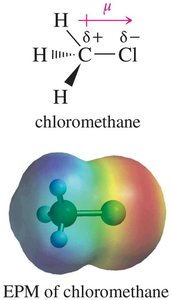
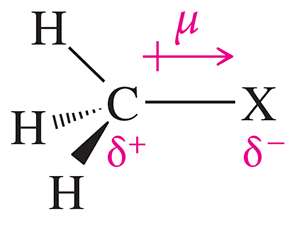
The carbon-halogen bond is polar due to the higher electronegativity of halogens compared to carbon. This polarity makes the carbon atom electrophilic and susceptible to attack by nucleophiles.
Bond polarity: The carbon atom bears a partial positive charge (δ+), and the halogen bears a partial negative charge (δ-).
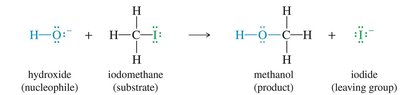
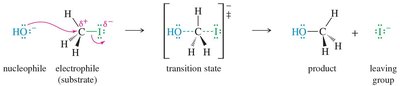
Nucleophilic attack: Nucleophiles attack the electrophilic carbon, while the halogen leaves with the electron pair.
Nomenclature of Alkyl Halides
IUPAC Nomenclature
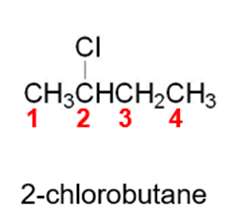
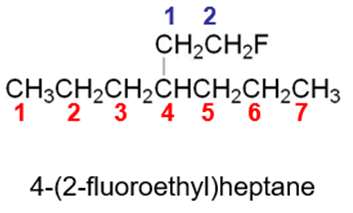
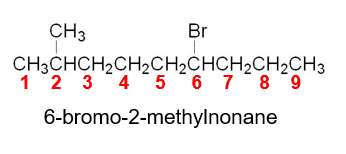
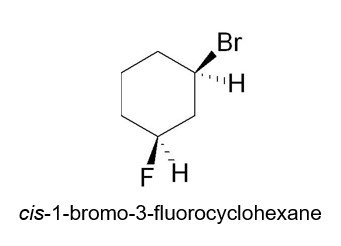
Alkyl halides are named as haloalkanes in IUPAC nomenclature. The longest carbon chain is chosen as the parent, and the position of the halogen is indicated by the lowest possible number.
Number the chain to give the halogen the lowest possible position.
Multiple halogens are listed alphabetically.
Common Names of Alkyl Halides
Common names are often used for simple alkyl halides, especially those with small alkyl groups. The alkyl group is named as a substituent on the halide.
Methylene halide: CH2X2
Haloform: CHX3
Carbon tetrahalide: CX4
Examples: methylene chloride (CH2Cl2), chloroform (CHCl3), carbon tetrachloride (CCl4).
Classification of Alkyl Halides
Types of Alkyl Halides
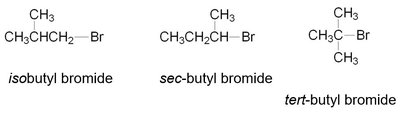
Methyl halide: Halogen attached to a methyl group (CH3X).
Primary (1°) alkyl halide: Halogen attached to a carbon bonded to one other carbon.
Secondary (2°) alkyl halide: Halogen attached to a carbon bonded to two other carbons.
Tertiary (3°) alkyl halide: Halogen attached to a carbon bonded to three other carbons.

Geminal and Vicinal Dihalides
Geminal dihalide: Two halogen atoms bonded to the same carbon.
Vicinal dihalide: Two halogen atoms bonded to adjacent carbons.
Physical Properties of Alkyl Halides
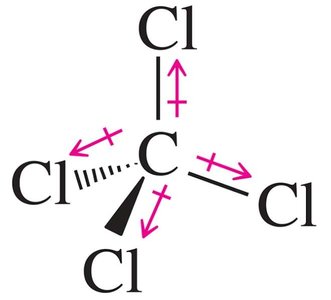
Dipole moments: Determined by the electronegativity difference and molecular geometry.
Boiling points: Increase with molecular mass and polarizability; spherical shape decreases boiling point.
Densities: Alkyl fluorides and chlorides (with one Cl) are less dense than water; alkyl bromides, iodides, and polychlorides are denser than water.
Uses of Alkyl Halides
Industrial and household cleaners
Anesthetics (e.g., halothane)
Refrigerants (Freons, now largely replaced)
Pesticides (e.g., DDT)
Preparation of Alkyl Halides
Free Radical Halogenation
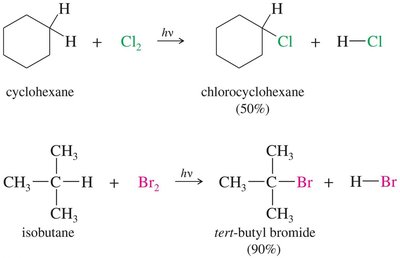
Alkyl halides can be prepared by the halogenation of alkanes. Chlorination is less selective, while bromination is highly selective for more substituted carbons.
Chlorination: Produces a mixture of products; not ideal for selective synthesis.
Bromination: Selectivity order: 3° > 2° > 1°.
Allylic Halogenation
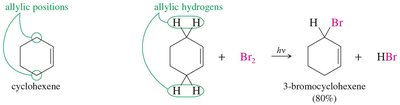
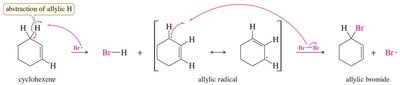
Allylic halogenation introduces a halogen at the allylic position (sp3 carbon adjacent to a double bond). Allylic radicals are resonance stabilized, making this reaction efficient.
N-Bromosuccinimide (NBS) in Allylic Bromination
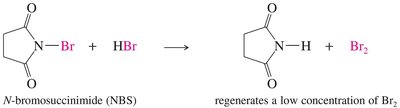
NBS is used to maintain a low concentration of Br2 for selective allylic bromination.

Nucleophilic Substitution Reactions
The SN2 Reaction
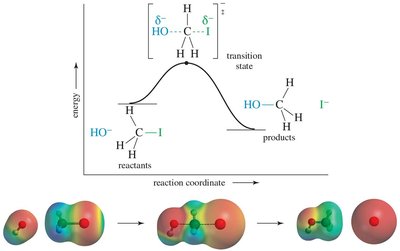
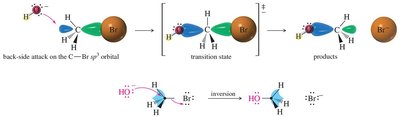
The SN2 (bimolecular nucleophilic substitution) reaction involves a single concerted step where the nucleophile attacks the electrophilic carbon from the opposite side of the leaving group, resulting in inversion of configuration.
Mechanism: One-step, concerted process.
Rate law:
Stereochemistry: Inversion at the chiral center (Walden inversion).
Factors Affecting SN2 Reactions
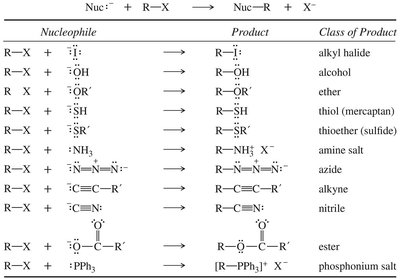
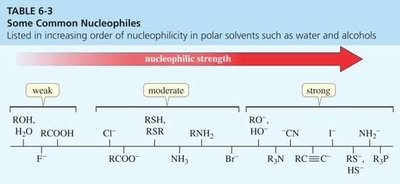
Nucleophilic strength: Stronger nucleophiles increase the reaction rate.
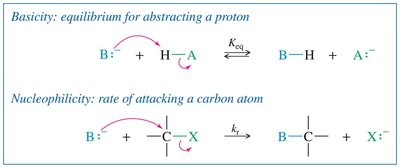
Basicity vs. nucleophilicity: Basicity is equilibrium-based (proton abstraction), nucleophilicity is kinetic (rate of attack on carbon).
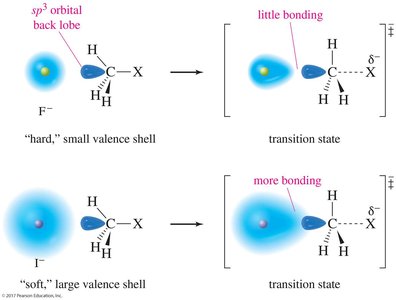
Trends: Nucleophilicity increases down a group and decreases across a period.
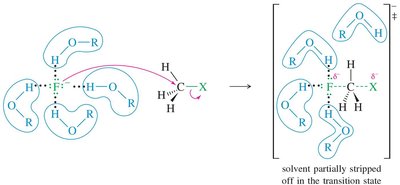
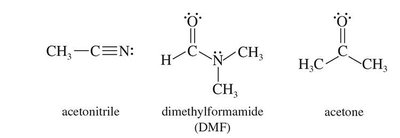
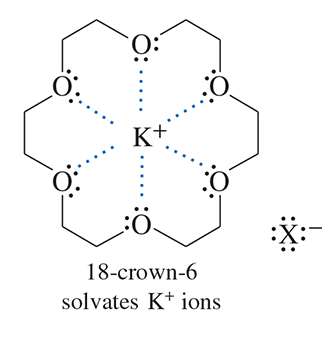
Solvent effects: Polar aprotic solvents (e.g., DMF, acetone) enhance nucleophilicity and SN2 rates; polar protic solvents hinder nucleophiles by solvation.
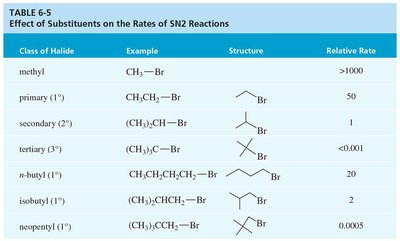
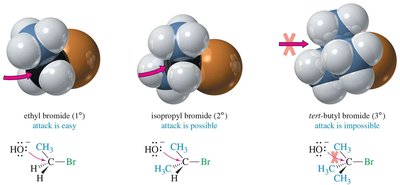
Substrate structure: Reactivity order: methyl > 1° > 2° >> 3° (steric hindrance blocks SN2 on tertiary centers).
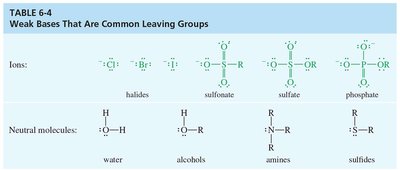
Leaving group ability: Good leaving groups are weak bases and stabilize the transition state.


The SN1 Reaction
Mechanism of SN1 Reaction
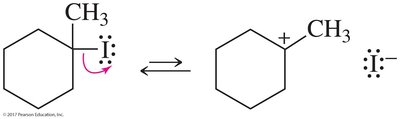
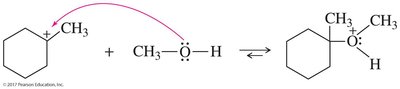
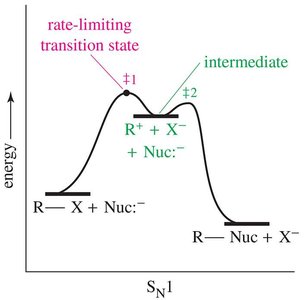
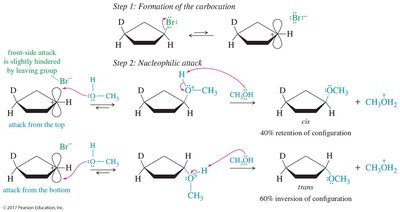
The SN1 (unimolecular nucleophilic substitution) reaction proceeds via a two-step mechanism involving a carbocation intermediate. The rate-determining step is the loss of the leaving group to form the carbocation.
Step 1: Formation of carbocation (slow, rate-determining).
Step 2: Nucleophilic attack on the carbocation (fast).
Step 3 (if nucleophile is neutral): Deprotonation to yield the final product.
Rate law:
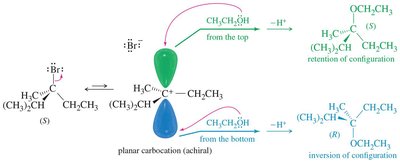
Stereochemistry: Racemization occurs due to planar carbocation intermediate; often more inversion than retention.



Factors Affecting SN1 Reactions
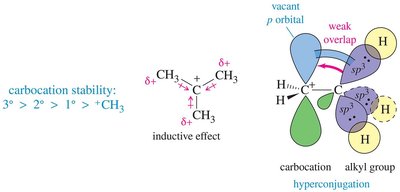
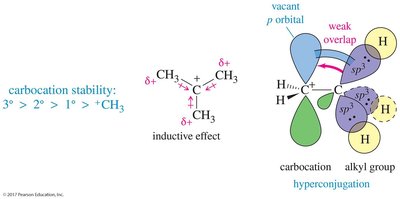
Carbocation stability: 3° > 2° > 1° >> methyl (due to inductive effects and hyperconjugation).
Solvent: Polar protic solvents stabilize ions and favor SN1 reactions.
Leaving group: Good leaving groups increase the rate of SN1 reactions.
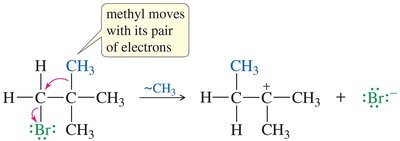
Rearrangements: Carbocations may rearrange via hydride or methyl shifts to form more stable intermediates.

Comparison of SN1 and SN2 Mechanisms
Summary Table
Feature | SN1 | SN2 |
|---|---|---|
Order of reactivity | 3° > 2° > 1° >> CH3X | CH3X > 1° > 2° >> 3° |
Nucleophile | Weak nucleophile (may be solvent) | Strong nucleophile required |
Solvent | Polar protic | Polar aprotic |
Rate law | First order, | Second order, |
Stereochemistry | Mixture (racemization) | Inversion only |
Rearrangements | Possible | Not possible |
Summary: The choice between SN1 and SN2 depends on the structure of the substrate, the strength of the nucleophile, the solvent, and the leaving group. Methyl and primary halides favor SN2, while tertiary halides favor SN1.
