 Back
BackAmino Acids, Peptides, and Proteins: Structure, Properties, and Synthesis
Study Guide - Smart Notes
 Tailored notes based on your materials, expanded with key definitions, examples, and context.
Amino Acids, Peptides, and Proteins
Introduction to Amino Acids and Peptides
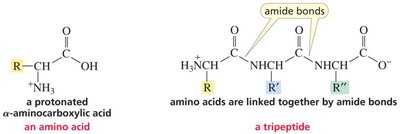
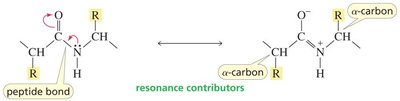
Amino acids are the fundamental building blocks of peptides and proteins. Peptides and proteins are polymers of amino acids linked together by amide bonds (also called peptide bonds). The diversity of protein function in biological systems arises from the variety and sequence of amino acids in their structure.
Functions of Proteins
Proteins serve a wide range of functions in living organisms, including:
Structural proteins: Provide strength and protection (e.g., collagen, keratin).
Protective proteins: Defend against predators and disease (e.g., antibodies, venoms).
Enzymes: Catalyze biochemical reactions.
Hormones: Regulate physiological processes (e.g., insulin, growth hormone).
Proteins with physiological functions: Transport and store molecules, contract muscles, etc.
The Most Common Naturally Occurring Amino Acids
Classification and Structures
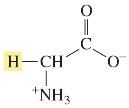
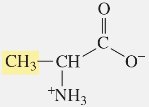
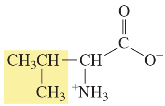
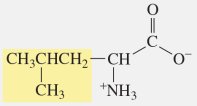
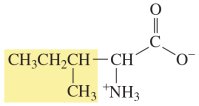
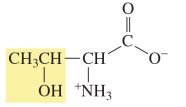
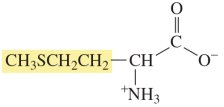
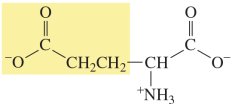
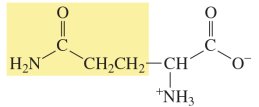
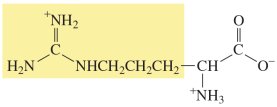
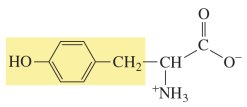
Amino acids differ only in the side chain (R group) attached to the alpha-carbon. They are classified based on the nature of their side chains:
Aliphatic side-chain amino acids: Glycine, Alanine, Valine, Leucine, Isoleucine
Hydroxy-containing: Serine, Threonine
Sulfur-containing: Cysteine, Methionine
Acidic: Aspartate (Aspartic acid), Glutamate (Glutamic acid)
Amide: Asparagine, Glutamine
Basic: Lysine, Arginine, Histidine
Aromatic: Phenylalanine, Tyrosine, Tryptophan
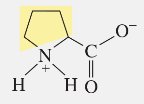
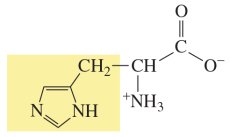
Heterocyclic: Proline, Histidine, Tryptophan
Essential, Conditionally Essential, and Non-Essential Amino Acids
Essential amino acids: Cannot be synthesized by the human body and must be obtained from the diet. They are vital for protein synthesis, tissue repair, and nutrient absorption.
Conditionally essential amino acids: Usually synthesized by the body but may become essential under certain physiological conditions.
Non-essential amino acids: Can be synthesized by the human body and do not need to be obtained from the diet.
Special Structures and Functional Groups
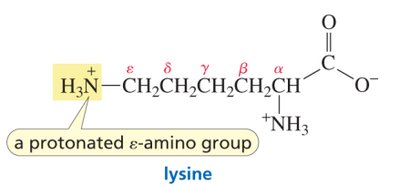
Lysine: Contains a protonated ε-amino group.
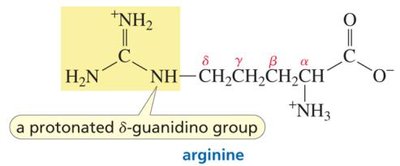
Arginine: Contains a protonated δ-guanidino group.
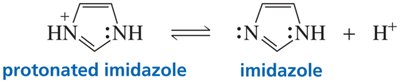
Histidine: Contains an imidazole ring, which can be protonated or neutral depending on pH.
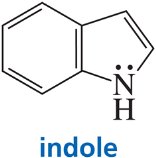
Tryptophan: Contains an indole ring.
D- and L- Amino Acids
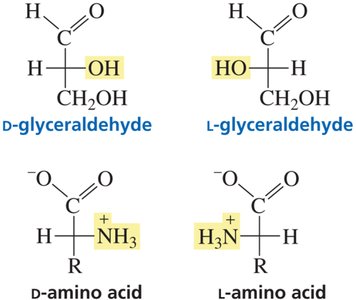
Amino acids in proteins are almost exclusively L-amino acids, which are stereochemically related to L-glyceraldehyde. D-sugars and L-amino acids are the predominant forms in nature.
Chemical Properties of Amino Acids
Zwitterions and Acid-Base Properties
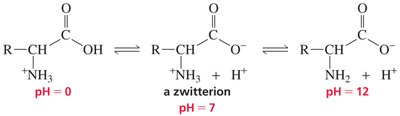
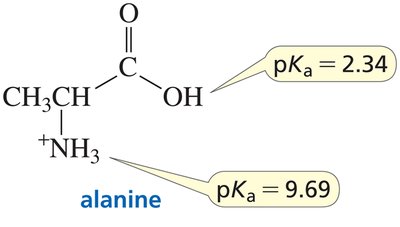
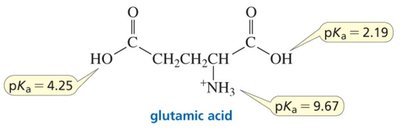
Amino acids exist as zwitterions at physiological pH, meaning they have both a positively charged amino group and a negatively charged carboxylate group. The acid-base behavior of amino acids is characterized by their pKa values for the carboxyl and amino groups, and sometimes for the side chain.
Isoelectric Point (pI)
The isoelectric point (pI) is the pH at which an amino acid has no net charge. It can be calculated as the average of the pKa values that bracket the zwitterionic form.
For alanine:
For lysine:
For glutamic acid:
Separation and Analysis of Amino Acids
Electrophoresis
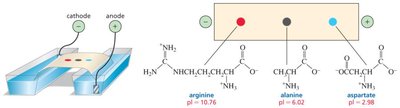
Electrophoresis separates amino acids based on their pI values. Amino acids migrate in an electric field toward the electrode opposite their charge at a given pH. Ninhydrin is commonly used to detect amino acids after separation.
Chromatography
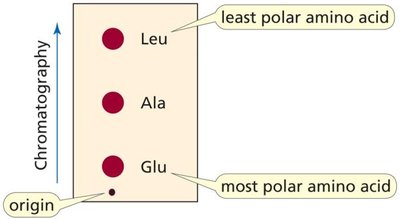
Chromatography separates amino acids based on their polarity. More polar amino acids travel less far on the chromatogram, while less polar amino acids travel farther.
Ion-Exchange Chromatography
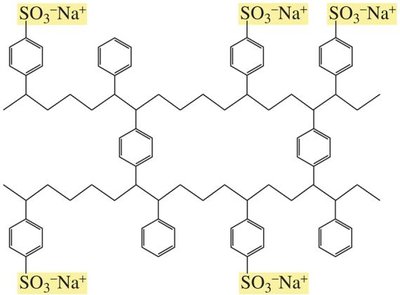
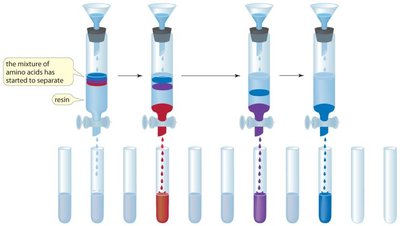
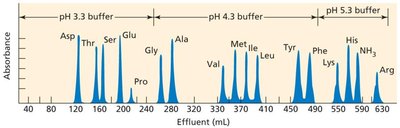
Ion-exchange chromatography uses a resin to separate amino acids based on their charge. The resin exchanges sodium ions for positively charged amino groups, allowing for effective separation.
Synthesis of Amino Acids
HVZ Reaction
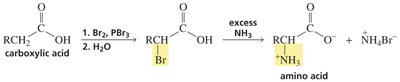
The Hell-Volhard-Zelinsky (HVZ) reaction is used to synthesize α-amino acids from carboxylic acids via bromination and subsequent amination.
Reductive Amination
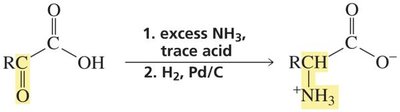
Reductive amination involves the conversion of α-keto acids to amino acids using ammonia and hydrogenation.
Strecker Synthesis
The Strecker synthesis produces amino acids from aldehydes via imine and cyanohydrin intermediates, followed by hydrolysis.

Resolution of Racemic Mixtures
Enzymatic hydrolysis can resolve racemic mixtures of amino acids by selectively hydrolyzing one enantiomer.
Peptides and Peptide Bonds
Peptide Structure and Nomenclature
Peptides are short chains of amino acids linked by peptide bonds. The sequence is written from the N-terminal (amino end) to the C-terminal (carboxyl end). Commas indicate unknown sequence; hyphens indicate known sequence.

Peptide Bond Character
The peptide bond has partial double-bond character due to resonance, restricting rotation and contributing to protein structure.

Disulfide Bonds and Protein Structure
Formation and Reduction of Disulfide Bonds
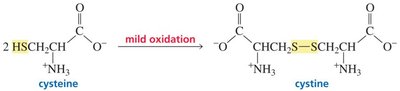
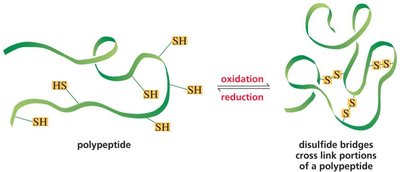
Disulfide bonds form by the oxidation of thiol groups (–SH) in cysteine residues, creating cystine. These bonds can be reduced back to thiols.




Biological Examples
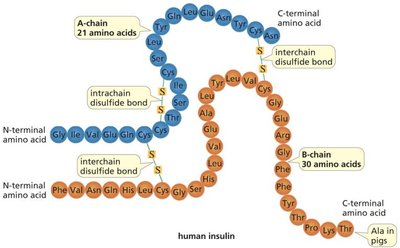
Disulfide bridges are crucial for the stability and function of proteins such as insulin, which contains both interchain and intrachain disulfide bonds.
Biologically Important Peptides
Peptide Hormones and Neurotransmitters
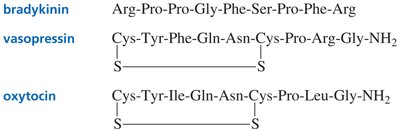
Examples include enkephalins (pain control), bradykinin (inhibits inflammation), vasopressin (regulates water retention), and oxytocin (induces labor and milk production).
Artificial Sweeteners
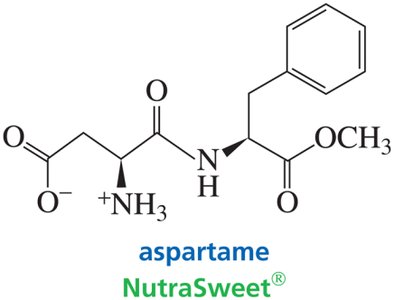
NutraSweet (aspartame) is the methyl ester of a dipeptide composed of aspartate and phenylalanine.
Peptide Synthesis
Challenges in Peptide Synthesis
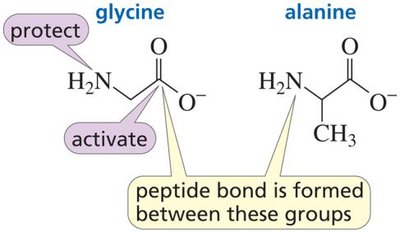
Because amino acids have both amino and carboxyl groups, uncontrolled reactions can yield multiple dipeptides. Protecting groups and activation strategies are used to ensure correct peptide bond formation.

Solid-Phase Peptide Synthesis
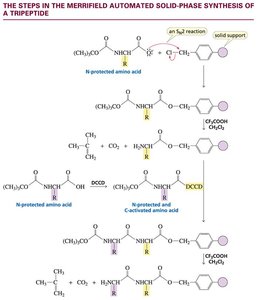
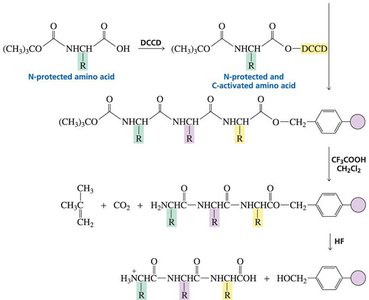
The Merrifield method allows automated synthesis of peptides by anchoring the C-terminal amino acid to a solid support, sequentially adding protected amino acids, and removing protecting groups after each addition.

Protein Structure
Levels of Protein Structure
Primary structure: Sequence of amino acids and location of disulfide bonds.
Secondary structure: Local folding into α-helices and β-sheets, stabilized by hydrogen bonds.
Tertiary structure: Overall three-dimensional shape of a single polypeptide chain.
Quaternary structure: Arrangement of multiple polypeptide chains (subunits) in a protein.
Determining Protein Structure
To determine the sequence of a protein, disulfide bridges are first reduced, peptide bonds are hydrolyzed, and the resulting amino acids are analyzed. Enzymes such as carboxypeptidase, trypsin, chymotrypsin, and elastase are used to selectively cleave peptide bonds for sequencing.

Secondary Structure: α-Helix and β-Pleated Sheet
The α-helix is a right-handed coil stabilized by hydrogen bonds within a single chain. The β-pleated sheet is formed by hydrogen bonds between different polypeptide chains or segments. Both structures maximize hydrogen bonding and minimize steric clashes between side chains.
Protein Denaturation
Denaturation is the loss of the highly organized tertiary structure of a protein, resulting in loss of function. It can be caused by changes in pH, addition of strong hydrogen-bonding reagents, exposure to organic solvents, heat, or agitation.
Additional info: The notes above integrate and expand upon the provided lecture slides, including definitions, examples, and explanations of key concepts in amino acid, peptide, and protein chemistry, as well as relevant synthetic and analytical techniques.
