 Back
BackAtomic and Molecular Structure: Foundations for Organic Chemistry
Study Guide - Smart Notes
 Tailored notes based on your materials, expanded with key definitions, examples, and context.
Atomic and Molecular Structure
Anchoring Concept: Structure and Function
Chemical compounds possess geometric structures that directly influence their chemical and physical behaviors. Understanding atomic and molecular structure is fundamental to predicting reactivity, properties, and function in organic chemistry.
Atoms and Bonding: Atoms combine via covalent or ionic bonds, forming molecules with distinct shapes and properties.
Lewis Structures: Visual representations of molecules showing how atoms are connected and where electrons reside.
VSEPR Theory: Predicts the 3D arrangement of atoms based on electron repulsion.
Hybridization: Describes how atomic orbitals mix to form new orbitals for bonding.
Intermolecular Forces: Forces between molecules that affect physical properties like boiling point and solubility.
Common Bonding Patterns and Formal Charges
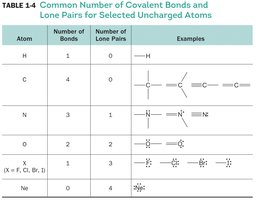
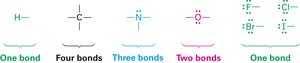
The number of bonds and lone pairs for each atom type is predictable and essential for constructing correct Lewis structures.
H-O-N-C Rule: Hydrogen forms 1 bond, Oxygen 2, Nitrogen 3, Carbon 4.
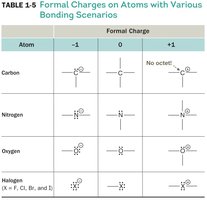
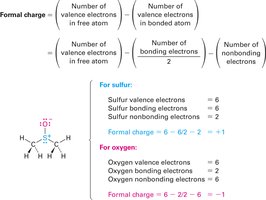
Formal Charge: Calculated to ensure charge balance and stability in molecules.
Guidelines for Drawing Lewis Structures
Lewis structures are foundational for understanding molecular geometry and reactivity.
Arrange atoms, connect with bonds (central atom is least electronegative).
Count total valence electrons.
Subtract two electrons for each bond.
Complete octets for all atoms (except hydrogen).
Use multiple bonds if necessary.
Period 2 atoms cannot have expanded octets; Period 3+ can.
Covalent bonds share electrons; ionic bonds transfer electrons.
Bond Strength and Length
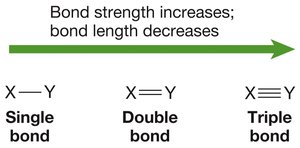
Bond order affects both strength and length.
Single bonds: Longest and weakest.
Double bonds: Intermediate length and strength.
Triple bonds: Shortest and strongest.
Valence Shell Electron Pair Repulsion (VSEPR) Theory
VSEPR theory helps predict the shape of molecules based on electron group repulsion.
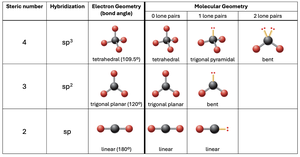
Electron Geometry: Orientation of electron groups around an atom.
Molecular Geometry: Arrangement of atoms around a central atom.
Hybridization and Molecular Geometry
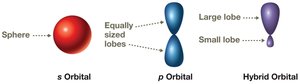
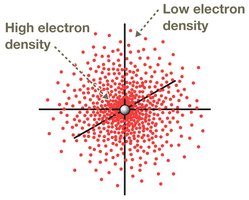
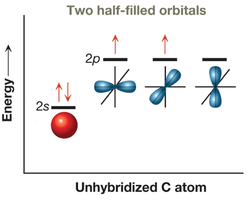
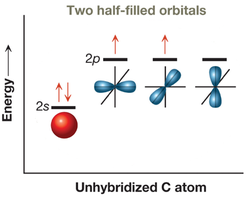
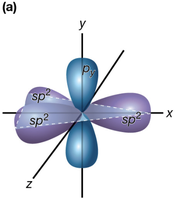
Hybridization explains how atomic orbitals combine to form new orbitals for bonding, matching observed bond angles and molecular shapes.
sp3 Hybridization: Tetrahedral geometry, bond angle 109.5°.
sp2 Hybridization: Trigonal planar geometry, bond angle 120°.
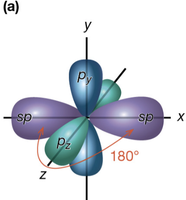
sp Hybridization: Linear geometry, bond angle 180°.
tValence Bond Theory
Valence bond theory describes how bonds form via overlap of atomic orbitals.
Sigma (σ) Bonds: Formed by head-on overlap; all single bonds are σ-bonds.
Pi (π) Bonds: Formed by sideways overlap of unhybridized p-orbitals; present in double and triple bonds.
Physical Properties and Polarity
The structure of a molecule determines its polarity and the types of intermolecular forces present, which in turn affect boiling point, melting point, and solubility.
Polarity: Determined by the presence of polar bonds and their arrangement.
Intermolecular Forces (IMFs): Include ion-ion, ion-dipole, hydrogen bonding, dipole-dipole, and London dispersion forces.
Intermolecular Forces (IMFs)
IMFs are responsible for many physical properties of substances.
Ion-Ion: Strongest, between fully charged ions.
Ion-Dipole: Between ions and polar molecules.
Hydrogen Bonding: Between H and N, O, or F atoms.
Dipole-Dipole: Between polar molecules.
London Dispersion: Weakest, present in all molecules.
Solubility and Miscibility
Solubility depends on the compatibility of intermolecular forces between substances.
Like dissolves like: Substances with similar IMFs are generally miscible.
Hydrophilic: Water-loving, usually polar or ionic.
Hydrophobic: Water-fearing, usually nonpolar.
Structure and Function: Enzymes and Intermolecular Forces
Enzymes are proteins that catalyze biological reactions, and their function depends on the ability to bind specific molecules via intermolecular forces.
Active Site: Region where substrate binds, determined by shape and IMFs.
Binding Ability: Influenced by hydrogen bonding, dipole-dipole, and dispersion forces.
Summary Table: Bonding and Geometry
Atom | Number of Bonds | Number of Lone Pairs | Examples |
|---|---|---|---|
H | 1 | 0 | H– |
C | 4 | 0 | CH4 |
N | 3 | 1 | NH3 |
O | 2 | 2 | H2O |
Halogens | 1 | 3 | Cl– |
Ne | 0 | 4 | Ne |
Atom | -1 | 0 | +1 |
|---|---|---|---|
Carbon | 5 valence electrons | 4 valence electrons | No octet |
Nitrogen | 4 valence electrons | 3 valence electrons | 2 valence electrons |
Oxygen | 3 valence electrons | 2 valence electrons | 1 valence electron |
Halogens | 2 valence electrons | 1 valence electron | 0 valence electrons |
Steric Number | Hybridization | Electron Geometry | Molecular Geometry |
|---|---|---|---|
4 | sp3 | Tetrahedral (109.5°) | Tetrahedral, trigonal pyramidal, bent |
3 | sp2 | Trigonal planar (120°) | Trigonal planar, bent |
2 | sp | Linear (180°) | Linear |
Key Equations
Formal Charge:
Example: Methanol (CH3OH)
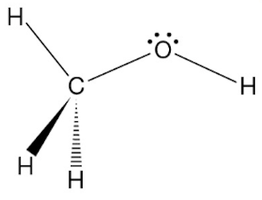
Methanol is a common industrial solvent and fuel. Its structure, polarity, and intermolecular forces determine its physical properties.
Lewis Structure: Shows connectivity and lone pairs.
Hybridization: Carbon is sp3 hybridized.
Polarity: Methanol is polar due to the O–H bond.
IMFs: Hydrogen bonding is the strongest IMF present.
Additional info:
Some context and examples were inferred to ensure completeness and clarity for exam preparation.
