 Back
BackAtomic Structure, Chemical Bonding, and Molecular Geometry: Foundations for Organic Chemistry
Study Guide - Smart Notes
 Tailored notes based on your materials, expanded with key definitions, examples, and context.
Atomic Structure and Subatomic Particles
Definition of the Atom and Fundamental Particles
The atom is the smallest unit of an element that retains its chemical properties, whether isolated or combined with other atoms. Atoms are composed of three fundamental subatomic particles: protons (positively charged), neutrons (neutral), and electrons (negatively charged).
Atomic Number (Z): Number of protons in the nucleus; defines the element.
Mass Number (A): Sum of protons and neutrons in the nucleus.
Electronic Structure and Quantum Numbers
Filling of Atomic Orbitals in Multi-Electron Atoms
Electrons occupy atomic orbitals in order of increasing energy, following the Aufbau principle. The order can be visualized using the diagonal rule:
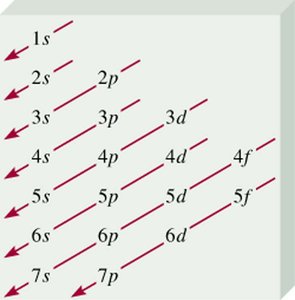
Hund's Rule: Electrons fill degenerate orbitals singly with parallel spins before pairing.
Pauli Exclusion Principle: No two electrons in an atom can have the same set of four quantum numbers.
Quantum Numbers and Atomic Orbitals
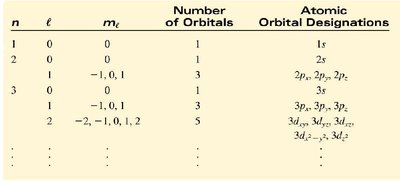
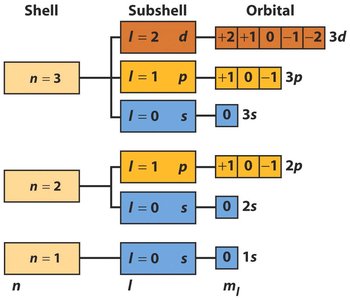
Quantum numbers describe the properties of atomic orbitals and the electrons within them:
Principal quantum number (n): Indicates the energy level and size of the orbital (n = 1, 2, 3, ...).
Azimuthal quantum number (l): Defines the shape of the orbital (l = 0, 1, ..., n-1).
Magnetic quantum number (m_l): Specifies the orientation of the orbital (m_l = -l to +l).
Shapes of Atomic Orbitals
The value of l determines the shape of the orbital:
s orbitals (l = 0): Spherical shape.
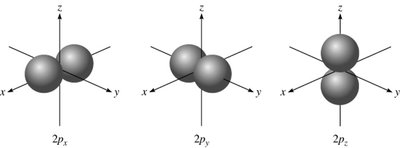
p orbitals (l = 1): Dumbbell-shaped, oriented along x, y, or z axes.
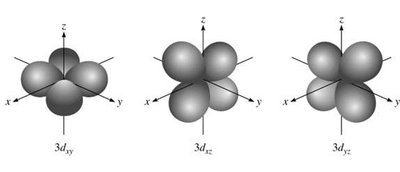
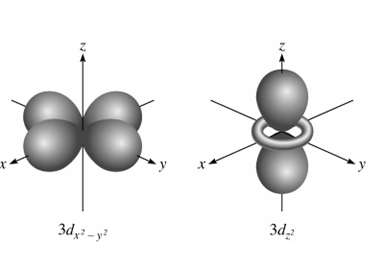
d orbitals (l = 2): More complex shapes, often cloverleaf.
Magnetic Properties of Substances
Paramagnetism and Diamagnetism
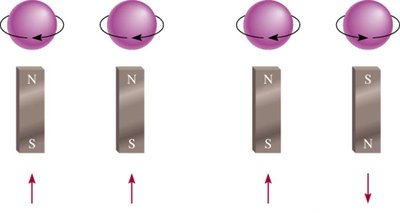
The electronic configuration of atoms determines their magnetic properties:
Paramagnetic substances: Contain unpaired electrons; attracted to magnetic fields.
Diamagnetic substances: All electrons are paired; weakly repelled by magnetic fields.
Chemical Bonding
Ionic and Covalent Bonds
Chemical bonds form when atoms share or transfer electrons to achieve stable electron configurations:
Covalent bonds: Atoms share electron pairs (common in organic molecules).
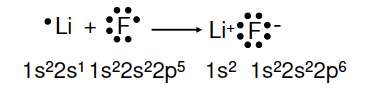
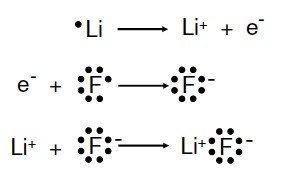
Ionic bonds: One atom donates electrons to another, forming cations and anions held by electrostatic attraction.
Electronegativity and Bond Polarity
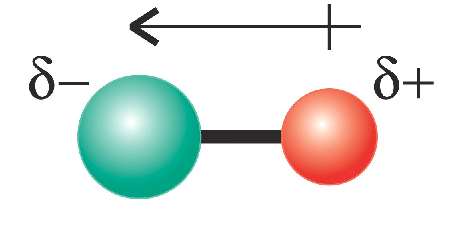
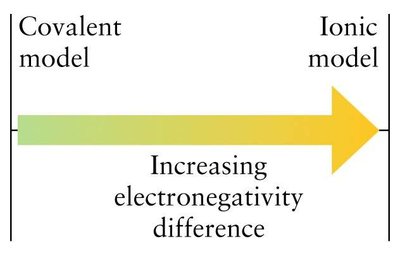
Electronegativity (χ) measures an atom's ability to attract electrons in a bond. The difference in electronegativity between two atoms determines bond polarity:
Polar covalent bond: Moderate difference in electronegativity; electrons shared unequally.
Ionic bond: Large difference in electronegativity; electrons transferred.
Lewis Structures
Lewis structures represent the arrangement of valence electrons around atoms in a molecule. Key rules:
Sum valence electrons for all atoms (adjust for charges).
Draw a skeletal structure, connect atoms with single bonds.
Complete octets for outer atoms, then central atom.
Form double/triple bonds if necessary to satisfy octet rule.
Ionic Bonding Example
Covalent Bonding and Bond Order
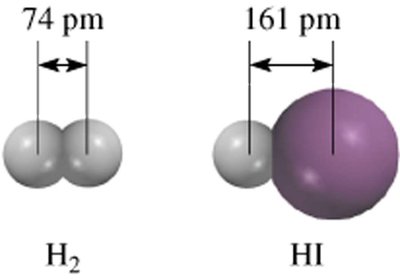
Covalent bonds can be single, double, or triple, depending on the number of shared electron pairs. Bond length decreases and bond strength increases with higher bond order.
Molecular Geometry
Valence Shell Electron Pair Repulsion (VSEPR) Theory
VSEPR theory predicts molecular geometry based on the repulsion between electron pairs around a central atom. The arrangement minimizes repulsion, determining the shape of the molecule.
Linear: 2 electron groups, 180° bond angle.
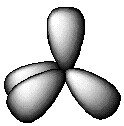
Trigonal planar: 3 electron groups, 120° bond angle.
Tetrahedral: 4 electron groups, 109.5° bond angle.
Trigonal bipyramidal: 5 electron groups, 90° and 120° bond angles.
Octahedral: 6 electron groups, 90° bond angles.
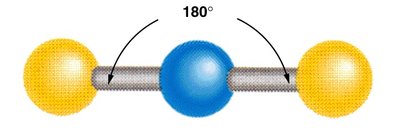
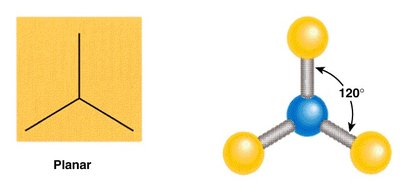
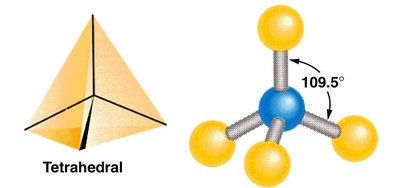
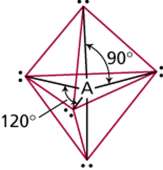
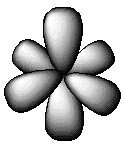
Summary Table: Electron Pair Arrangements and Molecular Geometries
Number of Electron Pairs | Arrangement | Geometry | Example |
|---|---|---|---|
2 | Linear | Linear | BeCl2, CO2 |
3 | Trigonal planar | Trigonal planar | BF3, CO32- |
4 | Tetrahedral | Tetrahedral | CH4, NH3, H2O |
5 | Trigonal bipyramidal | Trigonal bipyramidal | PCl5 |
6 | Octahedral | Octahedral | SF6 |
Valence Bond Theory and Hybridization
Valence Bond Theory (VBT)
VBT describes covalent bond formation as the overlap of atomic orbitals from different atoms. The strength of the bond depends on the extent of orbital overlap. Hybridization explains the observed molecular geometries by combining atomic orbitals into new, equivalent hybrid orbitals.
sp3 hybridization: Tetrahedral geometry (e.g., CH4, NH3).
sp2 hybridization: Trigonal planar geometry (e.g., BF3).
sp hybridization: Linear geometry (e.g., BeCl2).
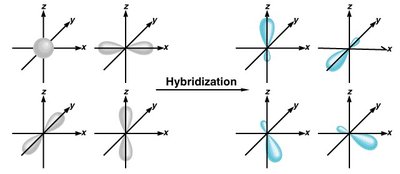
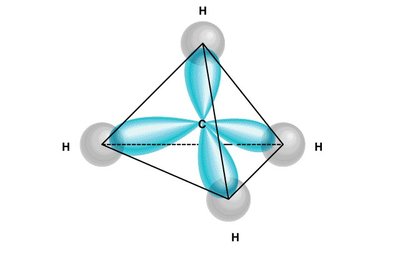
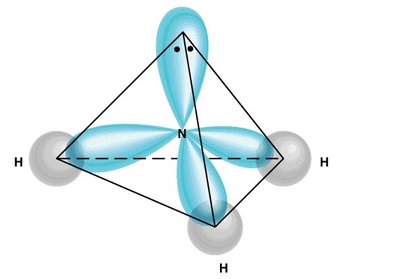
Summary Table: Hybrid Orbitals and Geometries
Atomic Orbitals Mixed | Hybridization | Number of Hybrids | Geometry | Example |
|---|---|---|---|---|
s + p | sp | 2 | Linear (180°) | BeCl2 |
s + 2p | sp2 | 3 | Trigonal planar (120°) | BF3 |
s + 3p | sp3 | 4 | Tetrahedral (109.5°) | CH4, NH3 |
Sigma (σ) and Pi (π) Bonds
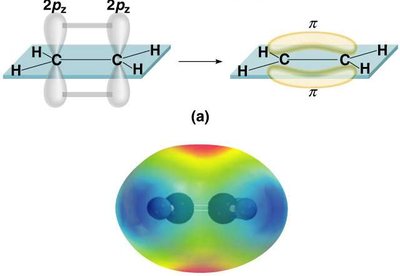
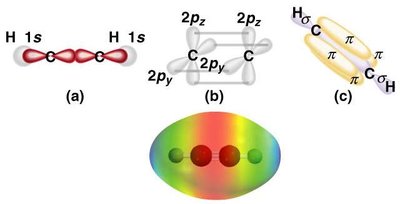
Sigma (σ) bonds are formed by head-on overlap of orbitals, while pi (π) bonds result from side-on overlap of p orbitals. Single bonds are always σ, double bonds have one σ and one π, and triple bonds have one σ and two π bonds.
Molecular Orbital Theory
Bonding and Antibonding Molecular Orbitals
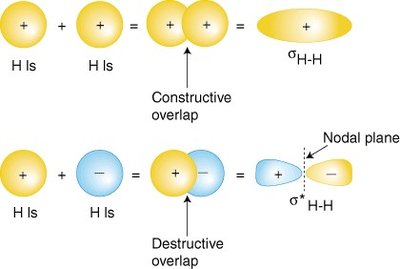
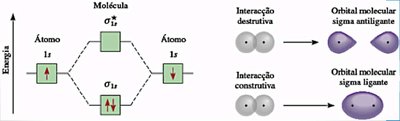
Molecular orbital (MO) theory describes bonds as the combination of atomic orbitals to form molecular orbitals that extend over the entire molecule. Constructive overlap forms bonding (σ, π) orbitals, while destructive overlap forms antibonding (σ*, π*) orbitals.
MO Diagrams for Diatomic Molecules
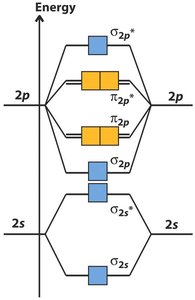
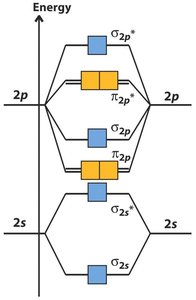
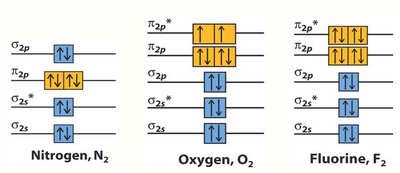
The energy ordering of molecular orbitals changes with atomic number. For O2 and F2, the σ2p orbital is higher in energy than the π2p orbitals. MO theory explains properties such as paramagnetism in O2.
Additional info: These foundational concepts in atomic structure, bonding, and molecular geometry are essential for understanding the behavior and reactivity of organic molecules, as covered in subsequent chapters of organic chemistry.
