 Back
BackBenzene and Aromatic Compounds: Structure, Properties, and Nomenclature
Study Guide - Smart Notes
 Tailored notes based on your materials, expanded with key definitions, examples, and context.
Benzene and Aromatic Compounds
Introduction to Aromatic Compounds
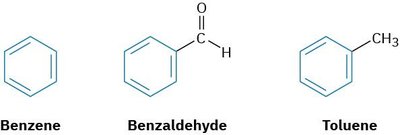
Aromatic compounds are a class of hydrocarbons characterized by their unique stability and electronic structure. The term "aromatic" originally referred to the fragrant nature of certain compounds, such as benzaldehyde (found in cherries and almonds), toluene (from balsam of Tolu), and benzene (from coal distillation).
Classification: Aromatic compounds are distinct from aliphatic hydrocarbons (alkanes, alkenes, alkynes).
Key Examples: Benzene, benzaldehyde, and toluene are prototypical aromatic compounds.
Structure: Aromatic compounds typically feature a conjugated ring system.
Historical Elucidation of Benzene Structure
The structure of benzene (C6H6) was a subject of scientific inquiry for over a century. Its 1:1 carbon-to-hydrogen ratio and low reactivity puzzled chemists.
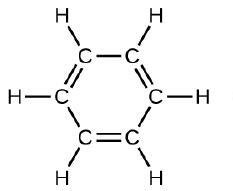
Kekulé's Model: In 1872, Kekulé proposed a cyclic structure with alternating single and double bonds, inspired by a vision.
Confirmation: The structure was confirmed in the 1930s.

Structure and Properties of Benzene
Benzene is a planar, hexagonal molecule with the formula C6H6. Each carbon is sp2-hybridized and bonded to a hydrogen atom.
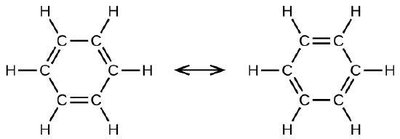
Bonding: The ring features alternating single and double bonds, forming a conjugated π system.
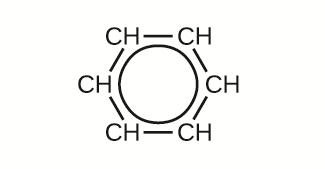
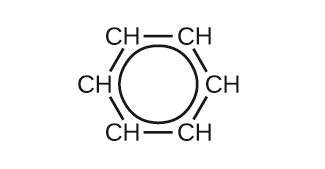
Delocalization: The π electrons are delocalized over the ring, resulting in resonance and unique stability.
Resonance and Aromaticity
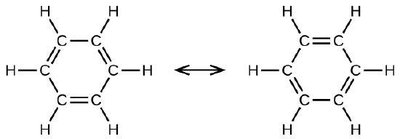
Benzene does not have fixed double bonds; instead, it is best represented as a resonance hybrid. This delocalization confers high symmetry and stability.
Resonance Structures: Two equivalent resonance forms exist, but the actual molecule is a hybrid.
Stability: Benzene is less reactive to addition reactions and prefers substitution reactions.
Physical Properties of Benzene
Benzene is a planar molecule with a C–C bond length of 1.39 Å, intermediate between single (1.54 Å) and double (1.34 Å) bonds. All bond angles are 120°, and all carbons are sp2-hybridized. 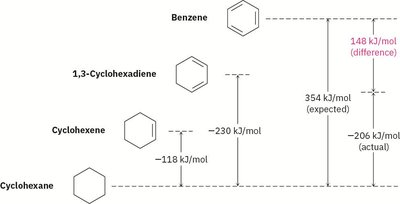
Resonance Energy and Stability
The extraordinary stability of benzene is quantified by its resonance energy, determined by comparing its heat of hydrogenation to similar compounds.
Resonance Energy: Benzene is 148 kJ/mol more stable than expected.
Molecular Orbitals in Benzene
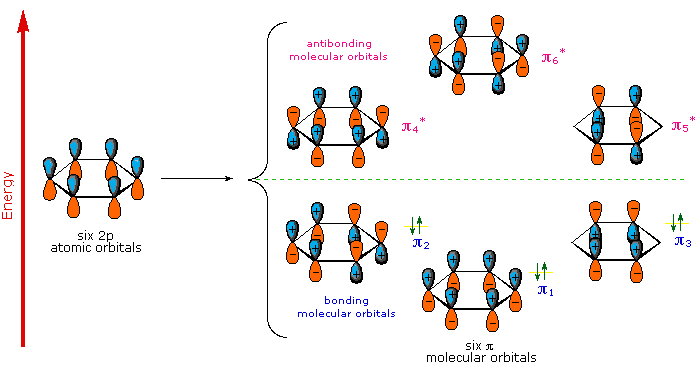
Benzene's six π electrons fill all bonding molecular orbitals, forming a closed shell and resulting in high stability. 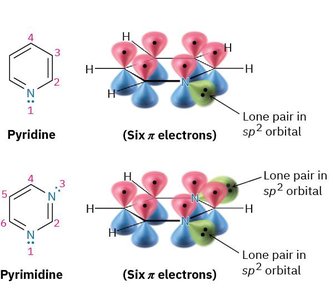
Aromaticity: Criteria and Hückel's Rule
Definition and Criteria
Aromaticity is a property that imparts extra stability to certain cyclic, conjugated molecules.
Cyclic: The molecule must be cyclic.
Planar: The molecule must be planar or nearly planar.
Conjugation: Every atom in the ring must have a p orbital (complete conjugation).
Orbital Overlap: All p orbitals must overlap.
Hückel's Rule: The molecule must have (4n + 2) π electrons, where n is an integer.
Hückel's Rule
Hückel's rule states that a molecule is aromatic if it has (4n + 2) π electrons in a conjugated, planar ring.
Application: Count π electrons, set equal to 4n + 2, solve for n.
Example: Benzene has 6 π electrons; 4n + 2 = 6, n = 1 → aromatic.
Practice: Aromaticity of Naphthalene
Naphthalene is aromatic as it meets all criteria and has 10 π electrons (n = 2). 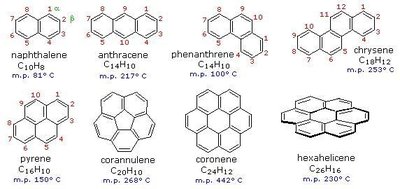
Heterocyclic Aromatic Compounds
Definition and Examples
Heterocyclic aromatic compounds contain atoms other than carbon (typically N, O, S) in the ring.
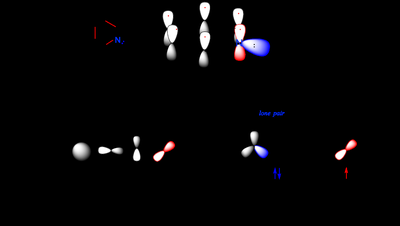
Criteria: Must have at least one lone pair in a p orbital and the heteroatom must be sp2-hybridized.
Examples: Pyridine, pyrrole, imidazole.
Antiaromaticity and Non-Aromatic Compounds
Antiaromatic Compounds
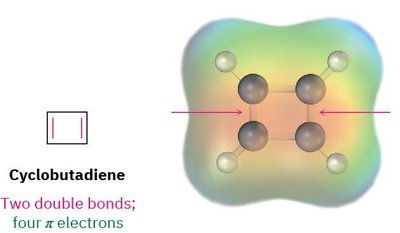
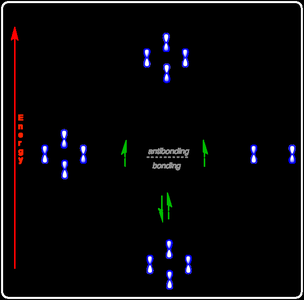
Antiaromatic compounds are cyclic, planar, fully conjugated, but have 4n π electrons, resulting in instability.
Example: Cyclobutadiene (4 π electrons, n = 1).
Non-Aromatic Compounds
Non-aromatic compounds may be cyclic and conjugated but lack full conjugation or planarity, preventing continuous π electron delocalization.
Example: Cyclic polyenes without aromaticity.
Aromatic Ions
Application of Hückel's Rule to Ions
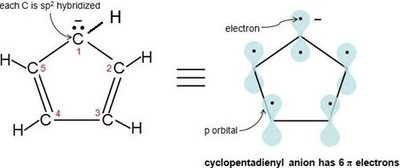
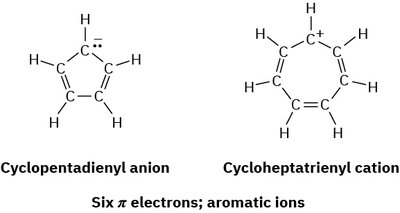
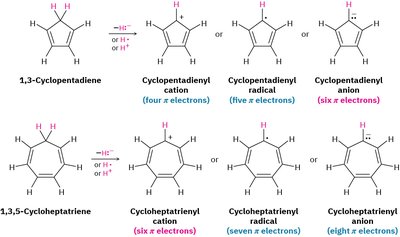
Aromaticity can also apply to ions if they have (4n + 2) π electrons.
Examples: Cyclopentadienyl anion (6 π electrons), cycloheptatrienyl cation (6 π electrons).
Stability: Aromatic ions are unusually stable and often more acidic.
Nomenclature of Aromatic Compounds
Monosubstituted Benzene Derivatives
Monosubstituted benzenes are named by stating the substituent followed by "benzene".
Examples: Chlorobenzene, nitrobenzene, methylbenzene (toluene).
Disubstituted Benzene Derivatives
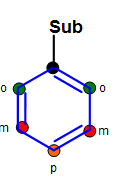
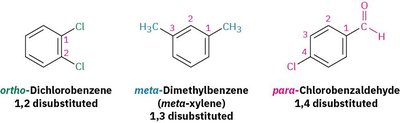
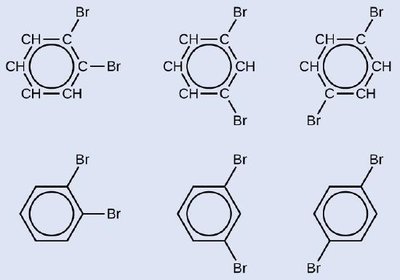
When two substituents are present, their positions are indicated by numbers or by the prefixes ortho (1,2), meta (1,3), and para (1,4).
Ortho: Adjacent substituents (1,2).
Meta: Separated by one carbon (1,3).
Para: Opposite sides (1,4).
Polysubstituted Benzene Derivatives
For more than two substituents, the ring is numbered to give the lowest possible numbers to the substituents.
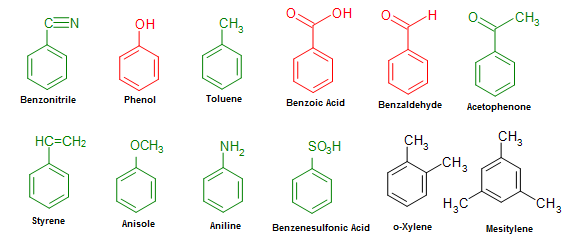
Special Names: Some derivatives have accepted common names (phenol, aniline, benzaldehyde, benzoic acid).
Phenyl and Benzyl Groups
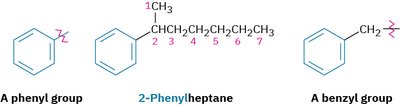
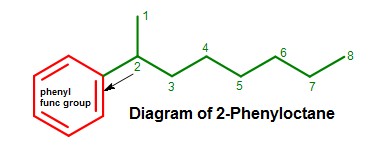
When benzene is attached to a longer carbon chain (6 or more carbons), it is named as a phenyl substituent.
Phenyl: –C6H5 group.
Benzyl: –CH2C6H5 group.
Practice and Applications
Isomerism in Aromatic Compounds
Example: Drawing three isomers of a six-carbon aromatic ring with two bromine atoms.
Naming Practice
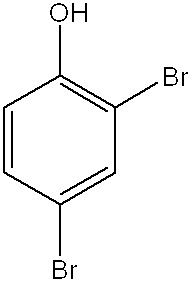
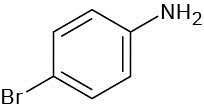
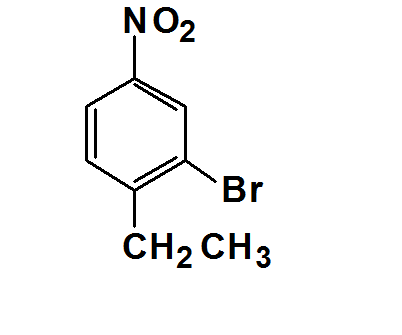
Example: 2,4-dibromophenol, 4-bromoaniline, 2-bromo-1-ethyl-4-nitrobenzene, 4-phenylheptane.
Summary Table: Aromaticity Classification
Compound | Aromatic | Antiaromatic | Non-aromatic |
|---|---|---|---|
Benzene | Yes | No | No |
Cyclobutadiene | No | Yes | No |
Cyclohexene | No | No | Yes |
Cyclopentadienyl anion | Yes | No | No |
Naphthalene | Yes | No | No |
Pyridine | Yes | No | No |
Pyrrole | Yes | No | No |
Additional info: Table entries inferred from academic context and examples in the notes.
