Back
BackCarbohydrate Structure and Reactions: Projections, Epimerization, Redox, and Chain Modification
Study Guide - Smart Notes
 Tailored notes based on your materials, expanded with key definitions, examples, and context.
Carbohydrate Structure and Representation
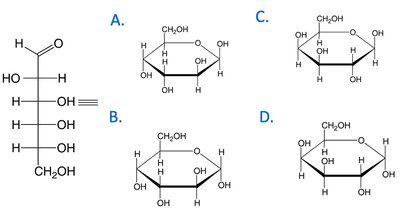
Fischer, Haworth, and Chair Projections
Carbohydrates can be represented in several ways to illustrate their stereochemistry and ring formation. The Fischer projection is a linear representation, while the Haworth projection and chair structure depict cyclic forms, which are crucial for understanding their chemical behavior.
Fischer Projection: Shows the linear form of sugars, with vertical lines representing carbon chains and horizontal lines for substituents.
Haworth Projection: Illustrates the cyclic (ring) form of sugars, typically for five- or six-membered rings.
Chair Structure: Used for six-membered rings (pyranoses), showing the spatial arrangement of substituents for stability.
Anomers: Isomers differing at the anomeric carbon (α or β), formed during ring closure.
All substituents equatorial: In glucose, the most stable chair form has all bulky groups in equatorial positions.
Example: Drawing the furanose form of fructose in linear and cyclic representations.
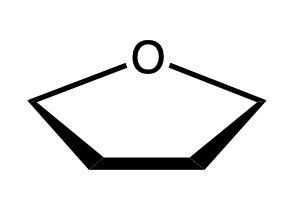
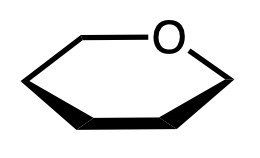
Additional info: Haworth projections are used to distinguish α and β anomers, with the orientation of the anomeric hydroxyl group (down for α, up for β).
Cyclic Representations and Glycoside Formation
Hemiacetals, Acetals, and Glycosides
Monosaccharides cyclize to form hemiacetals (aldoses) or hemiketals (ketoses). These can react further to form acetals (glycosides), which are important in carbohydrate chemistry.
Hemiacetal: Formed when an alcohol reacts with an aldehyde group within the same molecule.
Acetal: Formed when a second alcohol reacts with the hemiacetal, creating a glycosidic bond.
Glycoside: The product of acetal formation, important for carbohydrate storage and structure.
Equilibrium: Hemiacetals are in equilibrium with the open-chain form; acetals are not.
Protecting groups: Acetals can act as protecting groups in synthetic chemistry.
Example: Formation of glycosides from glucose.
Additional info: Glycoside formation is used to modify carbohydrates for biological and synthetic purposes.
Epimerization and Anomerization
Epimers and Anomers
Epimerization is the process of interconverting sugars that differ at a single chiral center. Anomers are a special type of epimer, differing at the anomeric carbon formed during ring closure.
Epimer: Diastereomers differing at exactly one chiral center.
Anomer: Epimers at the anomeric carbon (α or β configuration).
Mechanism: Epimerization can occur via base-catalyzed reactions, interconverting sugars.
Example: Interconversion between glucose and mannose.
Additional info: Epimerization is important in metabolism and synthetic carbohydrate chemistry.
Reduction and Oxidation of Carbohydrates
Redox Reactions in Monosaccharides
Carbohydrates can undergo reduction and oxidation, altering their functional groups and properties. These reactions are used to identify and modify sugars.
Reduction: Aldoses can be reduced to alditols using agents like NaBH4.
Oxidation: Aldoses can be oxidized to carboxylic acids using Br2 (selective for aldehydes) or HNO3 (strong oxidant, oxidizes both aldehyde and primary alcohol).
Reducing sugars: Sugars with free aldehyde or ketone groups that can be oxidized.
Non-reducing sugars: Sugars where the anomeric carbon is involved in a glycosidic bond, preventing oxidation.
Example: Oxidation of glucose to gluconic acid with Br2, and to glucaric acid with HNO3.
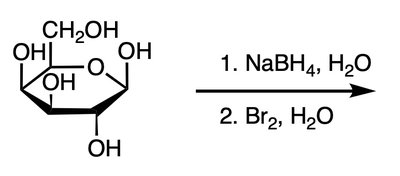
Additional info: Redox reactions are used in analytical chemistry to distinguish reducing from non-reducing sugars.
Chain-Lengthening and Shortening of Carbohydrates
Kiliani-Fischer Synthesis and Chain Modification
Carbohydrate chains can be lengthened or shortened to produce different sugars. The Kiliani-Fischer synthesis is a classical method for chain-lengthening, while other methods can shorten the chain.
Kiliani-Fischer Synthesis: Adds a carbon to the chain, converting an aldose to a higher aldose.
Chain Shortening: Methods such as oxidative cleavage can remove carbons from the chain.
Applications: Used to synthesize rare sugars and study carbohydrate metabolism.
Example: Lengthening glucose to produce mannose or other higher aldoses.
Additional info: Chain modification is important in both synthetic organic chemistry and biochemistry.
Summary Table: Carbohydrate Redox and Chain Modification
Reaction | Reagent | Product | Notes |
|---|---|---|---|
Reduction | NaBH4, H2O | Alditol | Reduces aldehyde to alcohol |
Oxidation (selective) | Br2, H2O | Carboxylic acid (aldose) | Oxidizes aldehyde only |
Oxidation (strong) | HNO3, H2O, heat | Dicarboxylic acid | Oxidizes both aldehyde and primary alcohol |
Chain Lengthening | Kiliani-Fischer | Higher aldose | Adds one carbon |
Chain Shortening | Oxidative cleavage | Lower aldose | Removes one carbon |