 Back
BackCarbohydrates: Structure, Classification, and Biological Significance
Study Guide - Smart Notes
 Tailored notes based on your materials, expanded with key definitions, examples, and context.
Carbohydrates: Structure, Classification, and Biological Significance
Biological Significance of Carbohydrates
Carbohydrates are the most abundant class of naturally occurring biomolecules, constituting about half of the world’s biomass (dry weight). They are primarily synthesized by plants via photosynthesis and serve as a major energy source for living organisms. In addition to their role in energy storage, carbohydrates also have important structural and functional roles in biological systems.
Energy Storage: Carbohydrates are produced by plants and consumed by animals for energy.
Structural Roles: Examples include cellulose in plants and chitin in arthropods.
Pharmaceutical Importance: Some drugs, such as salicin and adriamycin, contain carbohydrate components.
Chemical Composition: Carbohydrates are organic compounds composed mainly of carbon, hydrogen, and oxygen, often with the empirical formula Cn(H2O)n.
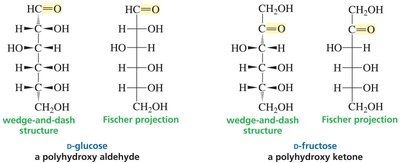
Functional Groups: Simple carbohydrates are polyhydroxyaldehydes or polyhydroxyketones.
Monosaccharides
Definition and Classification
Monosaccharides are the simplest carbohydrates that cannot be hydrolyzed into smaller carbohydrates. They are the building blocks of more complex carbohydrates and can be classified by the number of carbon atoms and the type of carbonyl group present.
Number of Carbons: Named with a prefix (triose, tetrose, pentose, hexose, etc.) and the suffix -ose.
Type of Carbonyl Group:
Aldoses: Contain an aldehyde group.
Ketoses: Contain a ketone group (usually at C-2).
Examples: Glyceraldehyde (aldotriose), dihydroxyacetone (ketotriose).
Representations of Monosaccharides
Monosaccharides are often depicted using Fischer projections, where the most oxidized carbon is placed at the top. Horizontal bonds project out of the plane, while vertical bonds project behind the plane.
D/L System of Nomenclature
The D/L system, established by Emil Fischer, is based on the configuration of glyceraldehyde. In Fischer projections:
D-sugar: The OH group on the stereocenter furthest from the carbonyl is on the right.
L-sugar: The OH group on the stereocenter furthest from the carbonyl is on the left.
Enantiomers: D- and L- forms of the same sugar are mirror images (enantiomers).
Optical Activity: The D/L designation does not predict the direction of optical rotation except for glyceraldehyde.
Epimerization and Isomerization
Epimers are sugars that differ in configuration at only one stereocenter. Epimerization is the process of converting one epimer to another. Isomerization involves the rearrangement between aldoses and ketoses via enediol intermediates.
Oxidation and Reduction Reactions
Carbohydrates undergo typical redox reactions due to their carbonyl and alcohol groups:
Oxidation to Aldonic Acids: The aldehyde group is oxidized to a carboxylic acid (e.g., D-gluconic acid).
Oxidation to Aldaric Acids: Both the aldehyde and primary alcohol are oxidized (e.g., D-glucaric acid).
Oxidation to Uronic Acids: Only the primary alcohol is oxidized (e.g., D-glucuronic acid).
Reduction to Alditols: Carbonyl groups are reduced to alcohols (e.g., D-glucitol/sorbitol).
Formation of Hemiacetals and Cyclic Structures
Monosaccharides can cyclize via intramolecular hemiacetal formation, resulting in five-membered (furanose) or six-membered (pyranose) rings. The new stereocenter formed is called the anomeric carbon, giving rise to α and β anomers (diastereomers).
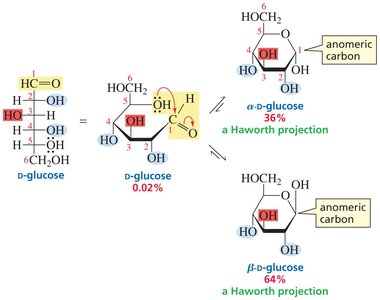
α-anomer: OH on the anomeric carbon is trans to the terminal CH2OH group.
β-anomer: OH on the anomeric carbon is cis to the terminal CH2OH group.
Mutarotation
Mutarotation is the interconversion between α and β anomers in aqueous solution, resulting in an equilibrium mixture with characteristic optical rotation values.
Formation of Glycosides
Hemiacetals can react with alcohols to form glycosides (acetals of sugars), which are stable in neutral and basic conditions but can be hydrolyzed in acid. Glycosidic linkages are important in the structure of disaccharides and polysaccharides. N-glycosides are formed when the anomeric carbon reacts with an amine, as seen in nucleosides.
Disaccharides
Structure and Properties
Disaccharides are composed of two monosaccharides joined by a glycosidic linkage. The properties of disaccharides depend on the nature of the glycosidic bond and whether a hemiacetal group is present.
Maltose: Two D-glucose units linked by an α(1→4) bond; reducing sugar.
Cellobiose: Two D-glucose units linked by a β(1→4) bond; reducing sugar.
Lactose: D-galactose and D-glucose linked by a β(1→4) bond; reducing sugar. Hydrolyzed by the enzyme lactase.
Sucrose: D-glucose and D-fructose linked by an α(1→2) and β(2→1) bond; non-reducing sugar, does not mutarotate.
Polysaccharides
Starch
Starch is the primary energy storage polysaccharide in plants and consists of two types: amylose and amylopectin, both polymers of D-glucose.
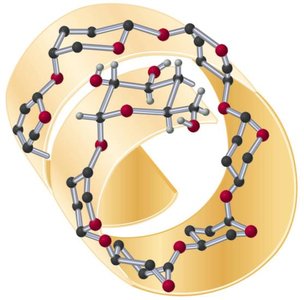
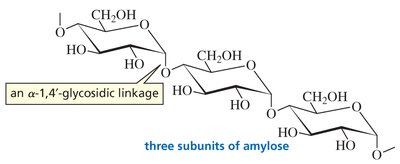
Amylose: Unbranched chains of D-glucose units joined by α(1→4) glycosidic linkages, forming a helical structure.
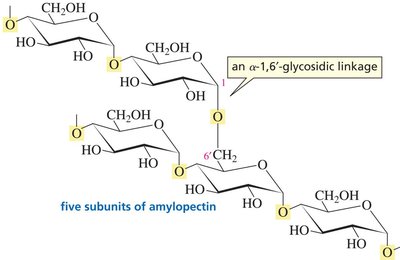
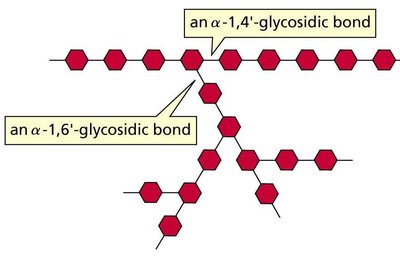
Amylopectin: Branched polymer with α(1→4) linkages and α(1→6) branches every 24–30 units.
Glycogen
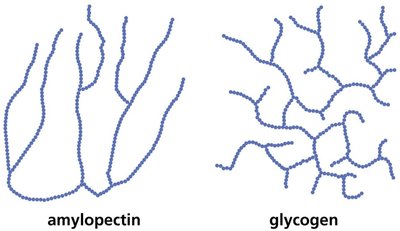
Glycogen is the main carbohydrate storage molecule in animals, similar to amylopectin but more highly branched (α(1→4) and α(1→6) linkages).
Cellulose
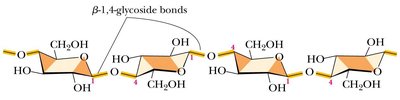
Cellulose is a structural polysaccharide in plants, consisting of linear chains of D-glucose linked by β(1→4) glycosidic bonds. The β configuration allows for straight chains and extensive hydrogen bonding, making cellulose insoluble in water.
Other Interesting Compounds
Vitamin C (L-Ascorbic Acid)
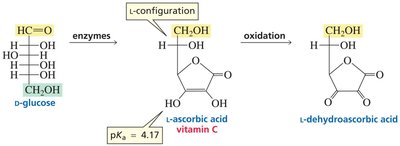
Vitamin C is an essential antioxidant vitamin derived biosynthetically from D-glucose in organisms capable of its synthesis. It is required in the human diet due to the inability to synthesize it endogenously.
Synthetic Sweeteners and Sugar Substitutes
Synthetic sweeteners are compounds that elicit a sweet taste response but may not structurally resemble carbohydrates. They are often much sweeter than sucrose and are used as sugar substitutes in various food products. Examples include aspartame, sucralose, saccharin, acesulfame potassium, and cyclamate.
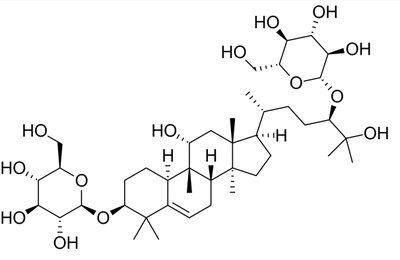
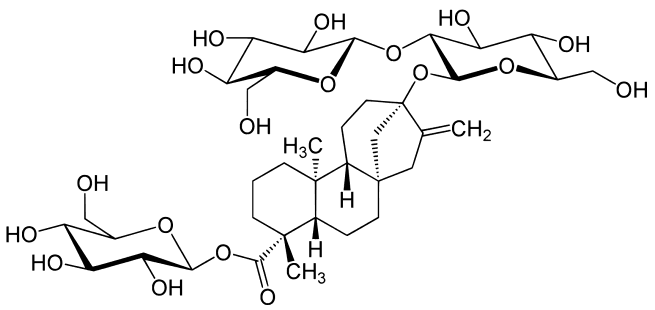
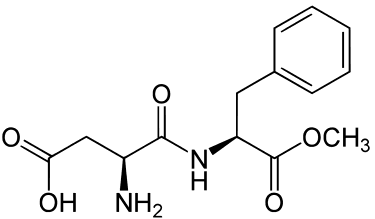
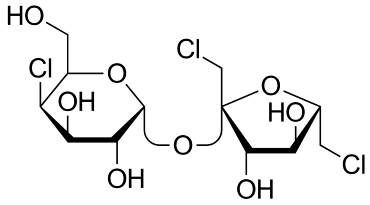
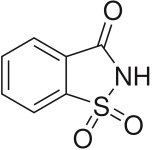
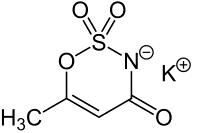
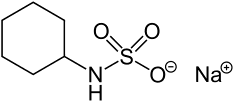
Additional info: The structures of sweeteners and their relative sweetness compared to sucrose are important for understanding their use in food chemistry and health considerations.
