 Back
BackChapter 1: Structures, Bonding, and Hybridization in Organic Chemistry
Study Guide - Smart Notes
 Tailored notes based on your materials, expanded with key definitions, examples, and context.
Why Study Organic Chemistry?
Organic chemistry is the study of the structure, properties, and reactions of carbon-containing compounds. Understanding organic chemistry allows us to explain molecular properties and design molecules with desired characteristics, which is essential in fields such as pharmaceuticals, materials science, and biochemistry.
Bonds: The Foundation of Molecular Structure
Ionic and Covalent Bonds
Bonds are the joining of two atoms through electron transfer or sharing. The two main types of bonds are:
Ionic bonds: Formed by the transfer of electrons from one atom to another, resulting in oppositely charged ions that attract each other.
Covalent bonds: Formed by the sharing of electrons between atoms.
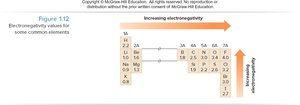
Electronegativity differences between atoms determine the ionic character of a bond.
Atomic Structure and Electron Configuration
Total Electrons vs. Valence Electrons
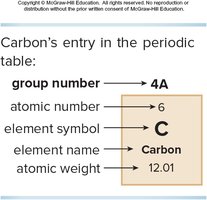
The atomic number of an element equals the number of protons and, in a neutral atom, the number of electrons. Electron configuration describes the arrangement of electrons in atomic orbitals. Valence electrons are those in the highest principal energy level and are responsible for bonding.
The Octet Rule
Atoms tend to achieve a filled valence shell, which for most main-group elements (C, N, O, halides) means 8 electrons (the octet rule). Hydrogen follows the duet rule (2 electrons). Covalent bonds involve the sharing of 2 electrons.
Lewis Structures
Drawing Lewis Structures
Lewis structures are diagrams that show the bonding between atoms and the lone pairs of electrons in a molecule. The steps for drawing Lewis structures are:
Count valence electrons using the group number from the periodic table.
Arrange atoms (hydrogens at the edges, larger atoms in the center).
Draw single bonds between atoms.
Allocate remaining valence electrons as lone pairs, then as additional bonds to satisfy the octet rule.
Rules of Thumb and Exceptions
Neutral atoms have typical bonding patterns (e.g., C forms 4 bonds, N forms 3, O forms 2, H forms 1).
Some molecules are exceptions to the octet rule (e.g., radicals, electron-deficient compounds, expanded octets).
Formal Charge
Formal charge is the charge assigned to individual atoms in a Lewis structure, not the overall molecule. It is calculated as:
The sum of all formal charges in a molecule equals the net charge of the molecule.
Isomerism
Isomeric Compounds
Isomers are compounds with the same molecular formula but different structures. Constitutional isomers differ in the connectivity of their atoms.
Resonance Structures
Some molecules can be represented by more than one valid Lewis structure, called resonance structures. These structures differ only in the arrangement of electrons, not atoms. The real molecule is a resonance hybrid, a blend of all resonance structures.
Resonance structures are not isomers.
They are not in equilibrium; the molecule exists as a hybrid.
Curved arrows are used to show electron movement between resonance forms.
Guidelines for good resonance structures:
Maximize the number of bonds and minimize charges.
Full octets are preferred.
Negative charges should be on more electronegative atoms.
Molecular Geometry and VSEPR Theory
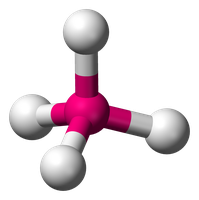
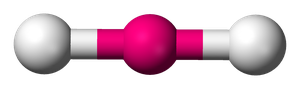
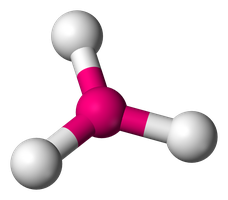
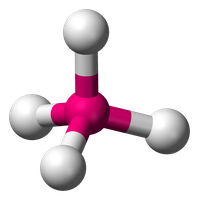
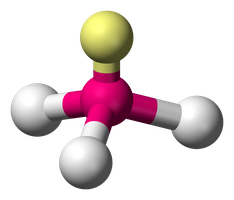
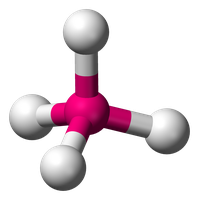
Molecules are three-dimensional. Their shapes are determined by the repulsion between electron pairs (Valence Shell Electron Pair Repulsion, VSEPR theory). The steric number (number of atoms bonded + number of lone pairs) determines geometry:
Steric number 2: Linear
Steric number 3: Trigonal planar
Steric number 4: Tetrahedral
Bonding and Valence Bond Theory
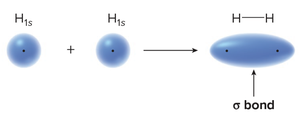
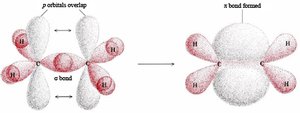
Atomic orbitals combine to form molecular orbitals. Sigma (σ) bonds are formed by head-on overlap of orbitals, while pi (π) bonds are formed by side-on overlap of p orbitals.
Hybridization
Atomic orbitals can hybridize to form new, equivalent orbitals for bonding:
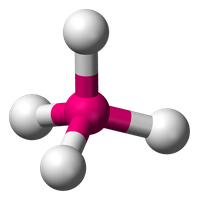
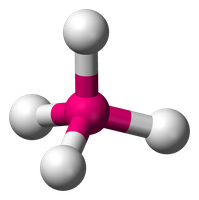
sp3 hybridization: 1 s and 3 p orbitals combine to form 4 equivalent sp3 orbitals (tetrahedral geometry).
sp2 hybridization: 1 s and 2 p orbitals combine to form 3 equivalent sp2 orbitals (trigonal planar geometry); the remaining p orbital forms a π bond.
sp hybridization: 1 s and 1 p orbital combine to form 2 equivalent sp orbitals (linear geometry); two p orbitals remain for π bonding.

Bond Length and Bond Strength
Bond strength increases and bond length decreases with increasing bond order (single, double, triple). Bonds with more s character (e.g., sp) are shorter and stronger than those with more p character (e.g., sp3).
Bond Polarity and Molecular Polarity
Bond polarity arises from differences in electronegativity between bonded atoms. Polar covalent bonds have a partial positive and partial negative end. The overall polarity of a molecule depends on the vector sum of all bond dipoles (the molecular dipole moment).
Drawing Conventions for Organic Molecules
Lewis structures: Show all atoms, bonds, and lone pairs.
Condensed structures: Show all atoms, but omit bond lines and lone pairs; repeat units are abbreviated.
Skeletal structures: Bonds are drawn as zig-zags; each vertex or end represents a carbon atom. Hydrogens attached to carbons are usually omitted, but heteroatoms and their hydrogens are shown. Lone pairs are not shown.
Review and Key Concepts
Understand the types of chemical bonds and how to draw Lewis structures.
Assign formal charges and recognize resonance structures.
Apply VSEPR theory to predict molecular geometry.
Describe hybridization and its effect on bond strength and geometry.
Interpret bond polarity and molecular dipole moments.
Use standard conventions for drawing organic molecules.
