 Back
BackChapter 4: The Study of Chemical Reactions – Thermodynamics, Kinetics, and Reaction Mechanisms
Study Guide - Smart Notes
 Tailored notes based on your materials, expanded with key definitions, examples, and context.
The Study of Chemical Reactions
Introduction to Chemical Reactions
Chemical reactions involve the transformation of reactants into products. Understanding these processes requires knowledge of thermodynamics (energy changes), kinetics (reaction rates), and mechanisms (stepwise pathways).
Thermodynamics: Examines energy changes during chemical and physical transformations.
Kinetics: Studies the rates at which reactions occur.
Mechanism: Describes the step-by-step sequence of events in a reaction.
Free-Radical Chain Reactions
Chlorination of Methane
The chlorination of methane is a classic example of a free-radical chain reaction, requiring heat or light for initiation. The process is most efficient with blue light, which is absorbed by chlorine gas, and proceeds via a chain mechanism.
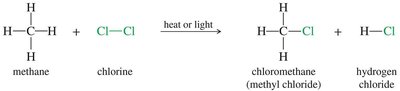
Mechanism of Free-Radical Chain Reaction
Initiation: Generates a radical intermediate, typically by homolytic cleavage of a bond.
Propagation: The radical intermediate reacts with a stable molecule to produce another radical and a product.
Termination: Two radicals combine to form a stable, non-radical product, ending the chain.
Initiation Step: Formation of Chlorine Atom
Chlorine molecules split homolytically into two chlorine atoms (free radicals) upon absorption of a photon.

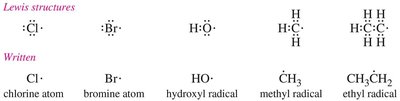
Lewis Structures of Free Radicals
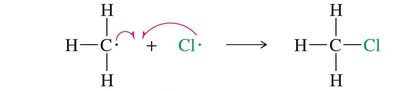
Free radicals are species with unpaired electrons. Halogen atoms (e.g., Cl·, Br·) and organic radicals (e.g., CH3·) are common examples.
Propagation Steps
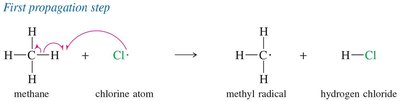
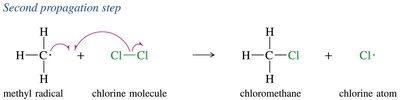
Propagation involves two main steps:
Step 1: Chlorine atom abstracts a hydrogen from methane, forming HCl and a methyl radical.
Step 2: Methyl radical reacts with another chlorine molecule, forming chloromethane and regenerating a chlorine atom.
Termination Steps
Termination occurs when two radicals combine, removing reactive intermediates from the system. This can also occur via reaction with contaminants or vessel walls.
Thermodynamics of Chemical Reactions
Equilibrium Constant and Free Energy Change
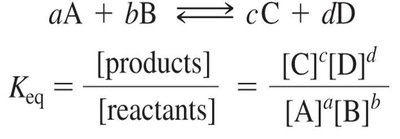
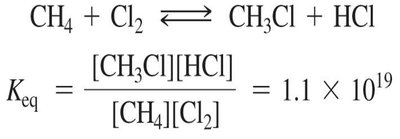
The equilibrium constant (Keq) expresses the ratio of product to reactant concentrations at equilibrium. The standard free energy change (ΔG°) determines reaction spontaneity:
ΔG° < 0: Reaction is spontaneous and product-favored.
ΔG° > 0: Reaction is nonspontaneous and reactant-favored.
Relationship Between ΔG° and Product Composition
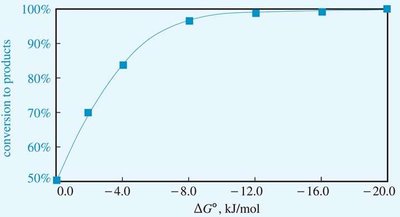
The extent of reaction completion depends on ΔG°. More negative ΔG° values correspond to higher product yields.
Enthalpy and Entropy
Enthalpy (ΔH°): Heat released or absorbed at standard conditions. Exothermic reactions (ΔH° < 0) release heat; endothermic (ΔH° > 0) absorb heat.
Entropy (ΔS°): Change in disorder or randomness. Spontaneous reactions tend to increase entropy and decrease enthalpy.
Gibbs Free Energy Equation:
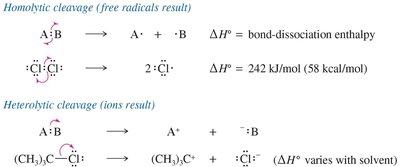
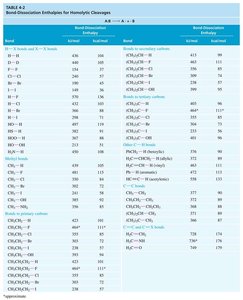
Bond-Dissociation Enthalpy (BDE)
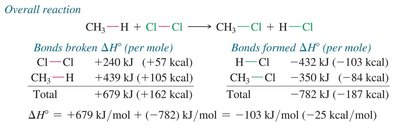
BDE is the energy required to break a bond homolytically. It is used to estimate reaction enthalpy changes:
Homolytic cleavage: Each atom gets one electron.
Heterolytic cleavage: One atom gets both electrons.
Kinetics of Chemical Reactions
Reaction Rate and Rate Law
The rate of a reaction measures how quickly reactants are converted to products. The rate law relates the rate to reactant concentrations:
General form:
Order of reaction: sum of exponents a and b.
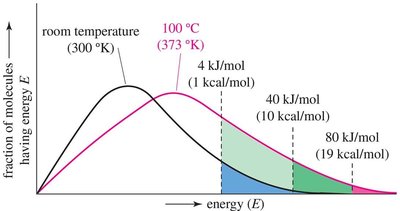
Activation Energy and Temperature Dependence
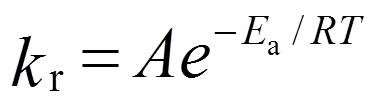
The rate constant (kr) depends on activation energy (Ea) and temperature, described by the Arrhenius equation:
Energy Diagrams and Reaction Mechanisms
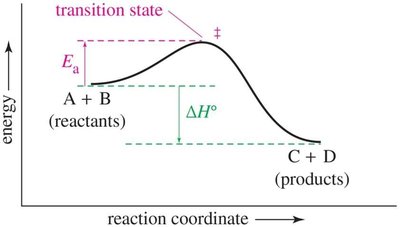
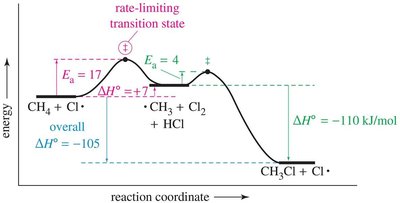
Energy diagrams illustrate the energy changes during a reaction. The highest point is the transition state, and the difference between reactants and the transition state is the activation energy.
Comparing Halogen Reactivity
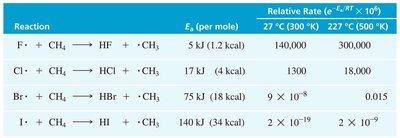
Different halogens react with alkanes at different rates due to varying activation energies.
Stability of Free Radicals and Carbocations
Stability of Free Radicals
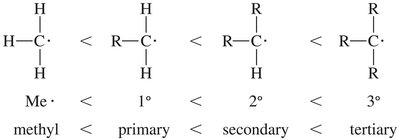
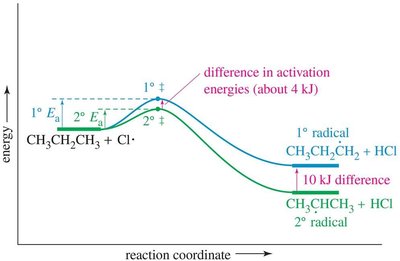
Free radical stability increases with substitution: tertiary > secondary > primary > methyl. More substituted radicals are stabilized by hyperconjugation and inductive effects.
Stability of Carbocations
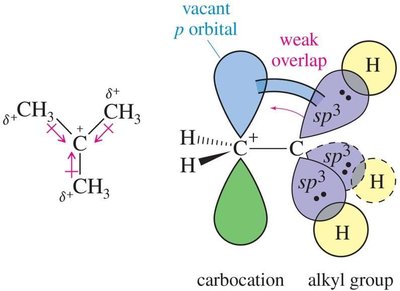
Carbocations are stabilized by alkyl groups via inductive effects and hyperconjugation. Resonance can further stabilize unsaturated carbocations.
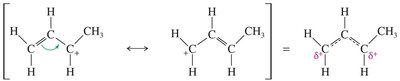
Reactive Intermediates
Types of Reactive Intermediates
Reactive intermediates are short-lived species formed during reactions. Major types include:
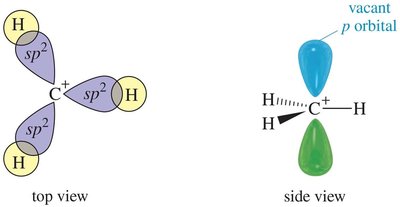
Carbocations: Positively charged, sp2 hybridized carbon with a vacant p orbital.
Free Radicals: Neutral, sp2 hybridized carbon with one unpaired electron.
Carbanions: Negatively charged, sp3 hybridized carbon with a lone pair.
Carbenes: Neutral, sp2 hybridized carbon with a lone pair and a vacant p orbital.
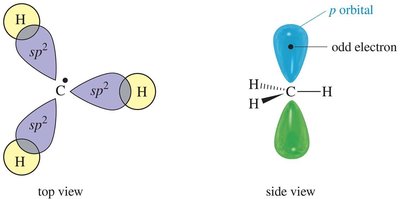
Stability of Carbanions
Carbanions are destabilized by alkyl groups; their stability order is the reverse of carbocations and radicals: methyl > primary > secondary > tertiary.
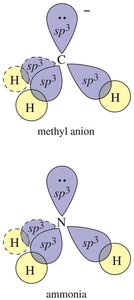
Basicity of Carbanions
Carbanions are strong bases and nucleophiles, capable of deprotonating ammonia.
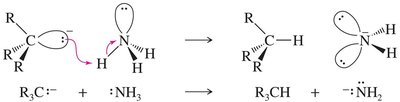
Carbenes
Carbenes are neutral species with both nucleophilic and electrophilic character due to their lone pair and vacant p orbital. They are important intermediates in organic synthesis.
Summary Table: Bond-Dissociation Enthalpies for Homolytic Cleavages
Bond | BDE (kJ/mol) | BDE (kcal/mol) |
|---|---|---|
H–H | 436 | 104 |
H–Cl | 432 | 103 |
Cl–Cl | 243 | 58 |
CH3–H | 439 | 105 |
CH3–Cl | 350 | 84 |
Key Equations
Gibbs Free Energy:
Equilibrium Constant:
Arrhenius Equation:
