 Back
BackCHEM 130: Introduction to Organic Chemistry – Structured Study Notes
Study Guide - Smart Notes
 Tailored notes based on your materials, expanded with key definitions, examples, and context.
Introduction to Organic Chemistry
Overview and Importance
Organic chemistry is the branch of chemistry that studies carbon compounds and their reactions. Carbon compounds are central to all living things and are found in a wide variety of substances, including drugs, vitamins, plastics, fibers, carbohydrates, proteins, and fats. Organic chemists determine molecular structures, study reactions, and develop synthetic procedures, profoundly impacting modern life through the development of materials and chemicals essential for health, agriculture, and industry.
Catenation: Carbon atoms bond covalently to form chains and rings, a phenomenon called catenation.
Elements in Organic Molecules: Most organic molecules contain C and H, and sometimes O, S, and N.
Applications: Organic chemistry knowledge is crucial for drug development, agricultural chemicals, and materials science.
Electronic Configuration and Hybridization of Carbon
Electronic Configuration of Carbon
Carbon has six electrons: two in the first shell and four in the second shell. The four valence electrons allow carbon to form four covalent bonds, giving it a valency of four.
Electronic configuration:
Orbital shapes: The s orbital is spherical; p orbitals are dumbbell-shaped and oriented along x, y, and z axes.
Bonding: Carbon forms strong covalent bonds, contributing to the stability and diversity of organic compounds.
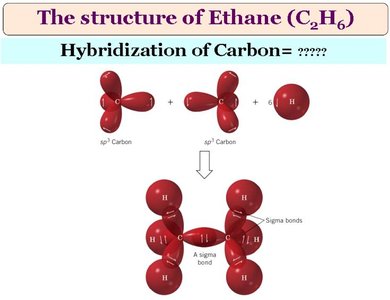
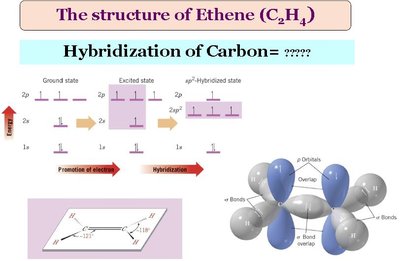
Hybridization of Carbon: sp3, sp2, sp
Hybridization is the mixing of atomic orbitals to form new hybrid orbitals suitable for bonding. Carbon can undergo three types of hybridization, which determine the geometry and bonding in organic molecules.
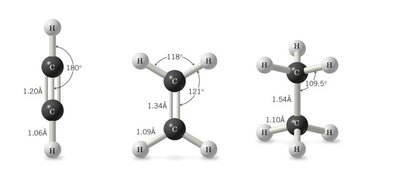
sp3 Hybridization: Four equivalent orbitals form a tetrahedral geometry with bond angles of 109.5° (e.g., alkanes).
sp2 Hybridization: Three equivalent orbitals form a trigonal planar geometry with bond angles of 120° (e.g., alkenes).
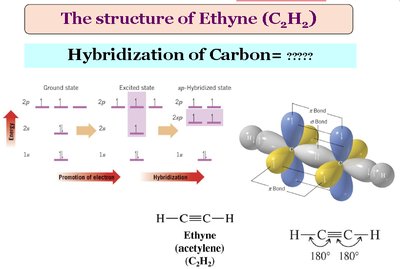
sp Hybridization: Two equivalent orbitals form a linear geometry with bond angles of 180° (e.g., alkynes).
Elemental Analysis (Qualitative)
Determining Molecular Formula
Elemental analysis identifies the elements present in organic compounds and determines their ratios. The empirical formula gives the simplest whole-number ratio, while the molecular formula provides the exact number of atoms.
Steps: Calculate moles of each element, determine ratios, and use molecular weight to find the molecular formula.
Example: For a compound with 42.9% C, 2.4% H, 16.7% N, and 38.1% O, and molecular weight 168 g/mol, the empirical formula is C3H2NO2, and the molecular formula is C6H4N2O4.
Hydrocarbons: Classification and Structure
Types of Hydrocarbons
Hydrocarbons are compounds containing only carbon and hydrogen. They are classified as aliphatic (alkanes, alkenes, alkynes, and cyclic analogues) or aromatic (benzene and derivatives).
Aliphatic hydrocarbons: Open-chain or cyclic structures; include saturated (alkanes) and unsaturated (alkenes, alkynes).
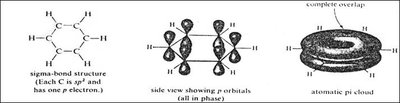
Aromatic hydrocarbons: Contain benzene rings; highly stable due to delocalized pi electrons.
Alkanes
Structure, Nomenclature, and Isomerism
Alkanes are saturated hydrocarbons with the general formula CnH2n+2 (acyclic) or CnH2n (cyclic). All carbons are sp3 hybridized, forming a homologous series.
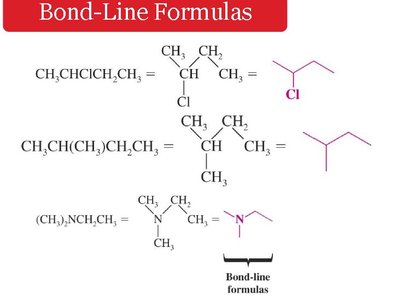
Nomenclature: Use IUPAC rules to name the longest chain as the parent, with substituents named and numbered for lowest possible locants.
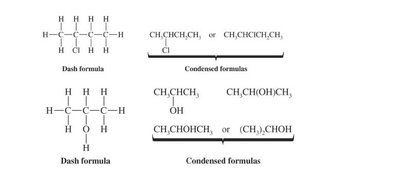
Isomerism: Structural isomers have the same molecular formula but different atom arrangements (e.g., n-butane and 2-methylpropane).
Physical Properties
State: C1-C4 are gases, C5-C17 are liquids, C18+ are solids at room temperature.
Density: Less dense than water.
Solubility: Nonpolar, soluble in nonpolar solvents, insoluble in water.
Melting/Boiling Points: Increase with molecular mass; branching lowers boiling point but can raise melting point due to symmetry.
Chemical Reactions
Combustion:
Halogenation: Alkanes react with halogens to form alkyl halides via free radical substitution.
Cracking: Pyrolysis of large alkanes produces smaller alkanes and alkenes.
Intermolecular Forces in Organic Molecules
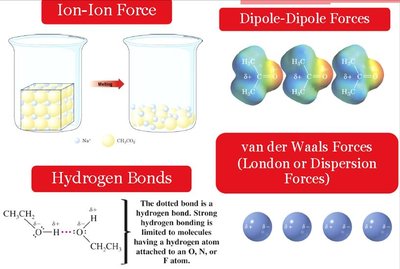
Van der Waals forces: Present in all organic molecules; strength increases with molecular size.
Hydrogen bonding: Occurs in molecules with N, O, or F attached to H.
Dipole-dipole and ion-ion forces: Present in polar and ionic compounds.
Alkenes
Structure, Nomenclature, and Isomerism
Alkenes are unsaturated hydrocarbons with the general formula CnH2n. The double bond consists of one sigma and one pi bond, leading to rigidity and lack of free rotation.
Nomenclature: Replace -ane with -ene; number the chain to give the double bond the lowest locant.
Geometric Isomerism: Cis-trans and E-Z isomerism arise from restricted rotation around the double bond.
Physical Properties
State: C2-C4 are gases, C5-C15 are liquids, >C15 are solids.
Boiling/Melting Points: Increase with molecular mass; trans isomers have higher melting points than cis isomers.
Solubility: Insoluble in water, more soluble in polar solvents than alkanes.
Chemical Reactions
Addition reactions: Hydrogenation, halogenation, hydration, hydroboration, and polymerization.
Markovnikov's Rule: In addition of HX to asymmetric alkenes, H adds to the carbon with more hydrogens.
Qualitative Tests: Bromine water and Baeyer's test (KMnO4) decolorization indicate unsaturation.
Alkynes
Structure, Nomenclature, and Isomerism
Alkynes are unsaturated hydrocarbons with the general formula CnH2n-2. They contain a carbon-carbon triple bond (one sigma and two pi bonds), resulting in linear geometry.
Nomenclature: Replace -ane with -yne; number the chain to give the triple bond the lowest locant.
Isomerism: Position, structural, and functional isomerism; no geometric isomerism.
Physical Properties
State: C2-C4 are gases, C5-C13 are liquids, >C13 are solids.
Boiling/Melting Points: Increase with molecular mass.
Solubility: Sparingly soluble in water, readily soluble in organic solvents.
Chemical Reactions
Addition reactions: Hydrogenation, halogenation, hydration (keto-enol tautomerism).
Qualitative Tests: Bromine water and Baeyer's test; ammoniacal silver nitrate distinguishes terminal alkynes.
Functional Groups in Organic Chemistry
Major Functional Groups
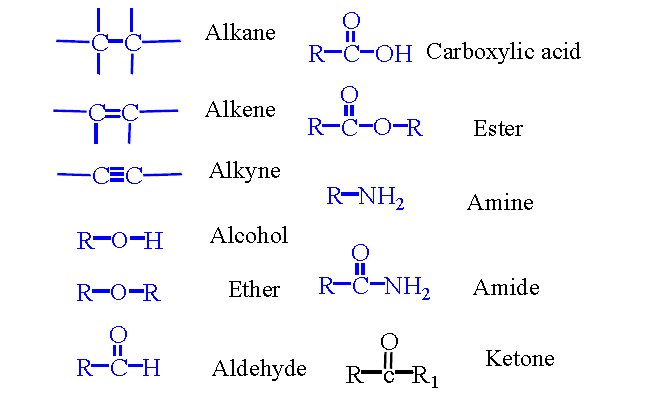
Functional groups are atoms or groups of atoms responsible for the characteristic reactivity and physical properties of organic compounds. The main functional groups include alcohols, carboxylic acids, ketones, aldehydes, alkyl halides, amines, phenols, and ethers.
Alcohols (ROH): Classified as primary, secondary, or tertiary based on the carbon bearing the -OH group.
Carboxylic acids (RCOOH): Always terminal; named by replacing -ane with -oic acid.
Ketones (RCOR): Carbonyl group within the chain; named by replacing -e with -one.
Aldehydes (RCHO): Carbonyl group at the end; named by replacing -e with -al.
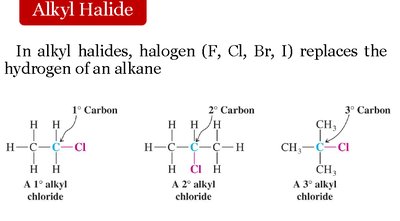
Alkyl halides (R-X): Halogen replaces hydrogen in an alkane.
Amines (RNH2): Classified as primary, secondary, or tertiary based on the number of alkyl groups attached to nitrogen.
Phenols and ethers: Phenols have -OH attached to an aromatic ring; ethers have R-O-R structure.
Qualitative Analysis of Functional Groups
Alcohols: Lucas test distinguishes 1°, 2°, and 3° alcohols; iodoform test for methyl alcohols.
Carboxylic acids: React with sodium hydrogen carbonate to produce CO2 and a precipitate.
Ketones: Iodoform test for methyl ketones; forms yellow precipitate.
Aldehydes: Fehling’s and Tollens’ tests; positive results indicate aldehydes.
Amines: Classified by the number of alkyl groups attached to nitrogen; systematic nomenclature uses the suffix -amine.
Summary Table: Hybridization and Bond Properties
Hybridization | Geometry | Bond Angle | Sigma Bonds | Pi Bonds |
|---|---|---|---|---|
sp3 | Tetrahedral | 109.5° | 1 | 0 |
sp2 | Trigonal planar | 120° | 1 | 1 |
sp | Linear | 180° | 1 | 2 |
Further Reading
Bruce P. Y.: Organic Chemistry. 5th Ed.
Carey, F: Organic Chemistry. 7th Ed.
Wade J. R. Organic Chemistry. 4th Ed.
Morrison and Boyd: Organic Chemistry. 6th Ed.
Solomons: Organic Chemistry. 4th Ed.
John McMurray: Fundamentals of Organic Chemistry. 7th Ed.
Vollhardt & Schore: Organic Chemistry – Structure and Function. 6th Ed.
Hornback J. M.: Organic Chemistry. 2nd Ed.
Additional info: This guide covers foundational topics in organic chemistry, including electronic structure, hybridization, hydrocarbon classification, and functional group analysis, suitable for college-level study and exam preparation.
