 Back
BackFundamentals of Organic Chemistry: Structure, Bonding, and Nomenclature
Study Guide - Smart Notes
 Tailored notes based on your materials, expanded with key definitions, examples, and context.
(Bio)organic Chemistry: Introduction
Definition and Scope
(Bio)organic chemistry is the study of carbon-containing compounds, including their structure, properties, and reactions. It encompasses molecules derived from living organisms (organic) and those from minerals (inorganic), with a focus on elements such as hydrogen, oxygen, sulfur, and nitrogen.
Organic compounds: Derived from living organisms.
Inorganic compounds: Derived from minerals.
Key elements: C, H, O, N, S.
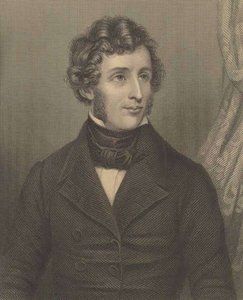
Historical context: The transition from 'vitalism' to modern organic chemistry was marked by Friedrich Wöhler's synthesis of urea from ammonium cyanate in 1828, disproving the belief that organic compounds could only be made by living things.
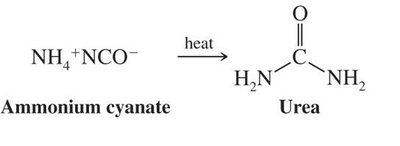
Example: Urea synthesis:
Electronic Structure and Bonding of Carbon
Carbon Atom and Hybridization
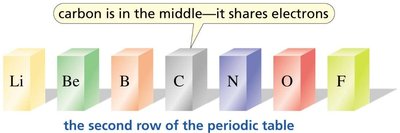
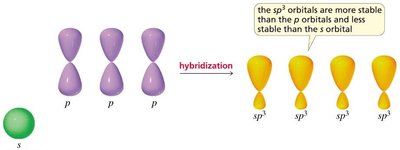
Carbon has 6 electrons, with 4 in its outer shell (configuration: ). It forms four covalent bonds, which can be explained by hybridization of its orbitals.
Hybridization types: sp3, sp2, sp
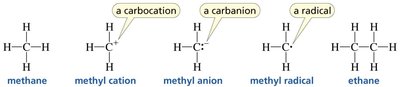
Bonding: If carbon does not form four bonds, it exists as an ion or radical.
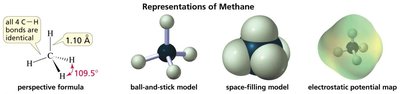
sp3 hybridization: Tetrahedral geometry, bond angle 109.5° (e.g., methane).
sp2 hybridization: Trigonal planar geometry, bond angle 120° (e.g., ethene).
sp hybridization: Linear geometry, bond angle 180° (e.g., ethyne).
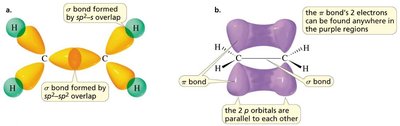
Bond Strengths and Lengths
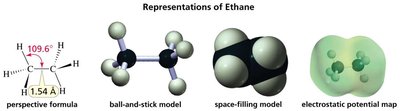
The hybridization of carbon affects the strength and length of C-H and C-C bonds, as well as the bond angles.
Molecule | Bond Strength (C-H, kcal/mol) | Bond Length (C-H, Å) | Bond Strength (C-C, kcal/mol) | Bond Length (C-C, Å) | Bond Angles | Hybridization |
|---|---|---|---|---|---|---|
Ethane | 101.1 | 1.10 | 90.2 | 1.54 | 109.5° | sp3 |
Ethene | 110.7 | 1.08 | 174.5 | 1.33 | 120° | sp2 |
Ethyne | 133.3 | 1.06 | 230.4 | 1.20 | 180° | sp |
Special Cases: Carbocations, Carbanions, and Radicals
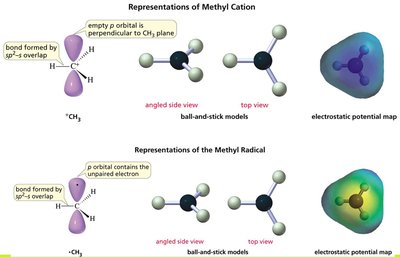
Carbon atoms with positive charge (carbocations) or unpaired electrons (radicals) are typically sp2 hybridized, while carbanions have a lone pair in an sp3 orbital.
Carbocation: sp2 hybridized, empty p orbital.
Carbanion: sp3 hybridized, lone pair in sp3 orbital.
Radical: sp2 hybridized, unpaired electron in p orbital.
Nomenclature of Organic Molecules
IUPAC System and Trivial Names
The International Union of Pure and Applied Chemistry (IUPAC) provides systematic rules for naming organic compounds to ensure clarity and uniformity. Trivial names are commonly used for well-known compounds.
Systematic names: Derived from structure, follow IUPAC rules.
Trivial names: Commonly used, not always systematic.
Radicofunctional names: Combine functional group and alkyl group names.

Drawing Organic Structures
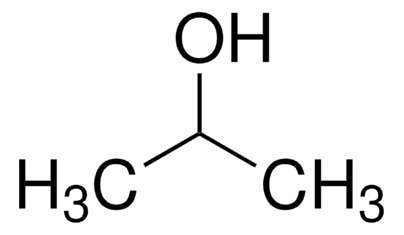
Organic molecules can be represented in various ways, including full structural formulas and skeletal notation. In skeletal notation, carbon atoms are implied at the vertices, and hydrogen atoms attached to carbon are omitted.
Structural formula: Shows all atoms and bonds.
Skeletal notation: Simplifies structure, omits C-H bonds.
Alkanes: Structure and Isomerism
Alkanes are saturated hydrocarbons with the general formula . Isomerism arises when atoms are connected in different ways, leading to constitutional isomers.
Linearity and branching: Linear and branched alkanes share the same formula but differ in structure.
Constitutional isomers: Same molecular formula, different connectivity.

Naming Branched Alkanes
To name branched alkanes, follow these steps:
Identify the longest continuous carbon chain (parent chain).
Number the chain to give substituents the lowest possible numbers.
Name and locate substituents (alkyl groups).
Arrange substituents alphabetically, ignoring prefixes like di-, tri-, sec-, tert- (except iso-).
If chains are equal length, choose the one with more substituents.
Cycloalkanes
Cycloalkanes are ring-shaped hydrocarbons with the formula . Substituents are numbered to give the lowest possible numbers, and the ring can be a substituent on a longer chain.
Alkenes and Alkynes: Priority and Naming
Alkenes (double bonds) and alkynes (triple bonds) are named by prioritizing the functional group with the highest precedence. The main chain must include the highest-priority group, and numbering gives the lowest possible locant to the functional group.
Alkene priority: Over alkynes.
Multiple bonds: Use suffixes like -diene, -diyn, -triene.
Naming Molecules with Functional Groups
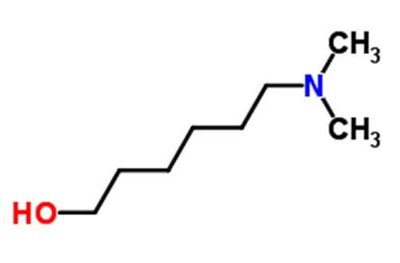
When naming molecules with functional groups (O, N, S), the main chain must contain the most important functional group, which determines the suffix and numbering.
Aldehydes: Always numbered as position 1.
Alcohols: Main chain includes the hydroxyl group, which gets the lowest number.
Ethers: Named by identifying the longest chain and naming substituents.
Summary Table: Distillation Fractions of Crude Oil
Distillation of crude oil separates hydrocarbons by boiling point and carbon number.
Volume % | Boiling Range (°C) | Carbon Atoms | Products |
|---|---|---|---|
1–2% | <30 | C1–C4 | Methane, ethane, propane, butane, LPG |
15–30% | 30–200 | C5–C12 | Nafta, gasoline, solvents, benzine |
5–20% | 200–300 | C12–C15 | Kerosine, jet oil |
10–40% | 300–400 | C15–C25 | Diesel, fuel oil |
Non-volatile | >400 | >C25 | Paraffin wax, asphalt, tar, lubricating oil |
Practice and Exercises
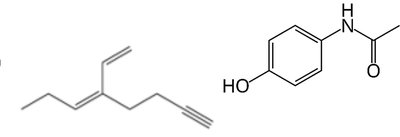
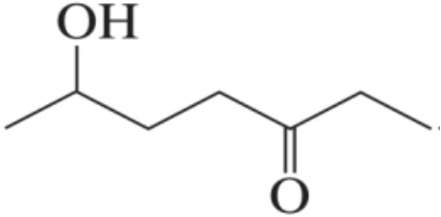
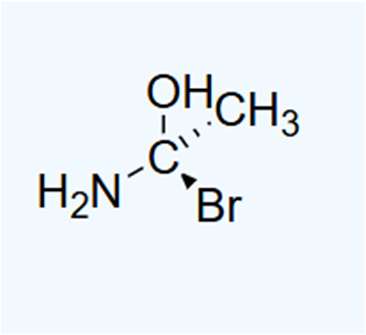
Students are encouraged to practice naming and drawing organic structures, including isomers and molecules with multiple functional groups.
Draw all possible isomers for pentane ().
Name molecules with multiple functional groups, prioritizing according to IUPAC rules.
Practice skeletal notation and structural formulas.
Conclusion
Understanding the electronic structure, hybridization, and systematic nomenclature of organic molecules is fundamental to organic chemistry. Mastery of these concepts enables prediction of molecular properties, reactivity, and biological function.
