Back

Key Review Topics for Organic Chemistry II: Essential Concepts from Orgo I

Study Guide - Learn with Videos

Curated lessons matched to your uploaded material – learn every topic step by step.

Atomic Structure

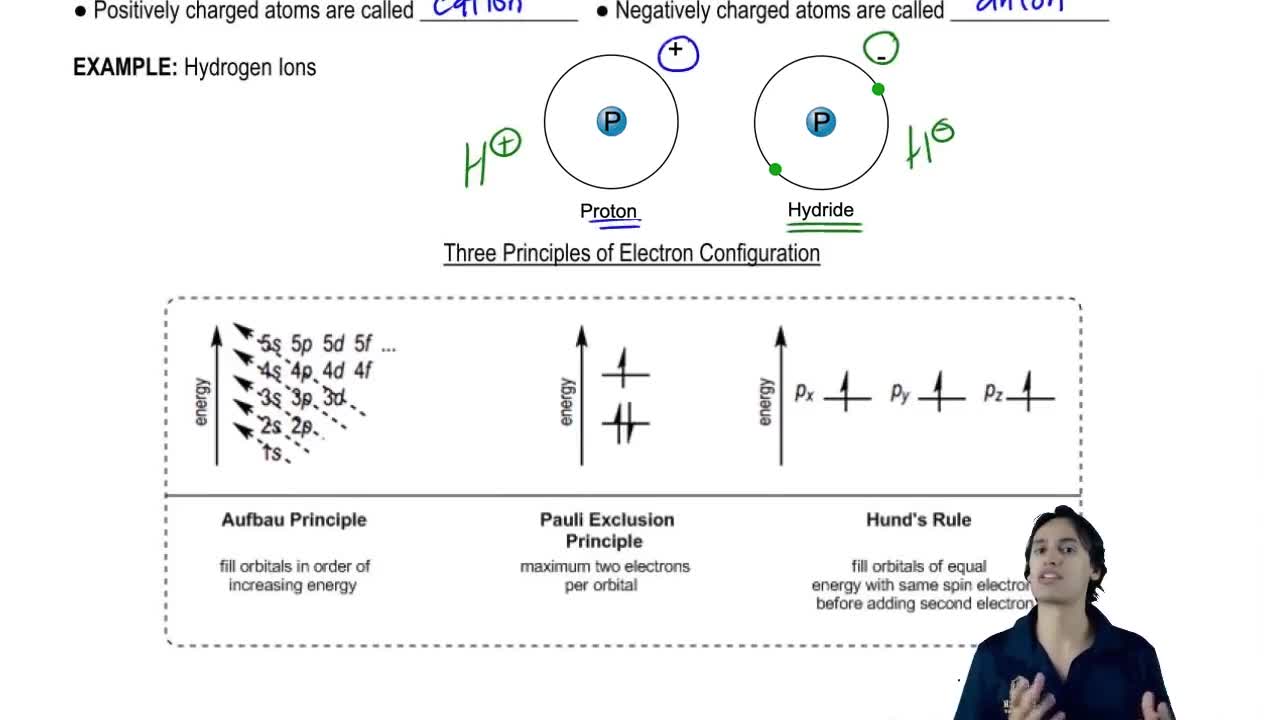
  • Three rules about orbitals you need to know.
    02:54
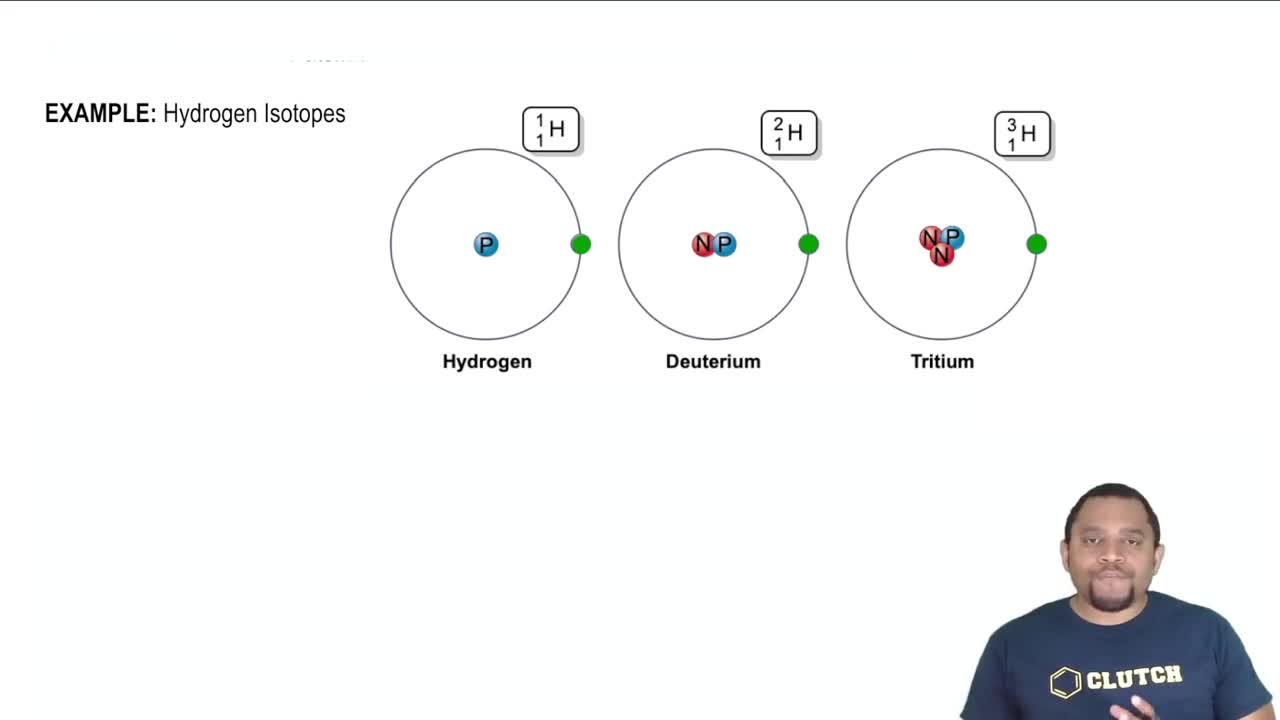
  • Understanding the hydrogen isotopes.
    03:06
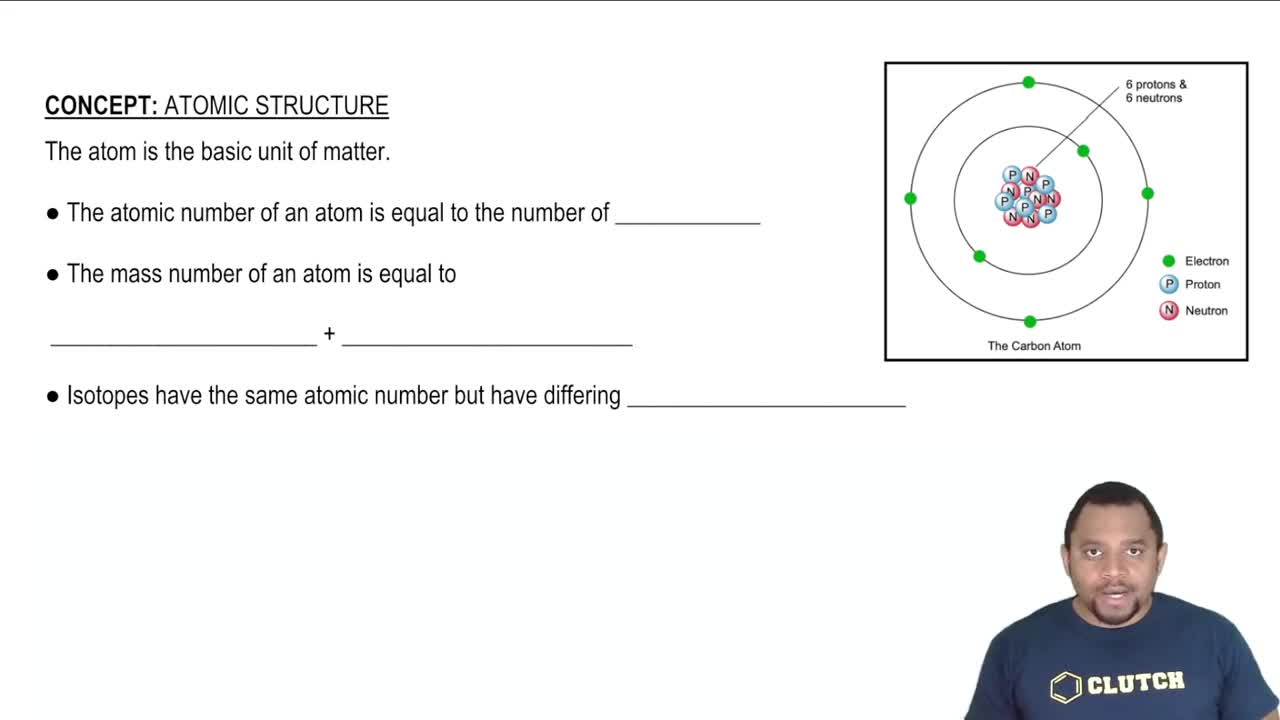
  • The difference between atomic numbers and atomic mass.
    01:44

Formal Charges

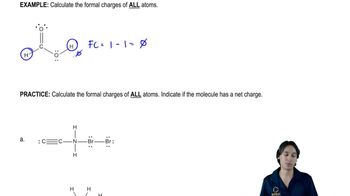
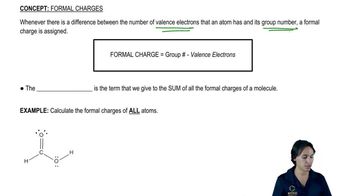
  • Calculate the formal charges of ALL atoms.
    02:21
  • Calculating formal and net charge.
    01:34

Lewis Structure

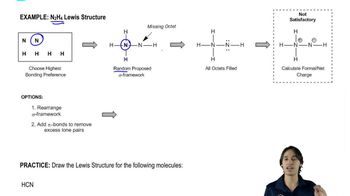
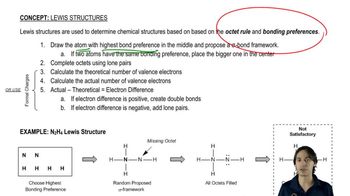
  • Drawing the Lewis Structure for N2H4.
    04:12
  • How to use Organic Chemistry to make Lewis Structures easier.
    03:49

Functional Groups

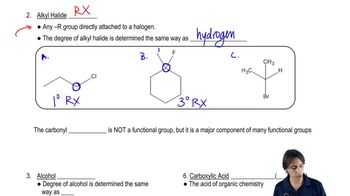
  • Assigning Degrees to Alkyl Halides
    01:30
  • Why we need functional groups.
    01:49
  • The difference between aldehydes and ketones.
    03:08

Acids and Bases

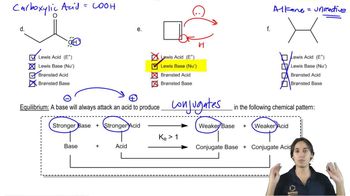
  • Lewis vs. Bronsted-Lowry Definition
    07:46
  • The Bronsted-Lowry definition of acids and bases.
    00:54
  • Equilibrium constant and conjugates.
    02:11

pKa

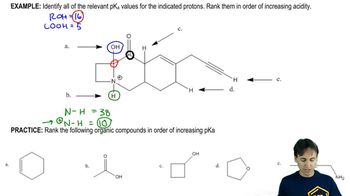
  • Identifying pKa values
    07:45
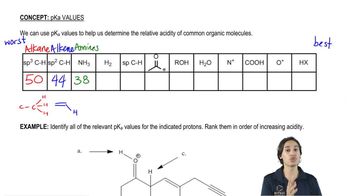
  • The 12 pKa values you want to memorize (because they are important!).
    09:36

Acid Base Equilibrium

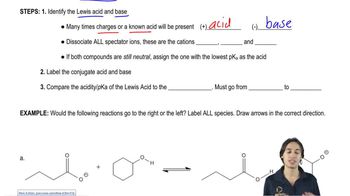
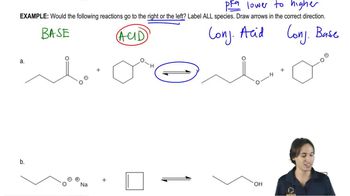
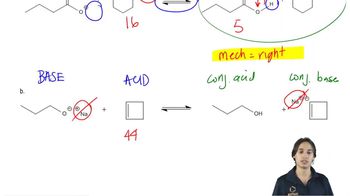
  • The 3 steps for determining the direction of acid and base equilibrium.
    05:11
  • Determining Acid/Base Equilibrium
    04:00
  • Determining Acid/Base Equilibrium
    02:34

Ranking Acidity

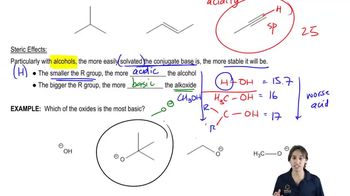
  • Which of the oxides is the most basic?
    00:30
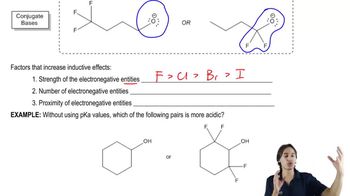
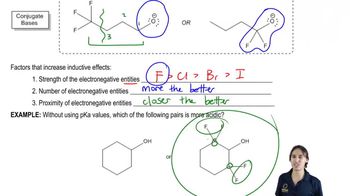
  • The 3 factors that determine the strength of inductive effects.
    03:09
  • Using Inductive Effect to determine acidity
    01:54
Skeletal Structure

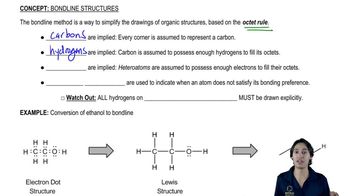
  • How bondline is different from Lewis Structures.
    04:03
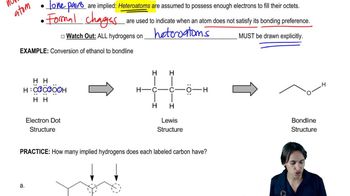
  • Conversion of ethanol from electron dot to bondline
    01:50

Constitutional Isomers

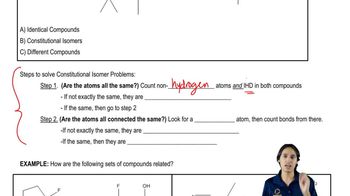
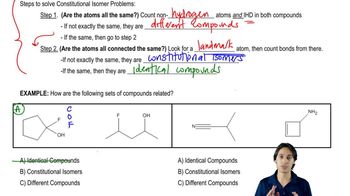
  • Isomeric Relationships
    03:28
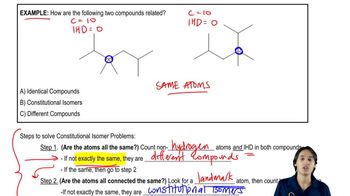
  • Using the flowchart to determine isometric relationships.
    05:02
  • Isomeric Relationships
    02:56

EAS:Synergistic and Competitive Groups

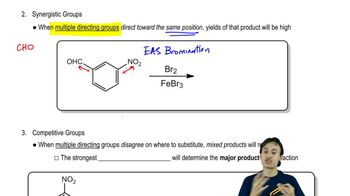
  • EAS with Polysubstituted Benzene
    08:48

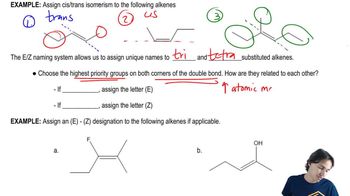
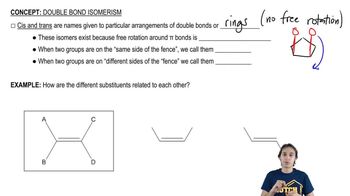
Cis vs Trans

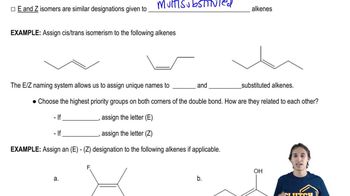
  • Why we need to use the E/Z naming system
    02:07
  • What does E and Z stand for?
    00:50
  • How to name different types of double bonds or rings
    04:28

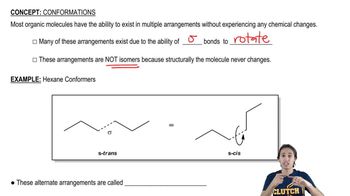
Conformational Isomers

  • Understanding what a conformer is.
    03:29

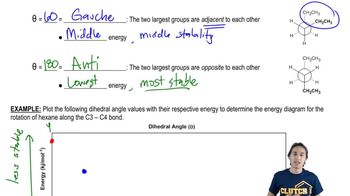
Newman Projections

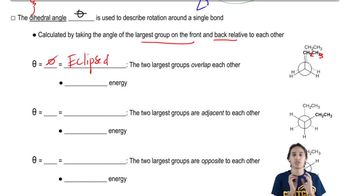
  • How to draw a Newman Projection Energy Diagram.
    07:27
  • How sigma bond rotation is visualized
    03:11
  • The energy states of 3 different Newman Projections.
    03:51

Ring Strain

  • Understanding Heat of Combustion
    01:11
  • What is torsional strain?
    02:00
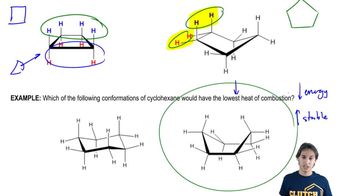
  • Lowest Heat of Combustion
    02:34
Chair Flip

  • The 3 important factors when drawing chairs
    05:12

Chirality

  • Drawing Mirror Images and Determining Chirality
    03:24
  • What is chirality?
    05:10
  • Drawing Mirror Images and Determining Chirality
    03:44

R and S Configuration

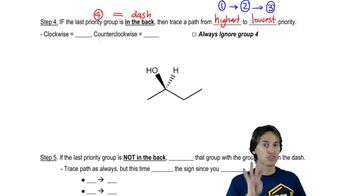
  • R and S Naming- Step 4
    03:07
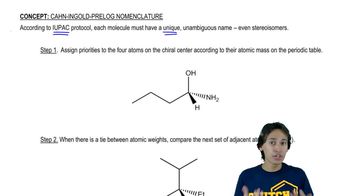
  • Why stereoisomers need their own naming system.
    01:48
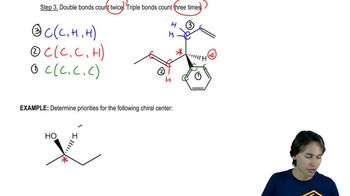
  • Determining Priorities
    01:19

Enantiomers vs. Diastereomers

  • Determine total number of stereoisomers
    00:49
  • How to predict the total number of stereoisomers.
    01:03
  • Draw stereoisomers and determine relationship
    07:41

Reaction Mechanism

  • How to tell if charged molecules will react as nucleophiles or electrophiles.
    02:39
  • Nucleophile or Electrophile
    01:49
  • How to tell if uncharged molecules will react as nucleophiles or electrophiles.
    02:48

Carbocation Stability

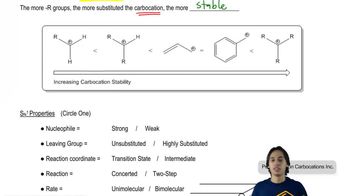
  • Determining Carbocation Stability
    05:58
  • Predicting the most stable carbocation
    01:21

Carbocation Intermediate Rearrangements

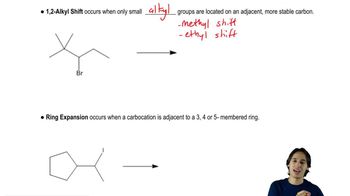
  • Alkyl Shift
    03:43
  • Understanding why carbocations shift.
    00:47
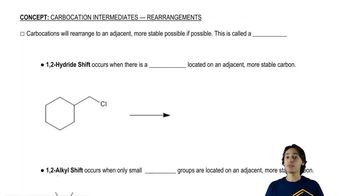
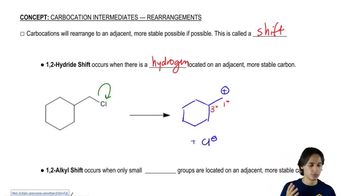
  • Hydride Shift
    03:34

Nucleophilic Substitution

  • Predict the product
    05:55
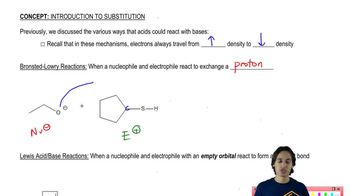
  • Nucleophiles and Electrophiles can react in Bronsted-Lowry Reactions.
    05:01
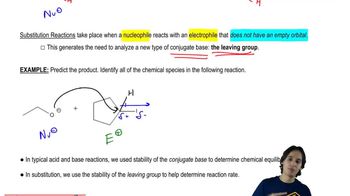
  • Nucleophiles and Electrophiles can react in Substitution Reactions.
    01:47

Good Leaving Groups

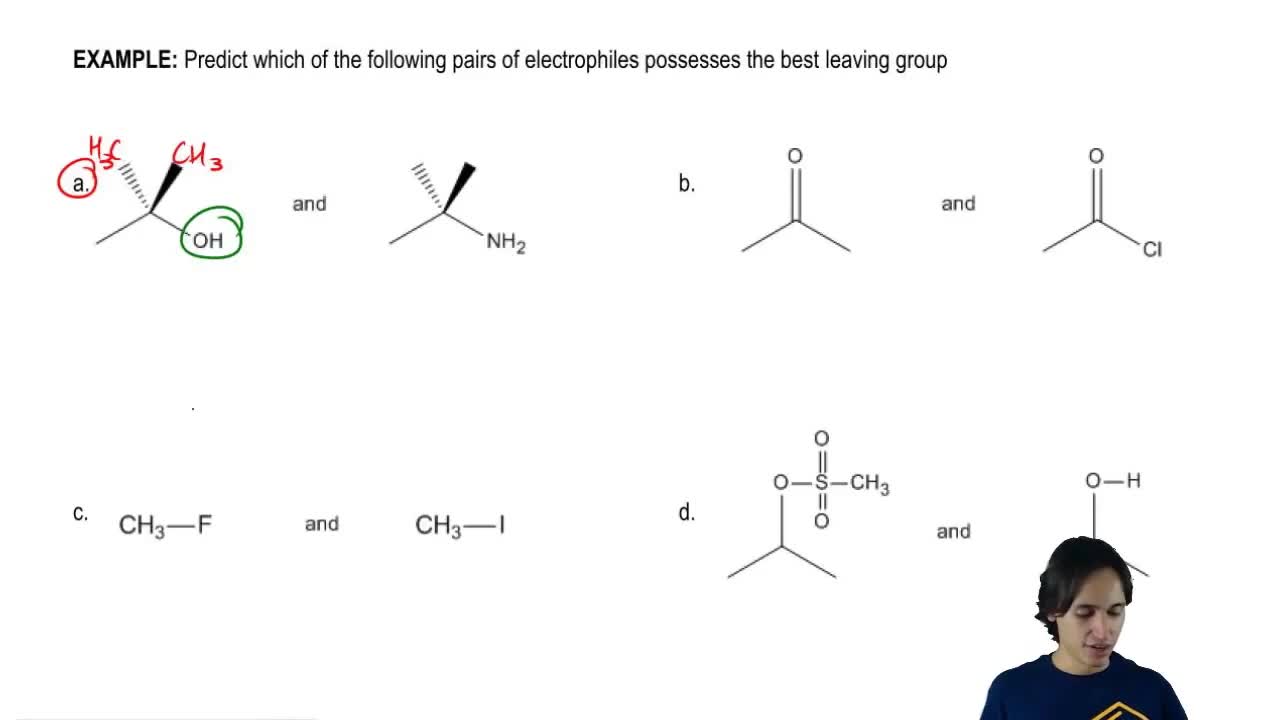
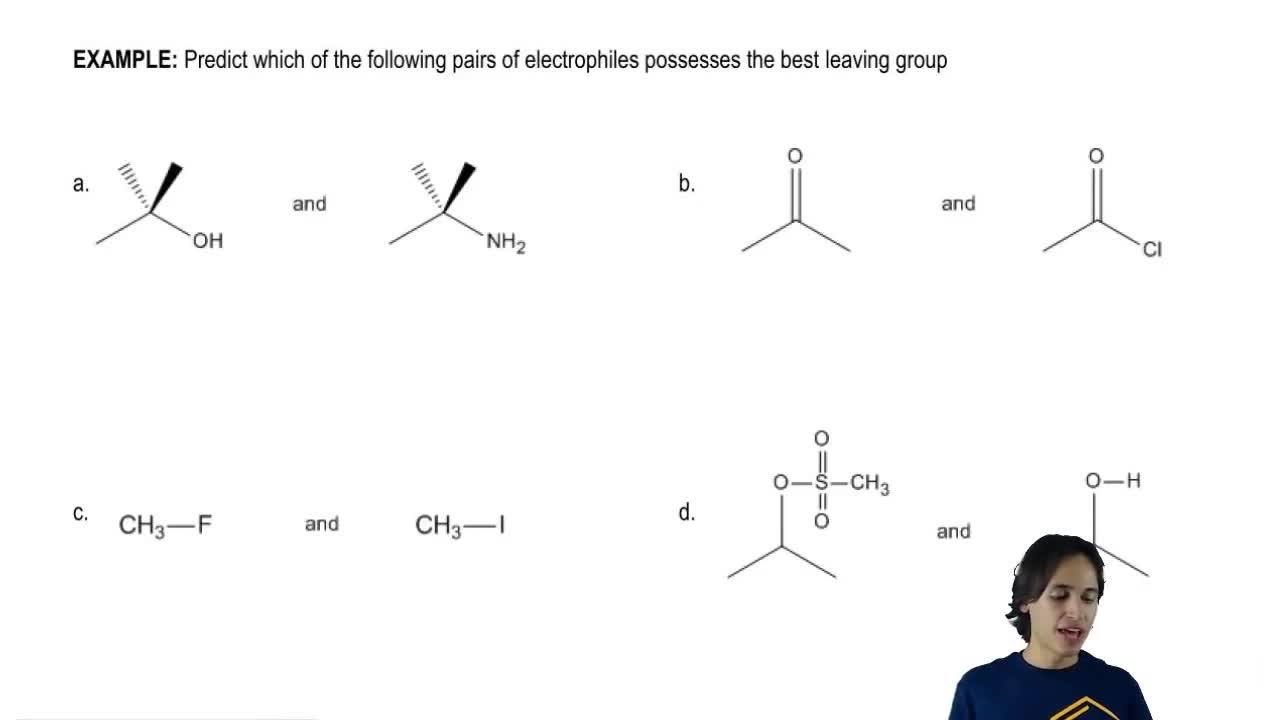
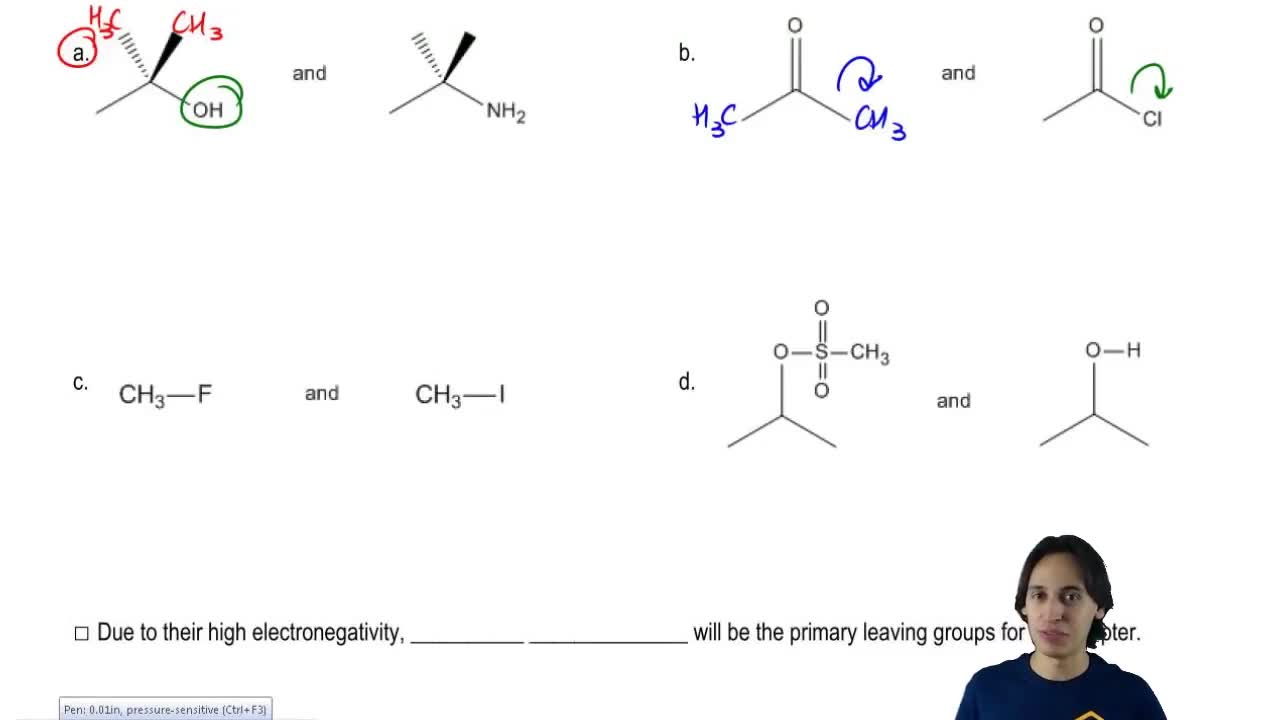
  • Predict the best leaving group
    00:50
  • Predict the best leaving group
    01:12
  • Predict the best leaving group
    00:36

SN2 Reaction

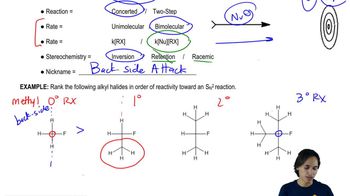
  • Ranking reactivity toward SN2
    04:03
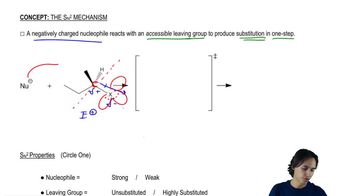
  • Drawing the SN2 Mechanism
    08:33
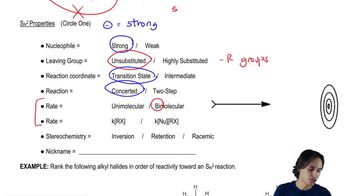
  • Understanding the properties of SN2.
    11:57

SN1 Reaction

  • Drawing the SN1 Mechanism
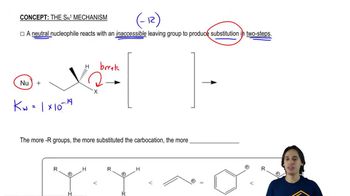
    10:49
  • Why highly substituted leaving groups favor SN1.
    01:13
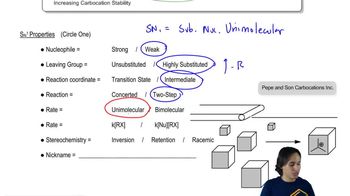
  • Understanding the properties of SN1.
    08:16

Substitution Comparison

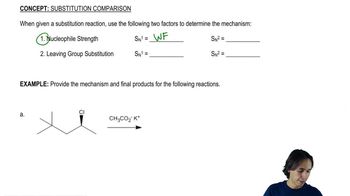
  • How do we predict if the mechanism is SN1 or SN2?
    03:32

E2 Mechanism

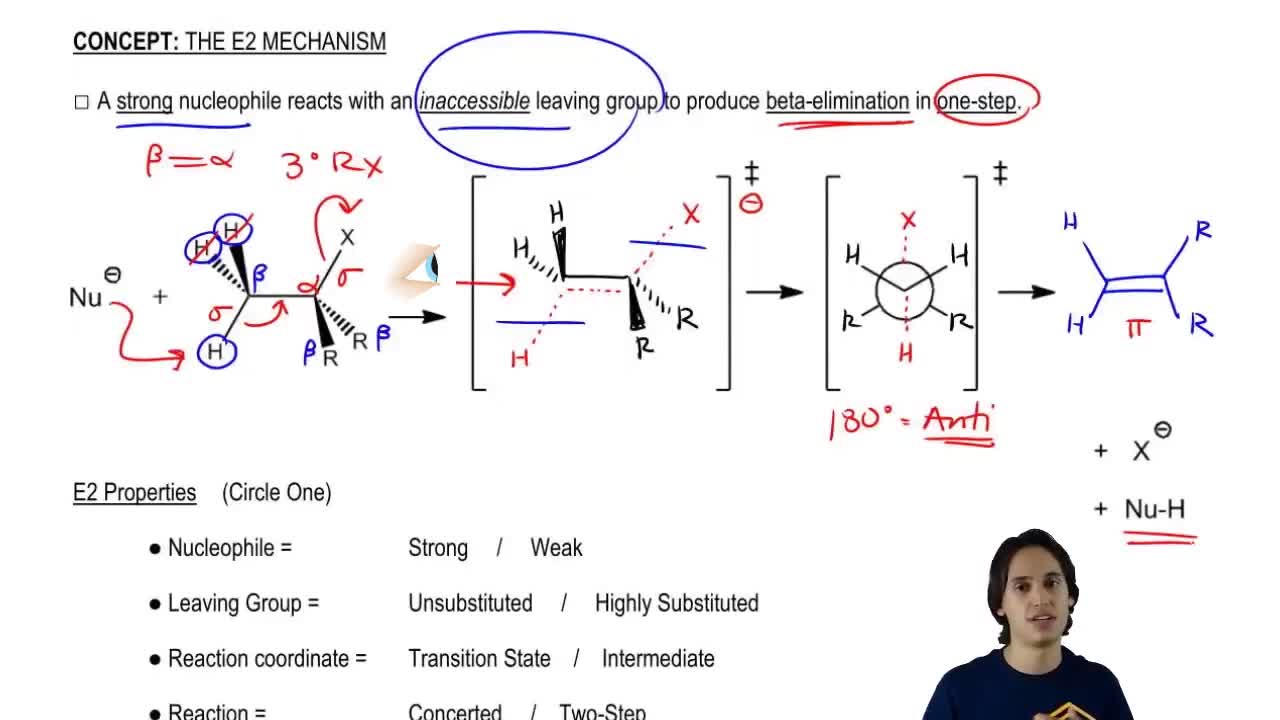
  • Understanding the properties of E2.
    04:42
  • Drawing the E2 Mechanism.
    09:36
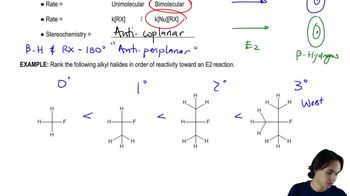
  • Rank reactivity toward E2
    02:03

Beta Hydrogen

  • Identify the number of unique products
    02:08
  • Identify the number of unique products
    03:19
  • Identify the number of unique products
    02:02

E2 - Anti-Coplanar Requirement

  • The Anti-Coplanar Requirement
    03:19
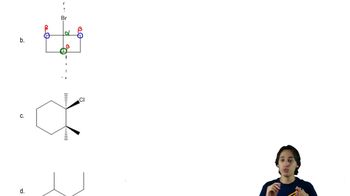
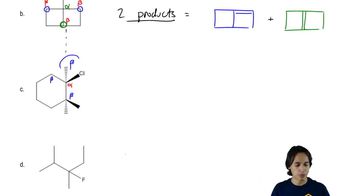
  • Identify the completion of E2 mechanisms
    03:39
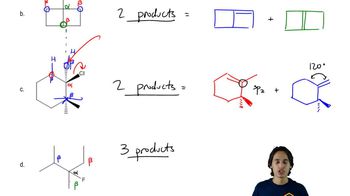
  • Identify the completion of E2 mechanisms
    01:09

E1 Reaction

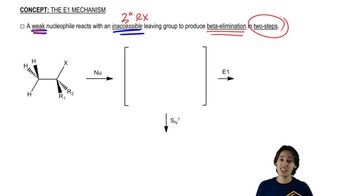
  • Understanding the properties of E1.
    03:32
  • Drawing the E1 Mechanism.
    08:09

Solvents

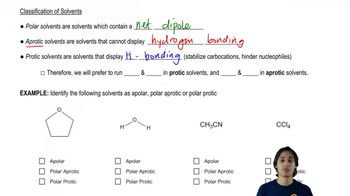
  • The difference between protic vs. aprotic solvents.
    03:57
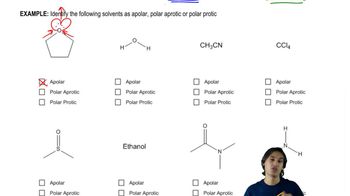
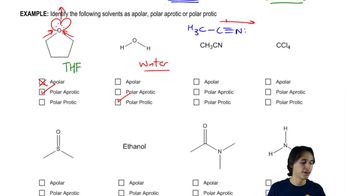
  • Identification of polarity in solvents
    01:16
  • Identification of polarity in solvents
    00:39

Leaving Groups

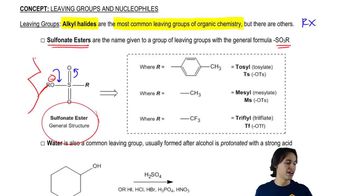
  • The 3 important leaving groups to know.
    07:22

Nucleophiles and Basicity

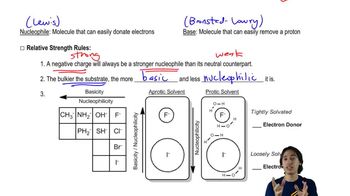
  • Understanding the difference between basicity and nucleophilicity.
    06:21

SN1 SN2 E1 E2 Chart (Big Daddy Flowchart)

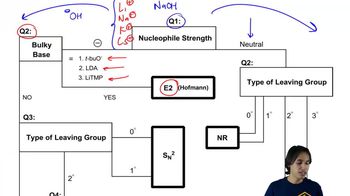
  • How to predict SN2 and E2 mechanisms.
    09:52
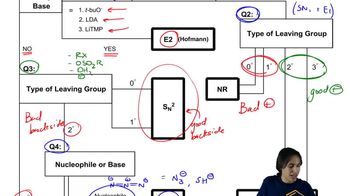
  • How to predict SN1 and E1 mechanisms.
    06:30
  • Overview of the flowchart.
    02:27

Cumulative Substitution/Elimination

  • Intro to Substitution/Elimination Problems
    00:38

Alkene Stability

  • Heat of Combustion
    02:55
  • Understanding trends of alkene stability.
    04:28

Zaitsev Rule

  • Hofmann product
    02:39
  • Defining Zaitsev’s Rule
    01:18
  • Zaitsev product
    07:01

Dehydrohalogenation

  • The dehydrohalogenation mechanism.
    03:02
  • Dehydrohalogenation mechanism and products
    04:35

Addition Reaction

  • Provide the mechanism
    01:15
  • Features of Addition Mechanisms.
    05:39

Markovnikov

  • Provide the mechanism
    01:26
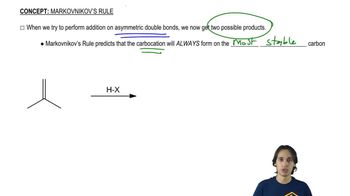
  • How to add to asymmetrical double bonds.
    03:38

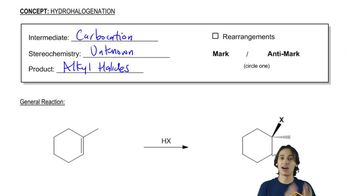
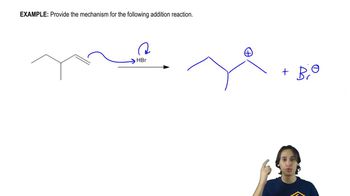
Hydrohalogenation

  • General properties of hydrohalogenation.
    04:07
  • Provide the mechanism
    02:24

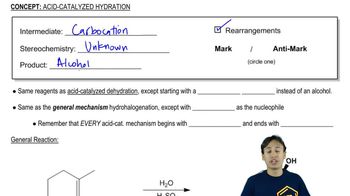
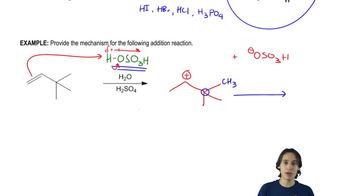
Acid-Catalyzed Hydration

  • General properties of acid-catalyzed hydration.
    06:32
  • Acid-catalyzed hydration mechanism
    06:34

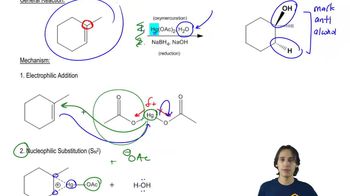
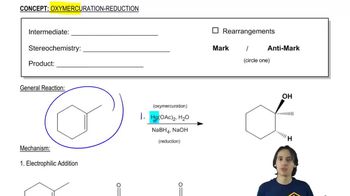
Oxymercuration

  • Acid-catalyzed oxymercuration-reduction mechanism
    09:01
  • General properties of oxymercuration-reduction.
    05:

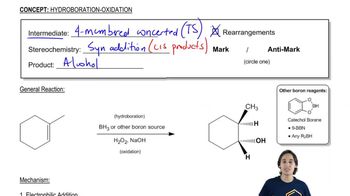
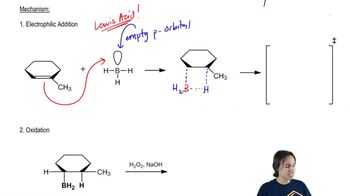
Hydroboration

  • General properties of hydroboration-oxidation.
    06:38
  • Acid-catalyzed hydroboration-oxidation mechanism
    06:14

Hydrogenation

  • General properties of catalytic hydrogenation.
    05:21

Halogenation

  • Halogenation Mechanism
    03:45
  • General properties of halogenation.
    02:27

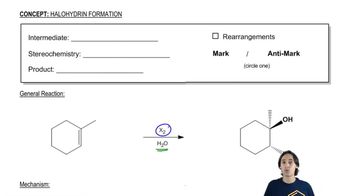
Halohydrin

  • Halohydrin Mechanism
    04:48
  • General properties of halohydrin formation.
    01:44

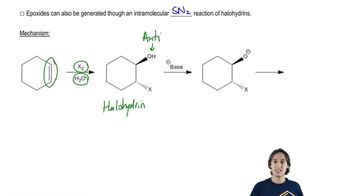
Epoxidation

  • Halohydrins to epoxides via intramolecular SN2.
    02:26
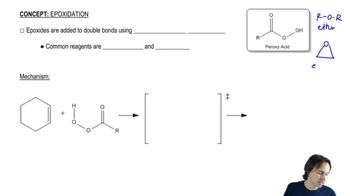
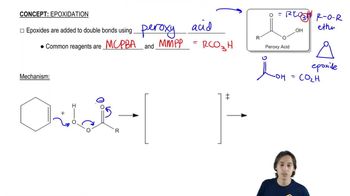
  • General properties of epoxidation.
    02:19
  • The mechanism of how peroxy acids make epoxides.
    03:19

Epoxide Reactions

  • Base-Catalyzed Epoxide Ring-Opening
    04:44
  • Acid-Catalyzed Epoxide Ring-Opening
    04:34

Dihydroxylation

  • General properties of syn vicinal dihydroxylation.
    03:50
  • Predict the product for the following multi-step reaction.
    04:42

Ozonolysis

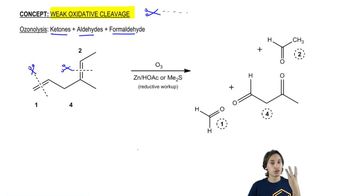
  • General properties of ozonolysis.
    06:30

Ozonolysis Full Mechanism

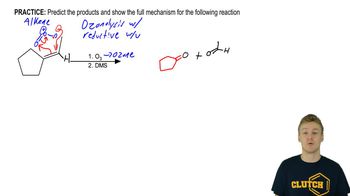
  • Predict the products and show the mechanism:
    12:11
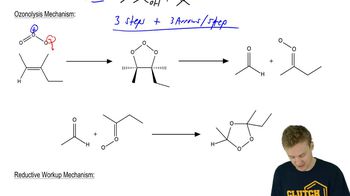
  • General Mechanism:
    07:48
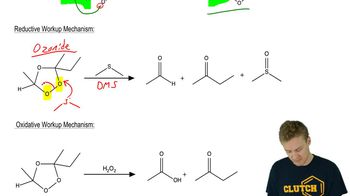
  • Reductive Workup Mechanism:
    03:16

Oxidative Cleavage

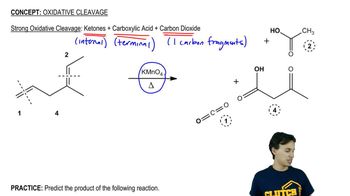
  • General properties of strong oxidative cleavage.
    06:00

Alkyne Oxidative Cleavage

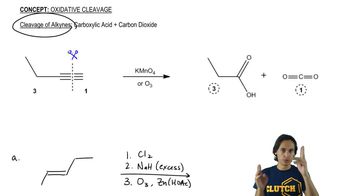
  • General features of alkyne cleavage.
    02:13
  • Predict the product of the following reaction.
    03:50

Alkyne Hydrohalogenation

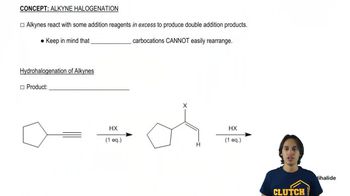
  • Double hydrohalogenation of alkynes.
    02:20
  • General properties of double addition reactions to alkynes.
    01:01

Alkyne Halogenation

  • Double halogenation of alkynes.
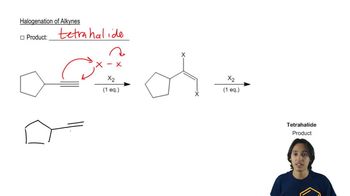
    02:15

Alkyne Hydration

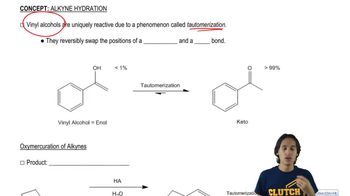
  • Vinyl alcohols yield tautomers.
    03:51
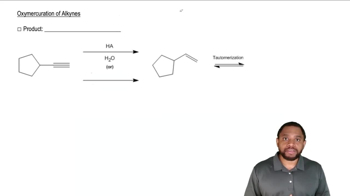
  • Markovnikov addition of alcohols yields ketones.
    03:29

Alkyne Hydroboration

  • Anti-Markovnikov addition of alcohols to terminal alkynes yields aldehydes
    02:43

Alcohol Nomenclature

  • Provide the correct common and IUPAC name.
    01:49
  • How to name polyols.
    01:47
  • Provide the correct common and IUPAC name.
    00:59

Alcohol Synthesis

  • Forming alcohols through SN2 reactions.
    01:44
  • Forming alcohols through Acid-Catalyzed Hydration.
    02:02
  • Forming alcohols through Hydroboration-Oxidation.
    01:37

Leaving Group Conversions - Using HX

  • Why do we need to convert Alcohol into a good leaving group?
    02:03
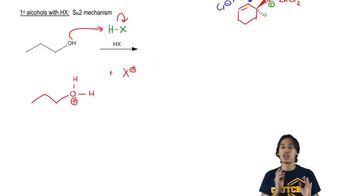
  • Using HX acids via SN2 reaction.
    02:16
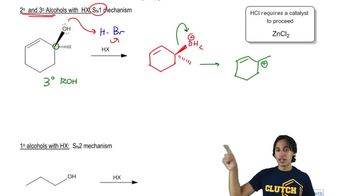
  • Using HX acids via SN1 reaction.
    07:20

Leaving Group Conversions - SOCl2 and PBr3

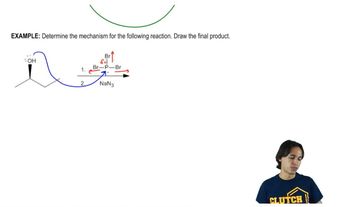
  • Predict the mechanism of PBr3, and draw the final product.
    06:01
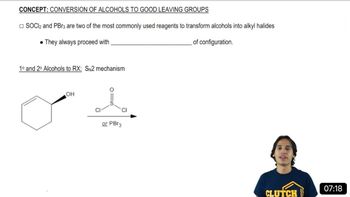
  • Learning the mechanism of SOCl2.
    07:18

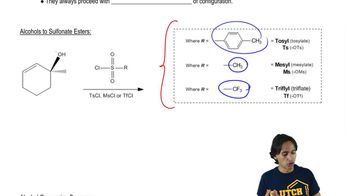
Leaving Group Conversions - Sulfonyl Chlorides

  • Learning the mechanism of Sulfonyl Chlorides.
    05:33

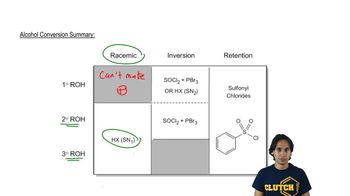
Leaving Group Conversions Summary

  • Comparing and contrasting the Alcohol Conversions.
    04:30

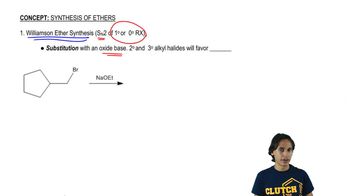
Williamson Ether Synthesis

  • The Mechanism of Williamson Ether Synthesis.
    03:50

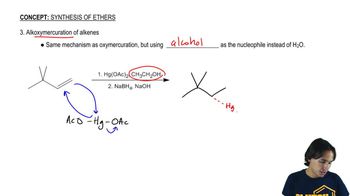
Making Ethers - Alkoxymercuration

  • The Mechanism of Alkoxymercuation.
    04:21

Making Ethers - Alcohol Condensation

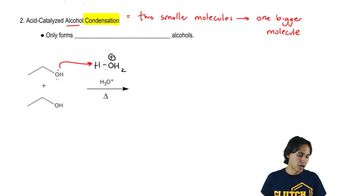
  • The Mechanism of Alcohol Condensation.
    04:33

Making Ethers - Acid-Catalyzed Alkoxylation

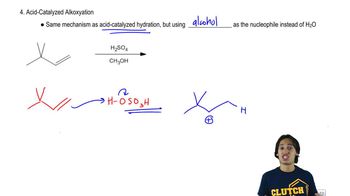
  • The Mechanism of Alkoxylation.
    04:25

Making Ethers - Cumulative Practice

  • Making Ethers - Intro
    00:10

Ether Cleavage

  • How to predict the products of Ether Cleavage.
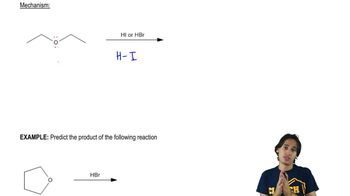
    04:22
  • Predict the product of the following reaction.
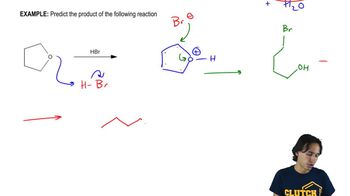
    03:44

Alcohol Protecting Groups

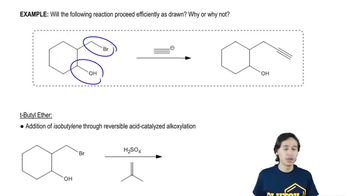
  • General features of Alcohol Protecting Groups.
    03:01

t-Butyl Ether Protecting Groups

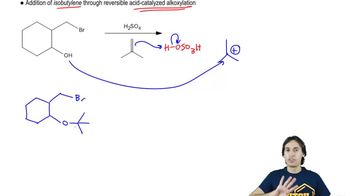
  • Mechanism of t-Butyl Ether Protecting Groups.
    05:49

Silyl Ether Protecting Groups

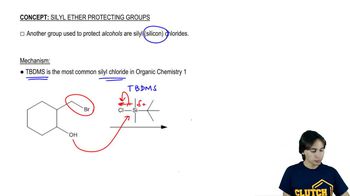
  • Mechanism of Silyl Ether Protecting Groups.
    07:16
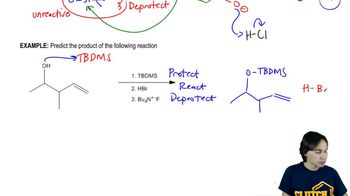
  • Predict the product of the following reaction.
    03:37

Oxidizing and Reducing Agents

  • Distinguishing between Oxidation and Reduction
    00:54
  • Distinguishing between Oxidation and Reduction
    01:18
  • Distinguishing between Oxidation and Reduction
    00:54
Oxidizing Agent

  • Reagents
    01:52
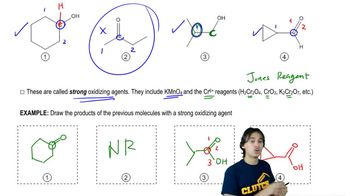
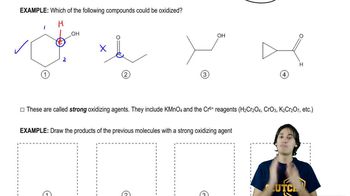
  • Strong oxidizing agents
    05:53
  • Strong oxidizing agents
    03:40

Reducing Agent

  • Intro
    00:15
  • Reducing Agents
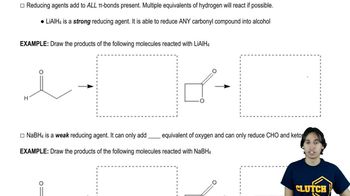
    09:28

Nucleophilic Addition

  • Nucleophilic Addition
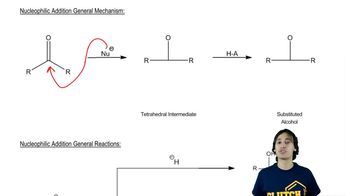
    08:27

Grignard Reaction

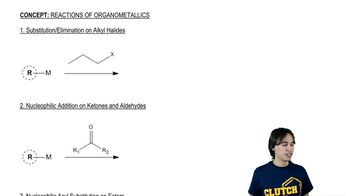
  • Reactions of Organometallics
    13:40

Protecting Alcohols from Organometallics

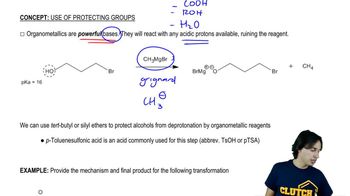
  • Use of Protecting Groups
    04:34
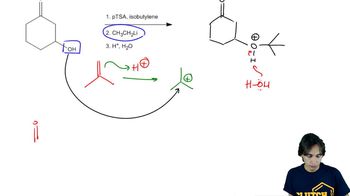
  • Provide mechanism and final product of transformation.
    04:45

Infrared Spectroscopy

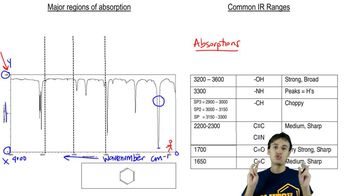
  • General Features of IR Spect
    16:04

Mass Spectrometry

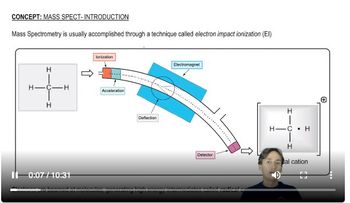
  • Equipment and Theory
    10:48
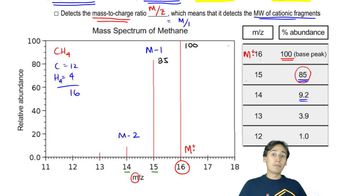
  • How to Read a Mass Spectrum
    01:25