 Back
BackNomenclature, Physical Properties, and Rotation About Single Bonds in Organic Compounds
Study Guide - Smart Notes
 Tailored notes based on your materials, expanded with key definitions, examples, and context.
An Introduction to Organic Compounds
Overview of Organic Compounds
Organic compounds are primarily composed of carbon and hydrogen, often with other elements such as oxygen, nitrogen, and halogens. Their structure and properties are determined by the types of bonds and functional groups present. - Key Point: Organic chemistry focuses on the study of carbon-containing compounds, their nomenclature, physical properties, and structural features. 
Alkanes: Structure and Nomenclature
Alkanes and Their Homologs
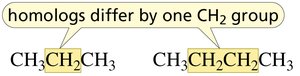
Alkanes are hydrocarbons containing only single bonds. They form a homologous series, where each successive member differs by a CH2 group. - Definition: Alkanes are saturated hydrocarbons with the general formula CnH2n+2. - Homologs: Homologous compounds differ by one CH2 unit. 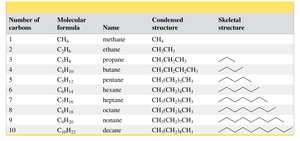
Structural Representation of Alkanes
Alkanes can be represented by molecular, condensed, and skeletal structures. - Methane, Ethane, Propane: Each has only one possible structure. - Example: Methane (CH4), Ethane (C2H6), Propane (C3H8). 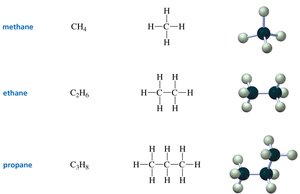
Constitutional Isomers
Constitutional isomers have the same molecular formula but different connectivity of atoms. - Butanes: Can be arranged in two ways: n-butane and isobutane. 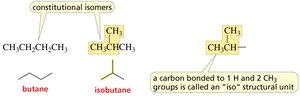 - Pentanes: Three possible isomers.
 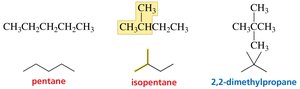 - Hexanes: Five possible isomers.
Naming Alkyl Substituents
Removing a hydrogen from an alkane forms an alkyl substituent. The suffix "-yl" replaces "-ane" in the parent alkane name. 
Common Names and Structural Variants
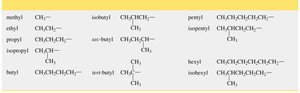
Common names are often used for simple alkyl groups and their derivatives. - Example: Methyl, ethyl, propyl, butyl, pentyl groups. 

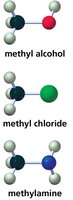
Propyl and Isopropyl Groups
- Primary carbon: Bonded to one other carbon. - Secondary carbon: Bonded to two other carbons. 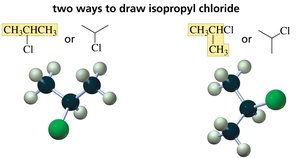
Butyl Groups: Classification
There are four butyl groups: n-butyl, isobutyl, sec-butyl, tert-butyl. - Primary, secondary, tertiary: Classification depends on the number of carbons attached to the central carbon. 
Use of 'n', 'iso', 'sec', and 'tert' Prefixes
- 'n': Indicates a straight-chain alkane. 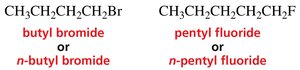 - Primary, secondary, tertiary hydrogens: Hydrogens are classified based on the carbon they are attached to.
Pentyl and Isopentyl Groups
- sec-Pentyl: Not a valid name; nomenclature must specify only one compound. 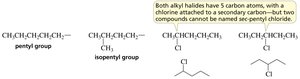
tert-Butyl and tert-Pentyl Groups
- tert-hexyl: Not a valid name; ambiguity in structure. 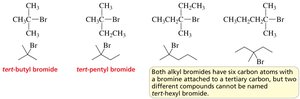
'Iso' Prefix
- 'Iso': Indicates branching at one end of the chain. 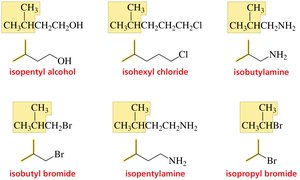
Summary Table: Common Alkyl Groups
Naming Alkanes
Systematic Nomenclature Rules
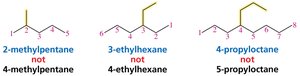
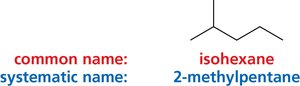
The IUPAC system provides rules for naming alkanes: 1. Identify the longest continuous chain (parent hydrocarbon). 2. Choose the chain with the greatest number of substituents if chains are equal in length. 3. Number the chain to give substituents the lowest possible numbers. 4. List substituents in alphabetical order, each preceded by a number. 5. Use prefixes (di-, tri-, tetra-) for multiple identical substituents. 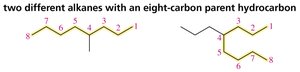


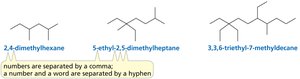
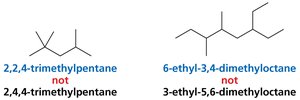
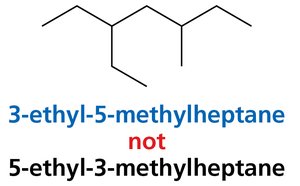
Cycloalkanes
Structure and Nomenclature of Cycloalkanes
Cycloalkanes are ring-shaped alkanes. The ring is the parent hydrocarbon unless a substituent has more carbons. - Monosubstituted cycloalkanes: No number needed. - Disubstituted cycloalkanes: Substituents are listed alphabetically; #1 goes to the first-listed substituent. 
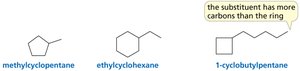

Classification and Nomenclature of Alkyl Halides, Ethers, Alcohols, and Amines
Alkyl Halides
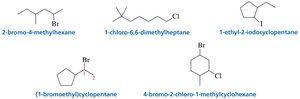
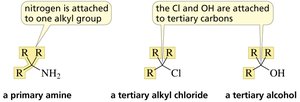
Alkyl halides are classified as primary, secondary, or tertiary based on the carbon to which the halogen is attached. 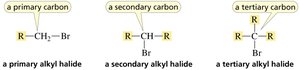

Ethers
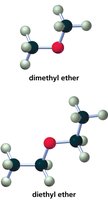
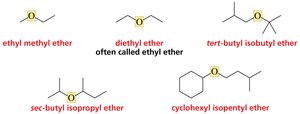
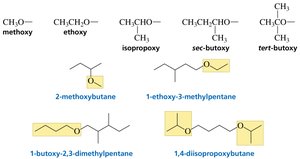
Ethers are compounds with an oxygen atom connecting two alkyl groups. - Symmetrical ether: Both groups are the same. - Unsymmetrical ether: Groups are different. 
Alcohols
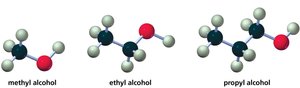
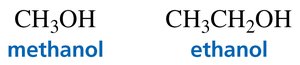
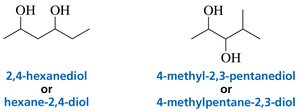
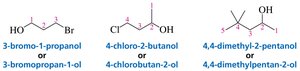
Alcohols are classified as primary, secondary, or tertiary based on the carbon to which the OH group is attached. 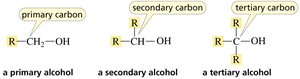


Amines
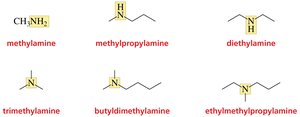
Amines are classified based on the number of alkyl groups attached to the nitrogen atom. - Primary amine: One alkyl group. - Secondary amine: Two alkyl groups. - Tertiary amine: Three alkyl groups. 

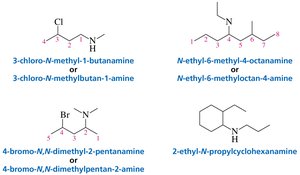
Summary Table: Nomenclature
Summary of Nomenclature Rules
- Systematic names use numbers to indicate positions of substituents and functional groups. - Common names do not use numbers and are often used for simple compounds.
Learning Objectives
Key Learning Outcomes
- Name alkanes, cycloalkanes, alkyl halides, ethers, alcohols, and amines using both systematic (IUPAC) and common nomenclature. - Draw condensed and skeletal structures from names. - Distinguish primary, secondary, and tertiary carbons and hydrogens. - Draw all possible constitutional isomers for a given molecular formula. - Predict relative physical properties based on structure, polarity, and hydrogen bonding. - Draw Newman projections and chair conformers for cyclohexane derivatives. - Predict stability of conformers and geometric isomers. Additional info: The notes above expand brief points into full academic explanations, add definitions, examples, and context for clarity and completeness.
