 Back
BackNomenclature, Physical Properties, and Structure of Organic Compounds
Study Guide - Smart Notes
 Tailored notes based on your materials, expanded with key definitions, examples, and context.
Chapter 3: Nomenclature, Physical Properties, and Structure
Overview of Chapter Objectives
This chapter introduces the systematic naming (nomenclature), classification, and physical properties of organic compounds. It covers the identification and naming of hydrocarbons, functional groups, and the impact of molecular structure on physical and chemical properties. Students will learn to recognize primary, secondary, and tertiary carbons and hydrogens, name alkenes and substituted alkenes, and understand the priorities of functional groups in nomenclature.
Key Point 1: Systematic nomenclature is essential for clear communication in organic chemistry.
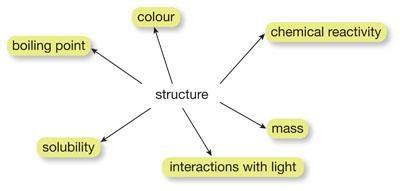
Key Point 2: Structure determines properties such as boiling point, melting point, solubility, and reactivity.
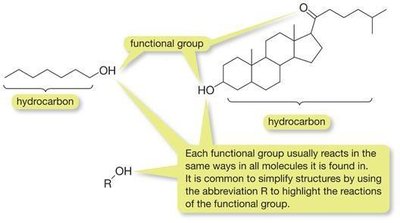
Key Point 3: Functional groups are the centers of chemical reactivity in organic molecules.
Functional Groups and Their Importance
Functional groups are specific groups of atoms within molecules that are responsible for the characteristic chemical reactions of those molecules. The presence and type of functional group largely determine the reactivity and properties of organic compounds.
Definition: A functional group is a group of atoms within a molecule that defines its chemical properties and reactivity.
Example: Alcohols (–OH), amines (–NH2), ethers (–O–), alkyl halides (–X), and others.
Application: Organic reactions often occur at the functional group, making it the focus of synthetic and mechanistic studies.
Classification of Hydrocarbons
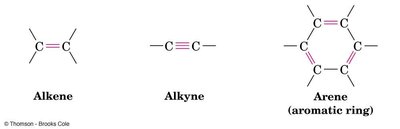
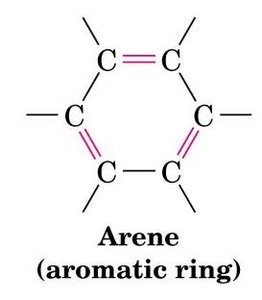
Hydrocarbons are organic compounds composed only of carbon and hydrogen. They are classified as aliphatic (alkanes, alkenes, alkynes) or aromatic (arenes).
Aliphatic Hydrocarbons: Include saturated (alkanes, cycloalkanes) and unsaturated (alkenes, alkynes) types.
Aromatic Hydrocarbons: Contain conjugated ring systems, such as benzene.
General Formula for Alkanes:
Isomerism in Alkanes
Isomers are compounds with the same molecular formula but different structural arrangements. Constitutional (structural) isomers differ in the connectivity of their atoms.
Constitutional Isomers: Same formula, different connectivity.
Example: Butane and isobutane.
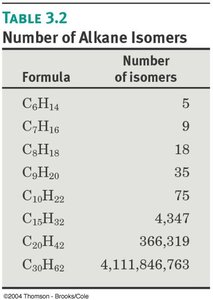
Number of Isomers: Increases dramatically with the number of carbon atoms.

Classification of Carbons and Alkyl Groups
Carbons in organic molecules are classified based on the number of other carbons to which they are attached. This classification is important for understanding reactivity and nomenclature.
Primary (1°) Carbon: Attached to one other carbon.
Secondary (2°) Carbon: Attached to two other carbons.
Tertiary (3°) Carbon: Attached to three other carbons.
Quaternary (4°) Carbon: Attached to four other carbons.

IUPAC Nomenclature: Alkanes and Substituents
The International Union of Pure and Applied Chemistry (IUPAC) system provides rules for naming organic compounds. The name consists of a prefix (substituents), parent (number of carbons), and suffix (family or functional group).
Prefix: Indicates the substituents and their positions.
Parent: Indicates the number of carbons in the main chain.
Suffix: Indicates the family (e.g., "-ane" for alkanes).

Rules for Naming Alkanes
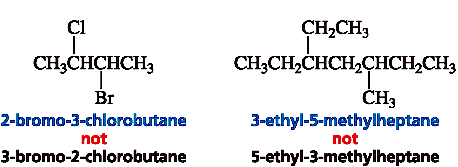
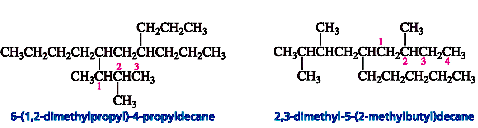
Systematic naming of alkanes involves identifying the longest continuous carbon chain, numbering the chain to give substituents the lowest possible numbers, and listing substituents in alphabetical order.
Step 1: Find the parent chain (longest continuous chain).
Step 2: Number the chain from the end closest to the first branch.
Step 3: Name and number substituents; use hyphens and commas appropriately.
Step 4: Alphabetize substituents, ignoring prefixes like di-, tri-, tetra- (except iso- and cyclo-).


Cycloalkanes: Structure and Nomenclature
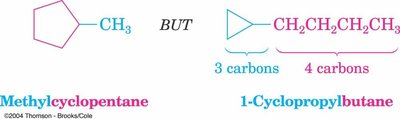
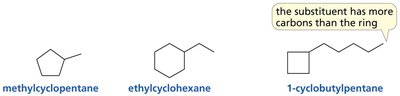
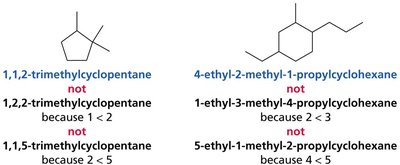
Cycloalkanes are saturated hydrocarbons with ring structures. The parent is the ring if it contains as many or more carbons than any chain attached. Numbering starts at the substituent with alphabetical priority.
General Formula: for cycloalkanes.
Naming: Prefix "cyclo" + alkane name.
Numbering: Assign lowest numbers to substituents, starting with alphabetical order.

Alkyl Halides: Classification and Nomenclature
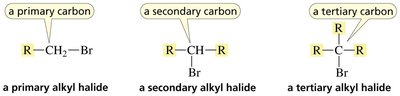
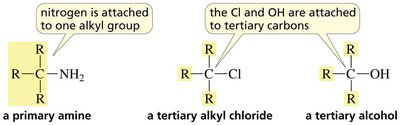
Alkyl halides are compounds where a halogen atom replaces a hydrogen atom in an alkane. They are classified as primary, secondary, or tertiary based on the carbon to which the halogen is attached.
Primary Alkyl Halide: Halogen on a primary carbon.
Secondary Alkyl Halide: Halogen on a secondary carbon.
Tertiary Alkyl Halide: Halogen on a tertiary carbon.
Ethers: Structure and Nomenclature
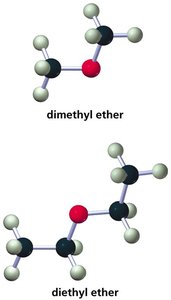
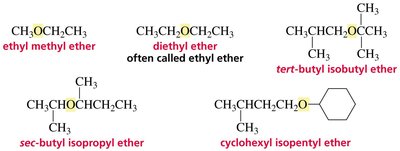
Ethers are compounds with an oxygen atom connected to two alkyl or aryl groups. They can be symmetrical (same groups) or unsymmetrical (different groups).
Common Names: List substituents in alphabetical order followed by "ether."
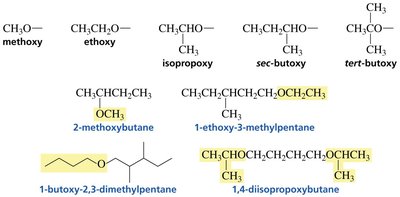
Systematic Names: Use the alkoxy group as a prefix.

Alcohols: Classification and Nomenclature
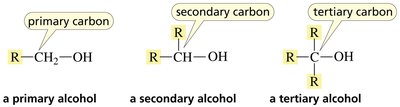
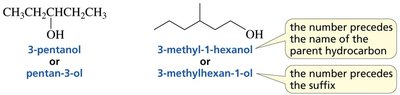
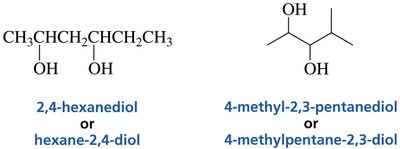
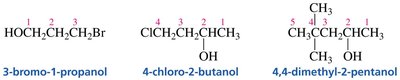
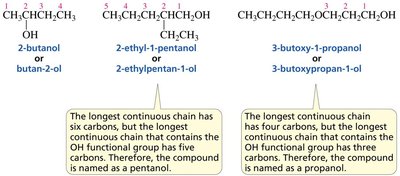
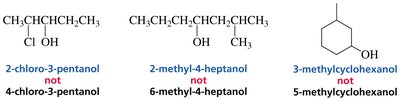
Alcohols contain the hydroxyl (–OH) functional group. They are classified as primary, secondary, or tertiary based on the carbon to which the OH is attached. Systematic names use the suffix "-ol."
Primary Alcohol: OH on a primary carbon.
Secondary Alcohol: OH on a secondary carbon.
Tertiary Alcohol: OH on a tertiary carbon.
Naming: Replace "-e" in alkane with "-ol" and number the chain to give OH the lowest possible number.


Amines: Classification and Nomenclature
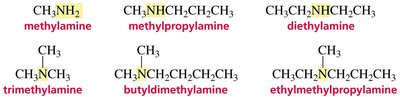
Amines are organic compounds containing nitrogen. They are classified as primary, secondary, or tertiary based on the number of alkyl or aryl groups attached to the nitrogen atom. Systematic names use the suffix "-amine."
Primary Amine: One group bonded to N.
Secondary Amine: Two groups bonded to N.
Tertiary Amine: Three groups bonded to N.
Naming: Replace "-e" in alkane with "-amine." Substituents on the chain are numbered; substituents on N are indicated by "N-".



Summary Table: Systematic vs. Common Names
This table summarizes the differences between systematic and common names for alkyl halides, ethers, alcohols, and amines.
Compound | Systematic Name | Common Name |
|---|---|---|
Alkyl halide | Substituted alkane (e.g., bromomethane) | Alkyl group + halide (e.g., methyl bromide) |
Ether | Substituted alkane (e.g., methoxymethane) | Alkyl groups + ether (e.g., dimethyl ether) |
Alcohol | Functional group suffix "ol" (e.g., methanol) | Alkyl group + alcohol (e.g., methyl alcohol) |
Amine | Functional group suffix "amine" (e.g., ethanamine) | Alkyl groups + amine (e.g., ethylamine) |
Intermolecular Forces and Physical Properties
Intermolecular forces are weak attractive forces between molecules. They influence boiling point, melting point, and solubility. Types include electrostatic, dipole–dipole, hydrogen bonding, and London dispersion forces.
Electrostatic Interactions: Strongest, occur between charged species.
Dipole–Dipole Interactions: Occur between polar molecules.
Hydrogen Bonding: Strong dipole–dipole interaction involving N or O and H.
London Forces: Weak, present in all molecules, especially non-polar.
Boiling Point Trends: Long, linear chains have higher boiling points due to greater surface area and stronger van der Waals forces. Branching lowers boiling point. Ring structures increase melting and boiling points due to improved packing.
Solubility: "Like dissolves like." Polar protic solvents can donate hydrogen bonds; polar aprotic solvents can accept hydrogen bonds; non-polar solvents rely on London forces. Water solubility decreases with increasing hydrocarbon chain length.
Conformations of Chain and Cyclic Molecules
Organic molecules can adopt different spatial arrangements (conformations) due to rotation around single bonds. The energy differences between conformers are due to torsional and steric strain.
Torsional Strain: Caused by eclipsing bonds.
Steric Strain: Caused by repulsion between groups forced close together.
Angle Strain: Caused by deviation from ideal bond angles.
Cyclohexane: Adopts a "chair" conformation to minimize strain. Substituents prefer equatorial positions to reduce steric interactions.
Disubstituted Cyclohexanes: Cis and trans isomers have different stabilities based on substituent positions.
Key Concepts Recap
Alkanes are hydrocarbons with single bonds, named by longest chain and substituents.
Functional groups define reactivity and classification.
IUPAC rules ensure systematic naming.
Intermolecular forces determine physical properties.
Conformations affect molecular stability and reactivity.
