 Back
Nucleophilic Substitution and β-Elimination: Mechanisms, Factors, and Competition
Study Guide - Smart Notes
 Tailored notes based on your materials, expanded with key definitions, examples, and context.
Nucleophilic Substitution and β-Elimination
Introduction to Nucleophilic Substitution and β-Elimination
Nucleophilic substitution and β-elimination are fundamental reactions in organic chemistry, particularly involving haloalkanes. In nucleophilic substitution, a nucleophile replaces a leaving group, while β-elimination involves the removal of a hydrogen and a leaving group from adjacent carbons, forming an alkene. These reactions often compete under similar conditions.
Nucleophile: Electron-rich species (Lewis base) that donates a pair of electrons.
Electrophile: Electron-deficient species (Lewis acid) that accepts a pair of electrons.
Leaving Group: The group displaced in substitution or lost in elimination, forming a stable anion.

Example: Hydroxide ion reacts with chloromethane, illustrating nucleophilic substitution.
Competing Reactions: Substitution vs. Elimination
When a halide and a hydrogen are present on adjacent carbons, both nucleophilic substitution and β-elimination can occur. The outcome depends on the nature of the nucleophile/base, the substrate, and the reaction conditions.
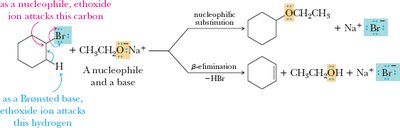
Example: Ethoxide ion can act as a nucleophile (substitution) or as a base (elimination).
Mechanisms of Nucleophilic Substitution
SN2 Mechanism (Bimolecular Nucleophilic Substitution)
The SN2 mechanism occurs in a single step, with simultaneous bond formation and bond breaking. The nucleophile attacks the electrophilic carbon from the opposite side of the leaving group (backside attack), resulting in inversion of configuration.
SN2: Substitution, Nucleophilic, Bimolecular
Transition State: Both nucleophile and leaving group are involved.
Reaction Order: Second order (rate depends on both substrate and nucleophile).
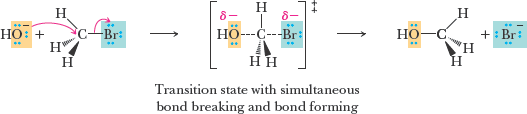
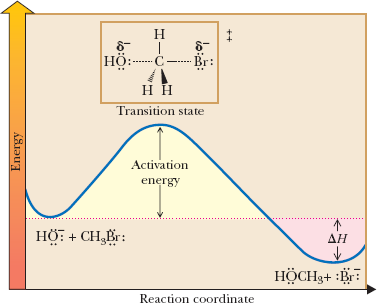
Example: Hydroxide ion attacks methyl bromide, forming methanol and bromide ion.
SN1 Mechanism (Unimolecular Nucleophilic Substitution)
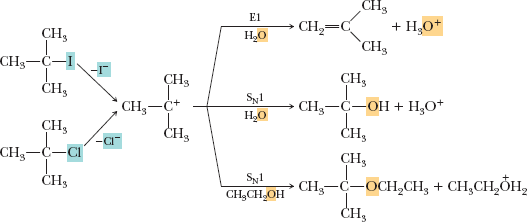
The SN1 mechanism involves two steps: first, the leaving group departs, forming a carbocation intermediate; second, the nucleophile attacks the carbocation. The rate-determining step is the formation of the carbocation, making the reaction first order with respect to the substrate.
SN1: Substitution, Nucleophilic, Unimolecular
Carbocation Intermediate: Planar, allowing attack from either face.
Reaction Order: First order (rate depends only on substrate).
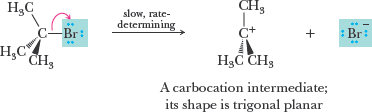
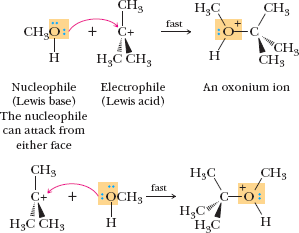
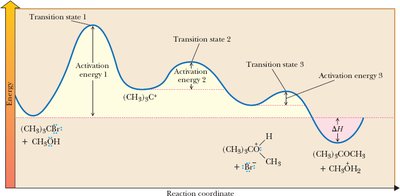
Example: Tert-butyl bromide reacts with methanol, forming tert-butyl methyl ether.
Key Mechanism Differences: SN1 vs. SN2
Comparison Table
SN2: One step, transition state, inversion of configuration.
SN1: Two steps, carbocation intermediate, racemization or partial inversion.
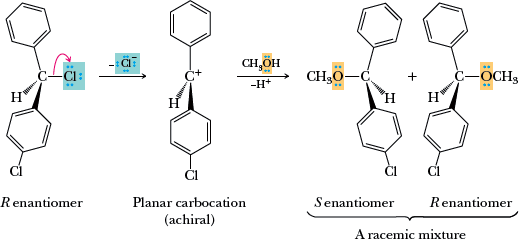
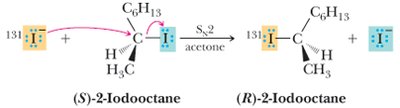
Example: SN2 reactions proceed with complete inversion; SN1 reactions may result in racemization.
Factors Affecting Nucleophilic Substitution
Structure of the Alkyl Portion of the Haloalkane
The structure of the substrate influences the mechanism. SN1 is favored by substrates that can form stable carbocations (tertiary, allylic, benzylic), while SN2 is favored by less hindered substrates (primary, methyl).
SN1: Electronic factors, carbocation stability.
SN2: Steric factors, accessibility to nucleophile.
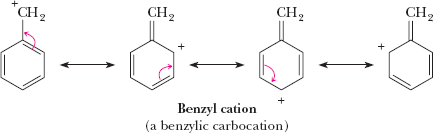
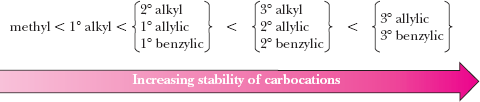
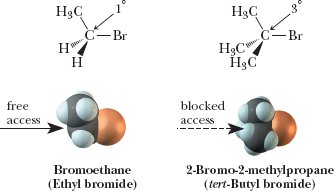
Example: Tertiary haloalkanes react via SN1; primary haloalkanes via SN2.
The Leaving Group
The leaving group must be able to stabilize the negative charge after departure. The more stable the anion, the better the leaving group. Strong acids have weak conjugate bases, which are good leaving groups.
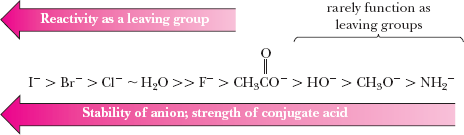
Example: Iodide, bromide, and chloride are good leaving groups; hydroxide and amide are poor.
The Solvent
Solvents affect reaction rates, nucleophilicity, and the balance between SN1 and SN2. Solvents are classified as protic (hydrogen-donating) or aprotic, and as polar or nonpolar based on dielectric constant.
Polar Protic: Water, alcohols, carboxylic acids.
Polar Aprotic: DMSO, acetonitrile, DMF, acetone.
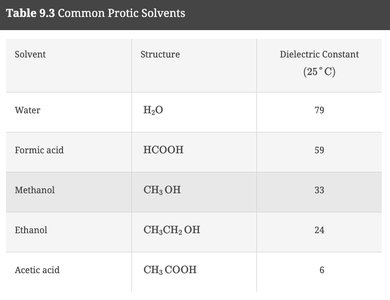
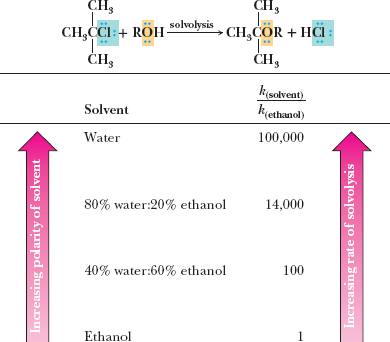
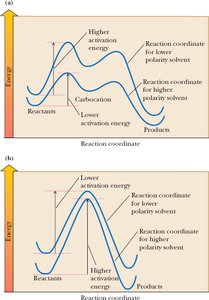
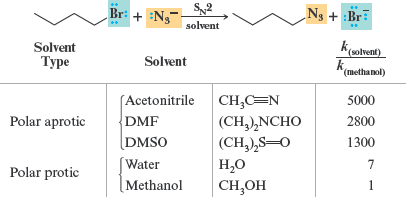
Example: SN1 is favored in polar protic solvents; SN2 is favored in polar aprotic solvents.
Structure of the Nucleophile
Nucleophilicity is a kinetic property, while basicity is an equilibrium property. Strong, sterically unhindered bases are good nucleophiles. Nucleophilicity is affected by solvent and the nature of the nucleophile.
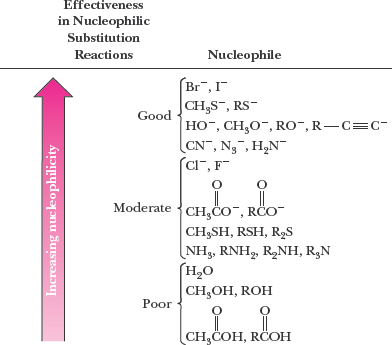
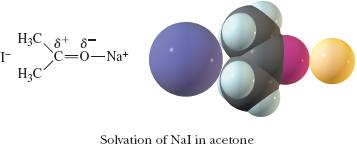
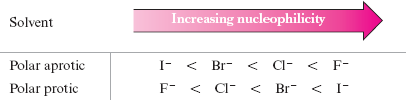
Example: In polar aprotic solvents, nucleophilicity increases with basicity; in polar protic solvents, polarizability dominates.
Skeletal Rearrangement in SN1 Reactions
Carbocation Rearrangement
Carbocation intermediates formed in SN1 reactions can rearrange to more stable carbocations via hydride or alkyl shifts. SN2 reactions do not involve rearrangement.

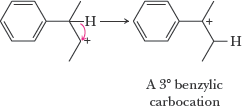
Example: Hydride shift leads to a more stable tertiary benzylic carbocation before nucleophilic attack.
Analysis of Nucleophilic Substitution Reactions
Predicting Products and Mechanisms
To predict the outcome of nucleophilic substitution, consider the structure of the haloalkane, the nucleophile, the leaving group, and the solvent. SN1 is favored by tertiary substrates and polar protic solvents; SN2 is favored by primary substrates and polar aprotic solvents.
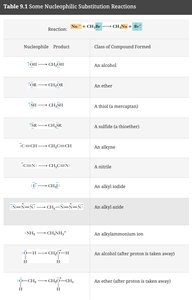
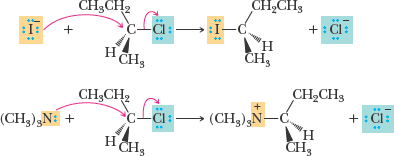
Example: Methanol/water favors SN1; strong nucleophiles in aprotic solvents favor SN2.
β-Elimination Reactions
Mechanism and Zaitsev's Rule
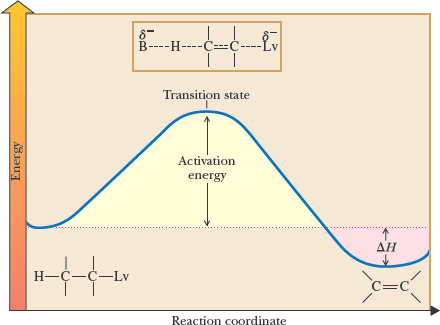
β-elimination involves removal of a hydrogen and a leaving group from adjacent carbons, forming an alkene. Strong bases promote β-elimination, and the major product is usually the most substituted alkene, following Zaitsev's rule.
Zaitsev's Rule: The most substituted alkene is the major product.
Dehydrohalogenation: Removal of H and X from adjacent carbons.

Example: Sodium ethoxide in ethanol promotes β-elimination, yielding the most substituted alkene.
E1 and E2 Mechanisms
E1 is a unimolecular elimination mechanism, involving carbocation formation followed by proton removal. E2 is a bimolecular mechanism, with simultaneous proton removal and leaving group departure.
E1: Favored by tertiary substrates and polar protic solvents.
E2: Favored by strong bases and less hindered substrates.
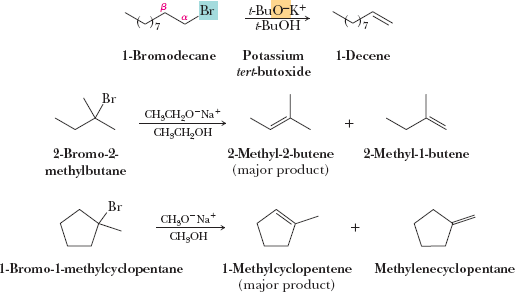
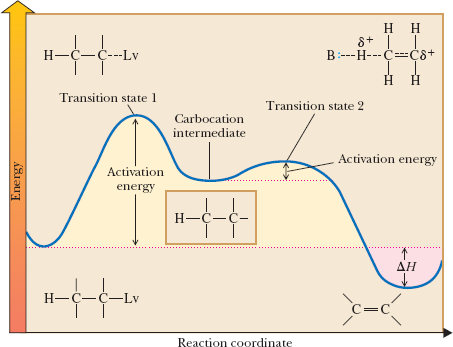
Example: E2 occurs with strong bases like hydroxide, alkoxides, and amide anions.
Competition Between Substitution and Elimination
Factors Determining Pathway
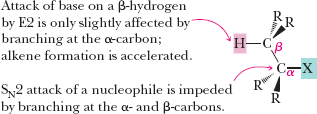
The competition between substitution and elimination depends on substrate structure, nucleophile/base strength, solvent, and temperature. Branching at the α- or β-carbon increases E2 and retards SN2. Higher temperatures favor elimination.
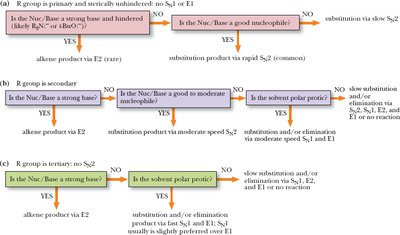
Example: Strong nucleophiles with pKa below 11 favor SN2; strong bases with pKa above 11 favor E2.
Summary Table: SN1 vs SN2 Reactions of Haloalkanes
The following table summarizes the characteristics and outcomes of SN1 and SN2 reactions for different types of alkyl halides:
Type of Alkyl Halide | SN2 | SN1 |
|---|---|---|
Methyl (CH3X) | SN2 is favored | SN1 does not occur |
Primary (RCH2X) | SN2 is favored | SN1 rarely occurs |
Secondary (R2CHX) | SN2 is favored in aprotic solvents | SN1 is favored in protic solvents |
Tertiary (R3CX) | SN2 does not occur | SN1 is favored |
Substitution at a chiral center | Inversion of configuration | Racemization or partial inversion |
Example: Tertiary alkyl halides react via SN1, primary via SN2.
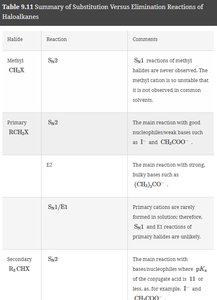
Summary Table: Substitution vs Elimination Reactions of Haloalkanes
The following table summarizes the preferred reaction pathway for different types of haloalkanes:
Halide | Reaction | Comments |
|---|---|---|
Methyl (CH3X) | SN2 | SN1 reactions are never observed |
Primary (RCH2X) | SN2/E1 | Main reaction with good nucleophiles; E2 with strong, bulky bases |
Secondary (R2CHX) | SN2/E1 | Main reaction with nucleophiles where pKa < 11; E2 with strong bases |
Tertiary (R3CX) | SN1/E1/E2 | SN2 does not occur; SN1 and E1/E2 predominate |
Example: Primary haloalkanes favor SN2; tertiary favor SN1/E1/E2.
Conclusion
Nucleophilic substitution and β-elimination are central to organic chemistry, with their mechanisms and outcomes determined by substrate structure, nucleophile/base strength, leaving group ability, solvent, and temperature. Understanding these factors allows prediction and control of reaction pathways in synthetic organic chemistry.
