 Back
BackOrganic Chemistry: Boiling Points of Alkanes and Structural Isomers
Study Guide - Smart Notes
 Tailored notes based on your materials, expanded with key definitions, examples, and context.
Q1. List n-hexane, 2,3-dimethylbutane, and 2-methylpentane in order of increasing boiling point.
Background
Topic: Physical Properties of Alkanes (Boiling Points)
This question tests your understanding of how molecular structure (branching and chain length) affects the boiling points of alkanes. More branching generally lowers boiling point, while longer straight chains increase it.
Key Terms and Concepts:
n-Hexane: A straight-chain alkane with six carbons (C6H14).
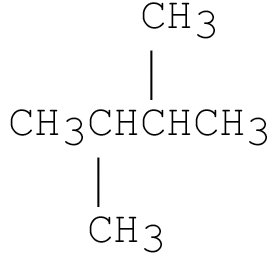
2,3-Dimethylbutane: A highly branched alkane isomer of hexane.
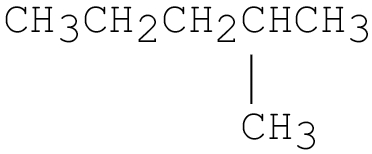
2-Methylpentane: A branched alkane isomer of hexane, less branched than 2,3-dimethylbutane.
Boiling Point: The temperature at which a liquid turns into vapor. For alkanes, more branching means lower boiling point due to decreased surface area and weaker London dispersion forces.
Step-by-Step Guidance
Draw the structures of each compound to visualize their branching:
n-Hexane: CH3CH2CH2CH2CH2CH3 (no branches)
2,3-Dimethylbutane: (see image below)
2-Methylpentane: (see image below)
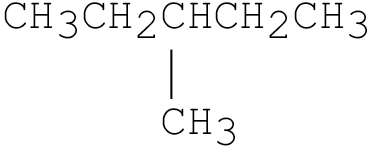
Recall the trend: More branching = lower boiling point. Straight chains have the highest boiling points among isomers.
Rank the compounds by degree of branching:
2,3-Dimethylbutane: most branched
2-Methylpentane: intermediate branching
n-Hexane: no branching (straight chain)
Arrange the compounds in order of increasing boiling point (from lowest to highest) based on their branching.
Try solving on your own before revealing the answer!
Final Answer: 2,3-dimethylbutane < 2-methylpentane < n-hexane
2,3-dimethylbutane is the most branched and has the lowest boiling point, followed by 2-methylpentane, and n-hexane (straight chain) has the highest boiling point.
