 Back
BackOrganic Chemistry Exam Study Guidance: Aromaticity, Mechanisms, and Reactions
Study Guide - Smart Notes
 Tailored notes based on your materials, expanded with key definitions, examples, and context.
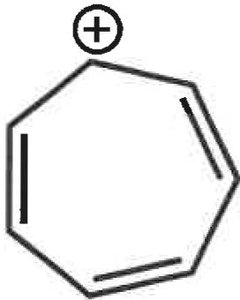
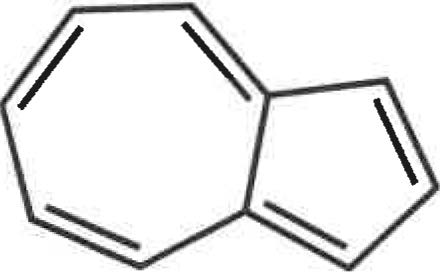
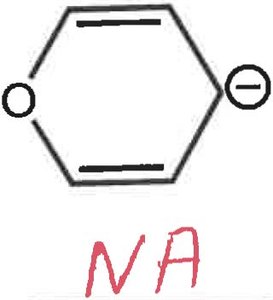
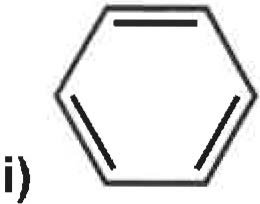
Q10. Label the structures below as aromatic (A), non-aromatic (NA), or antiaromatic (AA).
Background
Topic: Aromaticity and Classification of Cyclic Compounds
This question tests your understanding of aromaticity, antiaromaticity, and non-aromaticity in organic molecules. You need to apply Huckel's rule and recognize structural features that determine aromatic character.
Key Terms and Concepts:
Aromatic: Cyclic, planar, fully conjugated, and follows Huckel's rule ( π electrons).
Antiaromatic: Cyclic, planar, fully conjugated, but has π electrons (unstable).
Non-aromatic: Does not meet criteria for aromaticity or antiaromaticity (may lack planarity or conjugation).
Huckel's Rule: Aromatic compounds must have π electrons, where is an integer.
Step-by-Step Guidance
Examine each structure for planarity and conjugation. Is the ring fully conjugated (alternating double/single bonds or lone pairs)?
Count the number of π electrons in the ring system. For each structure, identify if it has or π electrons.
Determine if the ring is planar and if all atoms participate in conjugation. If not, it is non-aromatic.
Apply Huckel's rule: If the ring is planar and fully conjugated, check if the π electron count fits (aromatic) or (antiaromatic).
Assign the correct label (A, AA, or NA) based on your analysis, but stop before labeling all structures.
Try solving on your own before revealing the answer!
Final Answer:
Cycloheptatrienyl cation: AA (antiaromatic)
Indole-like fused ring: A (aromatic)
Six-membered ring with oxygen and negative charge: NA (non-aromatic)
Benzene ring: A (aromatic)
Each structure was analyzed for planarity, conjugation, and π electron count. Aromatic compounds follow Huckel's rule, antiaromatic compounds have π electrons, and non-aromatic compounds lack full conjugation or planarity.
