 Back
BackOrganic Chemistry Worksheet Study Guidance – Naming, Mechanisms, Reactivity, and Synthesis
Study Guide - Smart Notes
 Tailored notes based on your materials, expanded with key definitions, examples, and context.
Q1. Provide the IUPAC/systematic name for each of the following compounds.
Background
Topic: Nomenclature of Organic Compounds
This question tests your ability to apply IUPAC rules to name organic molecules, which is fundamental for clear communication in organic chemistry.
Key Terms:
IUPAC: International Union of Pure and Applied Chemistry, sets systematic naming rules.
Functional groups: Groups of atoms responsible for characteristic reactions.
Parent chain: The longest continuous carbon chain in the molecule.
Step-by-Step Guidance
Identify the longest carbon chain in the structure; this will be your parent chain.
Determine the principal functional group and assign its suffix (e.g., -ol for alcohol, -one for ketone).
Number the chain so that the functional group gets the lowest possible number.
Identify and name any substituents (alkyl groups, halides, etc.), and assign their positions.
Combine the substituent names, parent chain, and functional group suffix into the full IUPAC name.
Try solving on your own before revealing the answer!
Final Answer: Example – 4-bromohexan-3-ol
This name follows the IUPAC rules: parent chain (hexane), functional group (alcohol at C3), substituent (bromo at C4).
Q2. For each reaction, ozonolysis of an unknown compound yielded equal amounts of the products below. What is a possible structure of the unknown compound?
Background
Topic: Ozonolysis of Alkenes
This question tests your understanding of how ozonolysis cleaves double bonds to form carbonyl compounds, and how to deduce the original alkene structure from the products.
Key Terms and Concepts:
Ozonolysis: Reaction where ozone cleaves C=C bonds, forming aldehydes or ketones.
Carbonyl compounds: Aldehydes and ketones formed as products.
Ring size: The question specifies 5-membered and 6-membered rings.
Step-by-Step Guidance
Examine the carbonyl products given for each reaction.
Determine how the products could be joined to form a ring with the specified number of members.
Draw the possible alkene structure that would yield these products upon ozonolysis.
Check that the structure fits the ring size requirement (5-membered or 6-membered).



Try solving on your own before revealing the answer!
Final Answer: Draw the ring alkene that would split into the given carbonyls.
For example, a cyclopentene with a double bond between the carbons that become the carbonyls.
Q3. Predict the major product(s) of the following reactions. Make sure to indicate the stereochemistry of the products.
Background
Topic: Reaction Mechanisms and Stereochemistry
This question tests your ability to predict the outcome of organic reactions, including regioselectivity and stereochemistry.
Key Terms:
Major product: The most abundant product formed.
Stereochemistry: The spatial arrangement of atoms in the product.
Regioselectivity: Preference for one direction of chemical bond making or breaking over all possible directions.
Step-by-Step Guidance
Identify the type of reaction (e.g., addition, substitution, elimination).
Determine the regioselectivity (Markovnikov or anti-Markovnikov).
Analyze the stereochemistry (syn or anti addition, chiral centers).
Draw the product(s) with correct stereochemistry.




Try solving on your own before revealing the answer!
Final Answer: Draw the major product(s) with stereochemistry indicated.
For example, anti addition leads to trans stereochemistry.
Q4. Indicate whether the following reactions are regioselective, stereoselective, and/or stereospecific. Drawing out the products will be a big help.
Background
Topic: Selectivity in Organic Reactions
This question tests your understanding of regioselectivity, stereoselectivity, and stereospecificity in organic reactions.
Key Terms:
Regioselective: Reaction favors one direction of bond formation.
Stereoselective: Reaction favors formation of one stereoisomer over another.
Stereospecific: Reaction mechanism leads to a specific stereoisomer.
Step-by-Step Guidance
Identify the reagents and the type of reaction (e.g., addition, substitution).
Draw the possible products and analyze their regio- and stereochemistry.
Determine if the reaction is regioselective, stereoselective, or stereospecific based on the product distribution.
Try solving on your own before revealing the answer!
Final Answer: Indicate Yes/No for each selectivity type for each reaction.
For example, hydroboration-oxidation is regioselective and stereospecific.
Q5. For each compound below, draw resonance contributors. Indicate the most stable and draw the resonance hybrid as well.
Background
Topic: Resonance Structures
This question tests your ability to draw resonance contributors and identify the most stable form.
Key Terms:
Resonance: Delocalization of electrons across multiple atoms.
Resonance hybrid: The true structure, a blend of all contributors.
Step-by-Step Guidance
Draw all possible resonance contributors for the compound.
Identify the most stable contributor (usually the one with full octets and minimal formal charge).
Draw the resonance hybrid, showing partial charges and delocalized electrons.
Try solving on your own before revealing the answer!
Final Answer: Draw the most stable resonance contributor and the hybrid.
Stability is determined by charge distribution and octet completion.
Q6. Draw all the resonance contributors of the following compounds. Use arrows to show the flow of electrons.
Background
Topic: Resonance and Electron Flow
This question tests your ability to illustrate electron movement in resonance structures.
Key Terms:
Curved arrows: Indicate electron movement.
Resonance contributors: Different possible electron arrangements.
Step-by-Step Guidance
Draw the initial structure of the compound.
Use curved arrows to show electron movement to generate other resonance contributors.
Repeat for all possible contributors.
Try solving on your own before revealing the answer!
Final Answer: Draw all resonance contributors with arrows.
Electron flow is shown by curved arrows.
Q7. Starting from 1-butyne, propose a synthesis of the two compounds shown below. Show the products formed from each synthetic step and reagents used.
Background
Topic: Organic Synthesis
This question tests your ability to plan a multi-step synthesis starting from a given compound.
Key Terms:
1-butyne: An alkyne starting material.
Synthesis: Sequence of reactions to convert one compound to another.
Reagents: Chemicals used to effect transformations.
Step-by-Step Guidance
Identify the target compounds and their functional groups.
Determine the transformations needed (e.g., addition, reduction, substitution).
Choose appropriate reagents for each step.
Draw the product after each step, showing the changes.


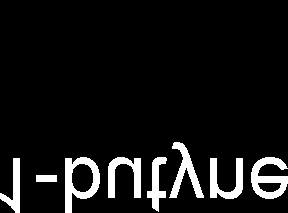
Try solving on your own before revealing the answer!
Final Answer: Sequence of reactions and products for each step.
Each step uses a specific reagent to transform 1-butyne into the target compound.
Q8. Predict the major product that results from the following reaction sequences:
Background
Topic: Reaction Sequences and Product Prediction
This question tests your ability to follow a sequence of reactions and predict the final major product.
Key Terms:
Reaction sequence: Multiple steps, each with its own reagents.
Major product: Most abundant product after all steps.
Step-by-Step Guidance
Identify the starting material and reagents for each step.
Predict the product of the first step.
Use the product as the starting material for the next step, and repeat.
Draw the structure of the final major product.


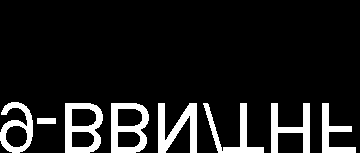
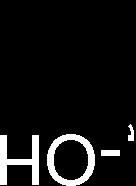


Try solving on your own before revealing the answer!
Final Answer: Draw the final major product after all steps.
Follow each step carefully to ensure correct product prediction.
Q9. Rank the following groups in terms of reactivity with HBr.
Background
Topic: Reactivity of Functional Groups
This question tests your understanding of how different groups react with HBr, a common reagent in organic chemistry.
Key Terms:
HBr: Hydrobromic acid, used for addition to alkenes and alkynes.
Reactivity: How quickly or favorably a group reacts.
Step-by-Step Guidance
Identify the functional groups or molecules listed.
Consider the mechanism of HBr addition (Markovnikov or anti-Markovnikov).
Rank the groups based on their expected reactivity with HBr.
Try solving on your own before revealing the answer!
Final Answer: List the groups from most to least reactive with HBr.
Reactivity depends on electron density and stability of intermediates.
Q10. Predict the product of the following reactions.
Background
Topic: Reaction Mechanisms and Product Prediction
This question tests your ability to predict the outcome of organic reactions based on the reagents and starting materials.
Key Terms:
Product: The compound formed after the reaction.
Mechanism: The stepwise process by which the reaction occurs.
Step-by-Step Guidance
Identify the starting material and reagents.
Determine the type of reaction (addition, substitution, elimination).
Draw the product, considering regio- and stereochemistry.


Try solving on your own before revealing the answer!
Final Answer: Draw the product for each reaction.
Product prediction is based on the mechanism and reagents used.
Q11. Provide a possible mechanism for reaction ii, using your knowledge of the mechanism for reaction i.
Background
Topic: Reaction Mechanisms and Pattern Recognition
This question tests your ability to apply known mechanisms to similar reactions and recognize patterns in reactivity.
Key Terms:
Mechanism: Stepwise process of bond breaking/forming.
Anti-addition: Addition of atoms to opposite sides of a double bond.
Step-by-Step Guidance
Review the mechanism for reaction i (halogenation of alkenes).
Identify the similarities between reaction i and reaction ii.
Draw the stepwise mechanism for reaction ii, showing electron movement and intermediate formation.
Try solving on your own before revealing the answer!
Final Answer: Draw the mechanism for reaction ii, showing anti-addition.
The mechanism is similar to reaction i, with anti-addition and similar intermediates.
Q12. Provide a reasonable arrow pushing mechanism for the following reactions.
Background
Topic: Arrow Pushing Mechanisms
This question tests your ability to illustrate the movement of electrons in organic reactions using curved arrows.
Key Terms:
Arrow pushing: Shows electron movement.
Mechanism: Stepwise process of the reaction.
Step-by-Step Guidance
Draw the starting material and reagents.
Use curved arrows to show electron movement for each step.
Draw intermediates and products for each step.


Try solving on your own before revealing the answer!
Final Answer: Draw the full arrow pushing mechanism for each reaction.
Curved arrows show electron movement and intermediate formation.
Q13. Indicate whether the following compounds are aromatic, antiaromatic, or non-aromatic. You may assume all rings are planar.
Background
Topic: Aromaticity
This question tests your ability to apply the rules of aromaticity to cyclic compounds.
Key Terms:
Aromatic: Follows Huckel's rule, planar, fully conjugated, 4n+2 pi electrons.
Antiaromatic: Planar, fully conjugated, 4n pi electrons.
Non-aromatic: Does not meet criteria for aromaticity or antiaromaticity.
Step-by-Step Guidance
Determine if the ring is planar and fully conjugated.
Count the number of pi electrons in the ring.
Apply Huckel's rule to classify as aromatic, antiaromatic, or non-aromatic.
Try solving on your own before revealing the answer!
Final Answer: Classify each compound as aromatic, antiaromatic, or non-aromatic.
Use pi electron count and conjugation to determine classification.
Q14. Provide a MO diagram (Frost circle/diagram) for the pi system of the following ring.
Background
Topic: Molecular Orbital Theory and Aromaticity
This question tests your ability to construct a Frost circle diagram for a cyclic pi system.
Key Terms:
MO diagram: Shows energy levels of molecular orbitals.
Frost circle: Tool for visualizing MO energies in cyclic systems.
Step-by-Step Guidance
Draw a circle and inscribe the polygon representing the ring.
Mark the energy levels where the vertices touch the circle.
Fill the orbitals with the correct number of pi electrons.
Try solving on your own before revealing the answer!
Final Answer: Draw the Frost circle diagram for the ring.
Energy levels correspond to the vertices of the inscribed polygon.
Q15. For each pair of compounds, indicate the stronger acid.
Background
Topic: Acidity Comparison
This question tests your ability to compare acidity based on structure, substituents, and resonance effects.
Key Terms:
Acid strength: Tendency to donate a proton.
Resonance stabilization: Stabilizes conjugate base, increases acidity.
Inductive effects: Electron-withdrawing groups increase acidity.
Step-by-Step Guidance
Identify the functional groups and substituents in each compound.
Consider resonance and inductive effects on the conjugate base.
Compare the stability of the conjugate bases to determine which acid is stronger.
Try solving on your own before revealing the answer!
Final Answer: Indicate the stronger acid for each pair.
Acidity is determined by resonance and electron-withdrawing effects.
