Back
BackOrganometallic Compounds and Carbenes in Organic Synthesis
Study Guide - Smart Notes
 Tailored notes based on your materials, expanded with key definitions, examples, and context.
Why Study Organic Chemistry?
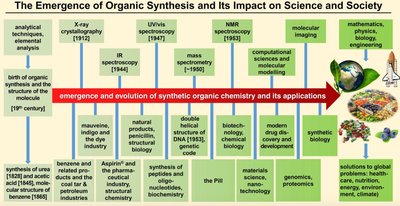
Organic Chemistry as an Enabling Science
Organic chemistry is foundational to numerous scientific disciplines and technologies. Its principles and reactions are essential for the development of new materials, medicines, and analytical techniques. The study of organic chemistry enables advances in both chemical and biological sciences, impacting fields such as biochemistry, pharmacy, genetics, and materials science.
Key Point: Organic chemistry underpins the synthesis and understanding of molecules in living systems and industrial applications.
Key Point: It is crucial for the development of pharmaceuticals, polymers, and functional materials.
Example: The synthesis of DNA, RNA, and proteins relies on organic reactions and methodologies.
Organic Chemistry in Medicine and Society
Applications in Pharmaceuticals
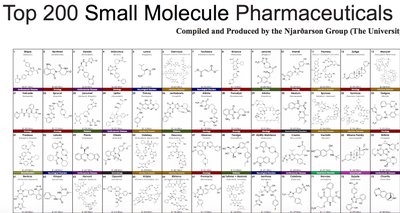
Organic chemistry is central to drug discovery and the development of small molecule pharmaceuticals. The design and synthesis of medicinal compounds depend on organic reactions and synthetic strategies.
Key Point: Most modern drugs are small organic molecules synthesized using organic reactions.
Key Point: The diversity of organic reactions allows for the creation of complex molecules with specific biological activities.
Example: The top 200 small molecule pharmaceuticals are products of advanced organic synthesis.
Trends in Synthetic Methodologies
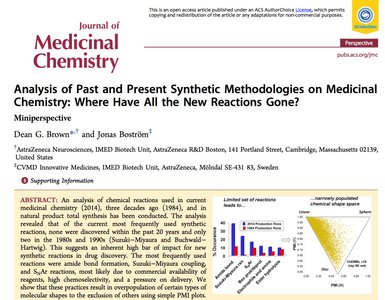
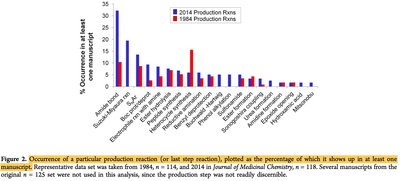
Analysis of medicinal chemistry literature reveals the prevalence and evolution of synthetic methodologies over time. Certain reactions remain dominant in drug synthesis, while others have declined or emerged.
Key Point: The frequency of specific organic reactions in pharmaceutical production can be tracked and analyzed.
Key Point: Understanding these trends helps guide future research and development in synthetic organic chemistry.
Example: The occurrence of production reactions in medicinal chemistry journals shows shifts in preferred methodologies.
Organometallic Compounds in Organic Synthesis
Introduction to Organometallic Compounds
Organometallic compounds contain carbon-metal bonds and are fundamental reagents in synthetic organic chemistry. They enable the formation of new carbon-carbon bonds and are widely used in the synthesis of complex molecules.
Key Point: Common organometallic reagents include organomagnesium (Grignard), organolithium, and lithium diorganocopper (Gilman) compounds.
Key Point: These reagents are especially important for reactions involving carbonyl compounds and cross-coupling processes.
Example: Grignard reagents are used to synthesize alcohols from alkyl halides and carbonyl compounds.
Grignard Reagents (R-MgX)
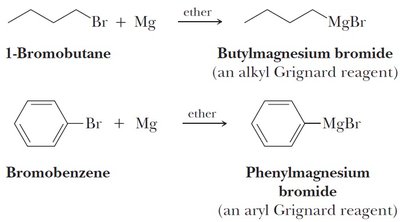
Grignard reagents are organomagnesium compounds prepared by reacting alkyl, aryl, or alkenyl halides with magnesium metal in ether solvents. They are versatile nucleophiles and bases in organic synthesis.
Key Point: Grignard reagents are typically prepared from bromides, iodides, or chlorides.
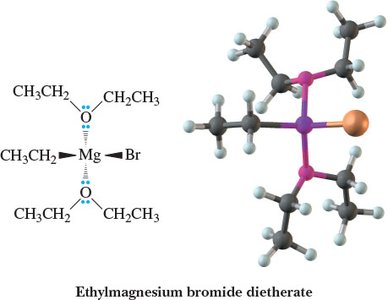
Key Point: They exist as coordination complexes solvated by ether, with magnesium acting as a Lewis acid.
Example: 1-Bromobutane reacts with Mg in ether to form butylmagnesium bromide.
Organolithium Reagents (R-Li)
Organolithium compounds are prepared by treating alkyl, aryl, or alkenyl halides with lithium metal. They are highly reactive nucleophiles and bases, used under inert atmospheres due to their sensitivity to moisture and oxygen.
Key Point: Organolithium reagents are more reactive than Grignard reagents and are widely used in modern synthesis.
Key Point: They enable the formation of new C-C bonds and are essential in the preparation of Gilman reagents.
Example: 1-Chlorobutane reacts with lithium in pentane to form butyllithium.

Reactivity and Mechanism
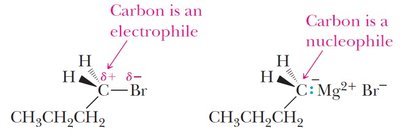
Both Grignard and organolithium reagents behave as carbanions, acting as nucleophiles in reactions with electrophilic centers such as carbonyl groups. The transformation of the halide carbon from electrophilic to nucleophilic is a key mechanistic feature.
Key Point: Carbon-metal bonds in these reagents are polar covalent, with carbon bearing a partial negative charge.
Key Point: These reagents react with aldehydes, ketones, esters, and acid chlorides to form new C-C bonds.
Example: The carbon in an alkyl halide is electrophilic, but becomes nucleophilic after reaction with Mg or Li.
Acid-Base Reactions of RMgX and RLi
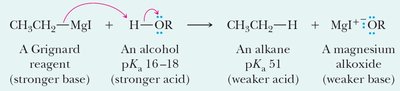
Grignard and organolithium reagents are strong bases and react readily with protic acids. Their basicity is demonstrated by their ability to deprotonate alcohols, water, and other functional groups with higher acidity than alkanes.
Key Point: These reagents cannot be prepared from organohalides containing acidic or reactive functional groups.
Key Point: Acid-base reactions proceed from stronger acid/base to weaker acid/base, as shown by pKa values.
Example: Ethylmagnesium iodide reacts with alcohol to form an alkane and magnesium alkoxide.


Reactions with Oxiranes (Epoxides)
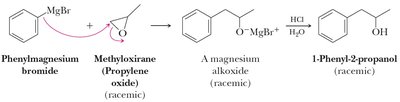
Grignard and organolithium reagents react with oxiranes (epoxides) to produce alcohols with extended carbon chains. The reaction is regioselective, favoring attack at the less hindered carbon in an SN2-like mechanism.
Key Point: The product is a primary alcohol with a chain two carbons longer than the original reagent.
Key Point: Substituted oxiranes yield products based on regioselective ring opening.
Example: Butylmagnesium bromide reacts with ethylene oxide to form 1-hexanol.

Lithium Diorganocopper (Gilman) Reagents
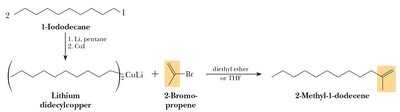
Gilman reagents are prepared by reacting organolithium compounds with copper(I) iodide. They are used for coupling reactions with organohalides, forming new C-C bonds with high selectivity.
Key Point: Only one organic group from the Gilman reagent is transferred in the coupling reaction.
Key Point: Best yields are obtained with methyl, primary alkyl, allylic, vinylic, and aryl halides.
Example: Butyllithium reacts with CuI to form lithium dibutylcopper, a Gilman reagent.


Reactions of Gilman Reagents
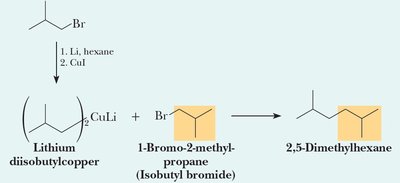
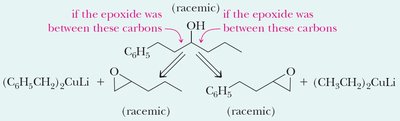
Gilman reagents are used for the selective formation of C-C bonds in organic synthesis, including the coupling of halides and the regioselective opening of epoxides.
Key Point: Coupling reactions preserve the configuration of double bonds in vinylic halides.
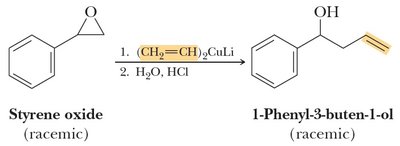
Key Point: Gilman reagents open epoxide rings at the less substituted carbon, yielding alcohols.
Example: Lithium dimethylcopper converts 1-bromocyclohexene to 1-methylcyclohexene.

Carbenes and Carbenoids
Carbenes: Structure and Reactivity
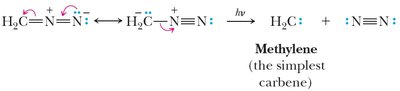
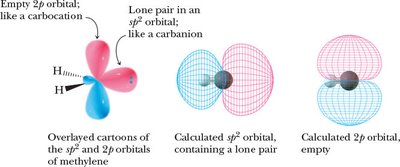
Carbenes are neutral molecules with a divalent carbon atom possessing only six valence electrons. They are highly reactive and act as electrophiles due to their electron deficiency. The simplest carbene, methylene, is generated by photolysis or thermolysis of diazomethane.
Key Point: Carbenes are sp2 hybridized, with a lone pair in one orbital and a vacant p orbital.
Key Point: Methylene combines features of both carbocations and carbanions.
Example: Photolysis of diazomethane produces methylene and nitrogen gas.
Dichlorocarbene: Preparation and Reactivity
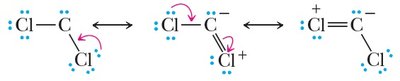
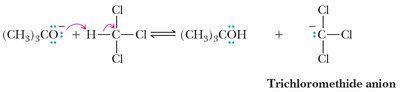
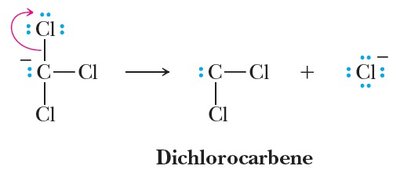
Dichlorocarbene is more stable and selective than methylene due to resonance stabilization by chlorine atoms. It is prepared by treating chloroform with potassium tert-butoxide, which removes HCl and generates the carbene.
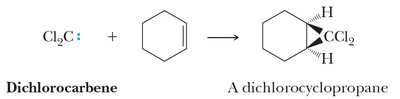
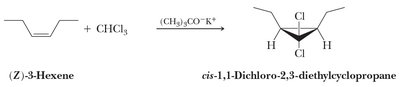
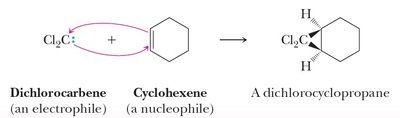
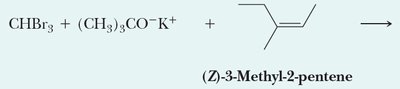
Key Point: Dichlorocarbene reacts with alkenes to form dichlorocyclopropanes via syn addition.
Key Point: The stereochemistry of the alkene is preserved in the cyclopropane product.
Example: Dichlorocarbene adds to cyclohexene to form a dichlorocyclopropane.

Simmons-Smith Reaction
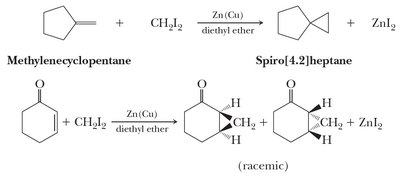
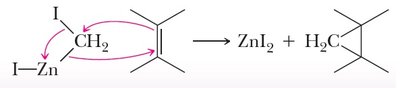
The Simmons-Smith reaction is a method for cyclopropanation of alkenes using the carbenoid iodomethylzinc iodide, prepared from diiodomethane and zinc-copper couple. This reagent reacts with alkenes in a concerted, stereospecific manner to form cyclopropanes.
Key Point: The Simmons-Smith reagent is more selective than free methylene and does not generate free carbenes.
Key Point: The reaction is stereospecific, preserving the configuration of the alkene.
Example: Methylene cyclopentane reacts with the Simmons-Smith reagent to form spiro[4.2]heptane.

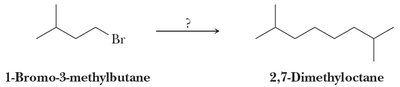
Problem Example: Synthesis Using Organometallic Reagents
Complex organic molecules can be synthesized using organometallic reagents and coupling reactions. Retrosynthetic analysis and stepwise synthesis are essential strategies in organic chemistry.
Key Point: Gilman reagents enable the coupling of alkyl halides to form larger, branched alkanes.
Key Point: All carbon atoms in the target molecule can be sourced from the starting bromoalkane.
Example: 1-Bromo-3-methylbutane is converted to 2,7-dimethyloctane via Gilman reagent coupling.