 Back
BackOrganometallic Reagents in Organic Chemistry: Structure, Preparation, and Reactivity
Study Guide - Smart Notes
 Tailored notes based on your materials, expanded with key definitions, examples, and context.
Chapter 15: Organometallic Reagents
15.1 Organometallic Nomenclature
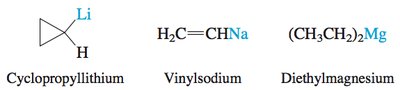
Organometallic compounds are molecules containing a direct bond between a carbon atom and a metal. The nomenclature of these compounds is based on the organic group attached to the metal and the metal itself. Common examples include cyclopropyllithium, vinylsodium, and diethylmagnesium.
Cyclopropyllithium: An organolithium compound with a cyclopropyl group bonded to lithium.
Vinylsodium: Contains a vinyl group bonded to sodium.
Diethylmagnesium: Features two ethyl groups bonded to magnesium.
15.2 The Carbon-Metal Bond
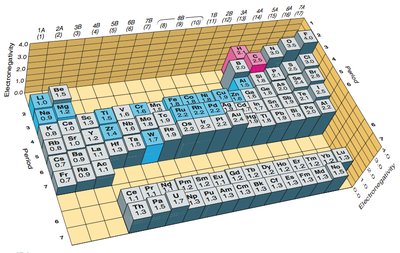
The nature of the carbon-metal bond in organometallic compounds is influenced by the electronegativity of carbon and the metal. Carbon is relatively electronegative compared to many metals, resulting in a polarized bond where carbon often carries a partial negative charge.
Electronegativity: The tendency of an atom to attract electrons. Carbon and hydrogen are more electronegative than most metals.
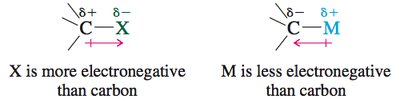
Bond Polarity: When carbon is bonded to a less electronegative metal (M), the bond is polarized with carbon being δ− and metal δ+.
Comparison: In contrast, when carbon is bonded to a more electronegative atom (X), carbon is δ+ and X is δ−.
15.2 Electronic Structure of Organometallics
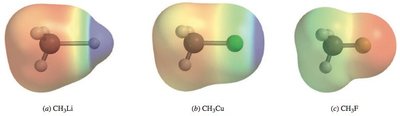
The electronic structure of organometallic compounds varies depending on the metal involved. The electron density distribution affects their reactivity and basicity.
Examples: CH3Li, CH3Cu, and CH3I show different electron distributions due to the nature of the metal or halide.
15.3 Preparation of Organolithium Compounds
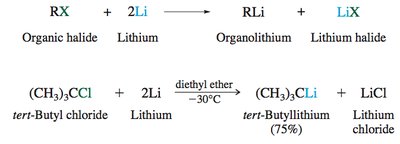
Organolithium compounds are synthesized by the reaction of organic halides with lithium metal. The reactivity of alkyl halides follows the order: I > Br > Cl > F.
General Reaction:
Example: tert-Butyl chloride reacts with lithium in diethyl ether at −30°C to form tert-butyllithium.
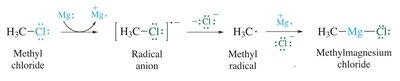
The mechanism involves the formation of a radical anion, followed by the generation of a methyl radical and finally methyl lithium.

15.3 Preparation of Organomagnesium Compounds (Grignard Reagents)
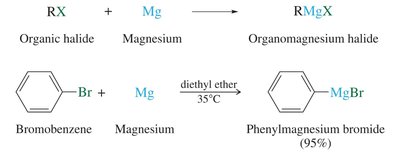
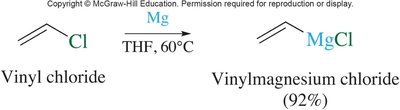
Organomagnesium compounds, known as Grignard reagents, are prepared by reacting organic halides with magnesium metal in an ether solvent.
General Reaction:
Example: Bromobenzene reacts with magnesium in diethyl ether at 35°C to form phenylmagnesium bromide.
15.4 Basicity of Organometallic Carbons
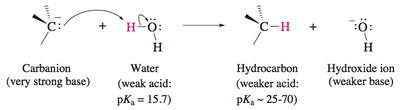
Organometallic carbons act as strong Brønsted bases due to the high electron density on carbon. Their basicity is often compared using pKa values.
Acid-Base Reaction: Organometallic reagents can deprotonate alcohols, water, and other weak acids.
Key Equation:

15.4 Applications of Organometallic Bases
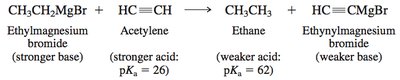
Organometallic reagents are used to generate new carbon-carbon bonds and to deprotonate compounds with relatively acidic hydrogens.
Example: Ethylmagnesium bromide reacts with acetylene to form ethynylmagnesium bromide and ethane.
15.5 Synthesis of Alcohols Using Grignard Reagents
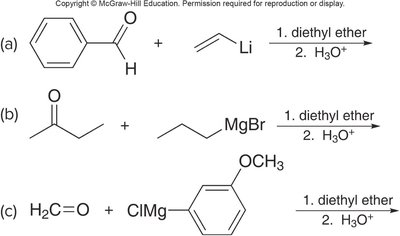
Grignard reagents and organolithium compounds react with ketones and aldehydes to form alcohols. The mechanism involves nucleophilic addition to the carbonyl group, followed by protonation.
General Mechanism:
Example: Predicting products from reactions of Grignard reagents with various carbonyl compounds.
15.6 Acetylenic Alcohols
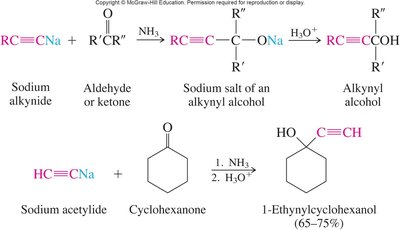
Alkynyl organometallics, such as sodium acetylide, react with aldehydes and ketones to form acetylenic alcohols. This reaction is useful for constructing carbon-carbon bonds involving triple bonds.
General Reaction:
Example: Sodium acetylide reacts with cyclohexanone to form 1-ethynylcyclohexanol.
15.7 Retrosynthetic Analysis with Organometallics
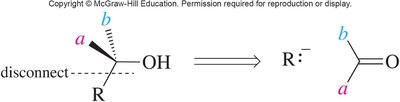
Retrosynthetic analysis is a strategy for planning organic syntheses by breaking down target molecules into simpler precursors. Organometallic reagents are often used in these disconnections, especially for alcohol synthesis.
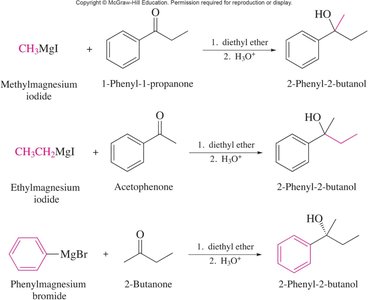
Disconnection Approach: Alcohols can be disconnected to reveal possible carbonyl and organometallic precursors.
Multiple Routes: Different pairs of starting compounds can lead to the same product.

15.8 Simmons-Smith Reaction
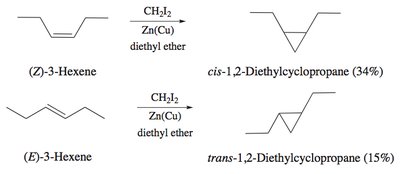
The Simmons-Smith reaction is a method for cyclopropanation of alkenes using organozinc reagents. Zinc inserts into alkyl halide bonds, forming organozinc halides that react with alkenes to produce cyclopropanes.
General Reaction:
Specific Example: Diiodomethane reacts with zinc and copper to form iodomethylzinc iodide, which cyclopropanates alkenes.


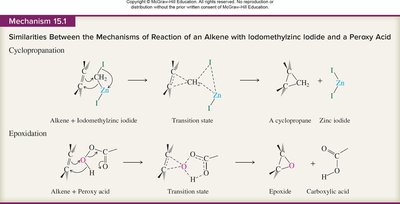
The mechanism of the Simmons-Smith reaction is similar to epoxidation, involving a transition state and the formation of a three-membered ring.
15.10 Transition Metal Organometallic Compounds
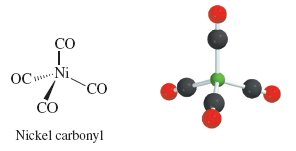
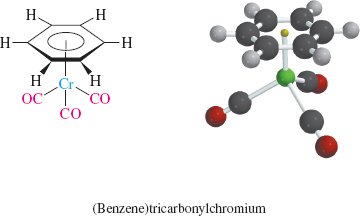
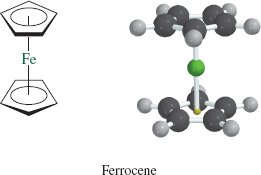
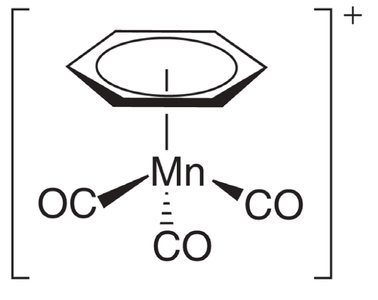
Transition metals form organometallic compounds by bonding to ligands, which can be neutral or anionic. The 18-electron rule is often used to predict stability, as transition metals with 18 valence electrons are considered to have a closed shell.
Common Transition Metals: Sc, Ti, V, Cr, Mn, Fe, Co, Ni, Cu, Zn.
Ligands: Hydride, alkyl, chloride, ammonia, triphenylphosphine, carbon monoxide, cyanide.
Examples: Nickel carbonyl, (benzene)tricarbonylchromium, ferrocene, benzenetricarbonylmanganese cation.


15.11 Organocuprate Reagents (Gilman Reagents)
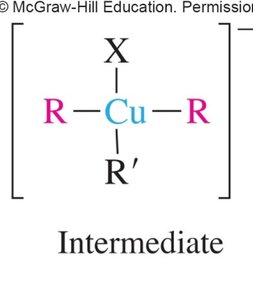
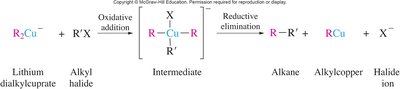
Organocuprate reagents, also known as Gilman reagents, are prepared by reacting organolithium compounds with copper(I) halides. These reagents are used for coupling reactions with alkyl and aryl halides.
Preparation: followed by
Reaction with Alkyl Halides:
Reactivity Order: RI > RBr > RCl >> RF; methyl > primary > secondary > tertiary
Mechanism: Coupling proceeds with inversion of stereochemistry at sp3 centers.





Reagent | Reaction Partner | Product | Yield |
|---|---|---|---|
(CH3)2CuLi | 1-Iodododecane | Undecane | 90% |
(CH3CH2CH2CH2)2CuLi | Iodobenzene | Butylbenzene | 75% |
(CH3CH2)2CuLi | (E)-1-Bromo-2-phenylethene | (E)-1-Phenyl-1-butene | 65% |
Summary: Organometallic reagents are essential tools in organic synthesis, enabling the formation of new carbon-carbon bonds, the preparation of alcohols, and the construction of complex molecules via coupling and cyclopropanation reactions. Their reactivity is governed by the nature of the metal-carbon bond, the basicity of the organometallic carbon, and the properties of the transition metal complexes.
