 Back
BackPharmaceutical Chemistry: Pharmacokinetic and Biopharmaceutical Aspects of Drug Molecules
Study Guide - Smart Notes
 Tailored notes based on your materials, expanded with key definitions, examples, and context.
Pharmaceutical Chemistry: Pharmacokinetic and Biopharmaceutical Aspects of Drug Molecules
Introduction
Pharmaceutical chemistry explores the relationship between the chemical structure of drug molecules and their biological effects. This study guide focuses on the biopharmaceutical and pharmacokinetic properties of drugs, mechanisms of drug absorption, and the physiological factors influencing these processes.
Biopharmaceutical Properties of Drug Substances
Key Physicochemical Properties
Biopharmaceutical properties are the physicochemical characteristics of drug substances that determine their biological action and effectiveness.
Solubility: The ability of a drug to dissolve in bodily fluids, affecting absorption and bioavailability.
Partition Coefficient: Ratio of concentrations of a compound in a mixture of two immiscible solvents, indicating lipophilicity.
Diffusivity: The rate at which drug molecules move through membranes or tissues.
Degree of Ionization: Influences membrane permeability and absorption.
Polymorphism: Existence of different crystalline forms, affecting solubility and stability.
These properties are determined by the chemical structure and stereochemistry of drug substances.
Pharmacokinetic Aspects of Drugs
ADME Process
Pharmacokinetics describes what the body does to the drug after administration, summarized by the ADME process:
Absorption: Entry of drug into systemic circulation.
Distribution: Dispersion of drug throughout body fluids and tissues.
Metabolism: Chemical transformation of the drug, often in the liver.
Elimination: Removal of drug from the body, primarily via kidneys.
Pharmacokinetics is a quantitative study of drug movement in, throughout, and out of the body.
Pharmacokinetic Parameters
Dose (D): Amount of drug administered.
Volume of Distribution (V): Theoretical volume in which the drug is distributed.
Bioavailability (F): Fraction of administered drug reaching systemic circulation unchanged.
Clearance (CL): Volume of plasma cleared of drug per unit time.
Absorption Rate Constant (Ka): Rate at which drug is absorbed.
Mathematical Expression: 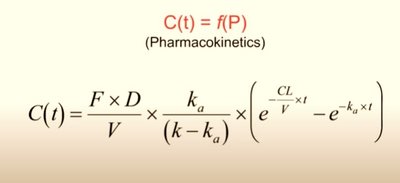
Uses of Pharmacokinetics
Develop mathematical models for drug concentration changes.
Predict drug behavior in the body.
Design dosage regimens.
Determine optimal route, dose, onset, peak, duration, and frequency of dosing.
Drug Absorption
Process of Drug Absorption
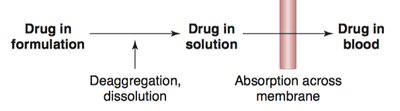
Drug absorption is the process by which a drug enters systemic circulation from the site of administration.
Drug particles must be released from the dosage form and dissolved.
Desirable biopharmaceutical properties enable passage through membranes into the blood.
Bioavailability and Route of Administration
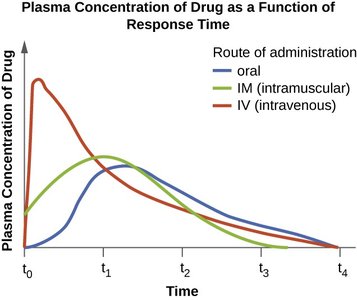
Bioavailability: Percentage of drug reaching systemic circulation unchanged.
Route of administration affects bioavailability (e.g., oral, intravenous, intramuscular).
Bioequivalence: Two formulations with same bioavailability and absorption rate.
Gastrointestinal Physiology and Drug Absorption
Anatomy of the GI Tract
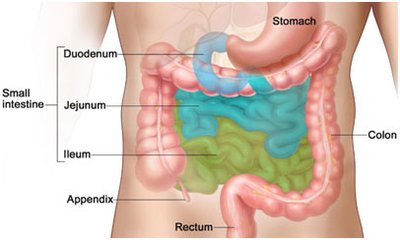
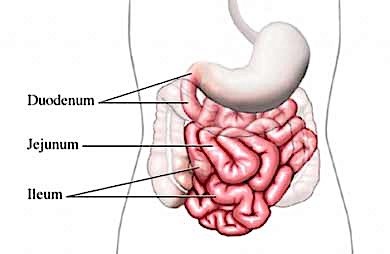
The gastrointestinal tract consists of the stomach, small intestine (duodenum, jejunum, ileum), and large intestine.
Stomach: Divided into body (pepsin and HCl secretion) and pylorus (mucus secretion).
pH: Stomach pH ranges from 1.0 to 3.5; more acidic at night.
Small Intestine: Duodenum (pH 5-7), Jejunum, Ileum (pH 7-8).
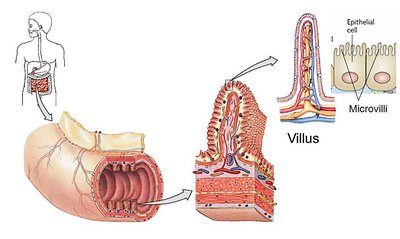
Surface Folds, Villi, Microvilli: Increase absorption area.
Brush Border: Mucopolysaccharide coating acts as a barrier.
Digestive Juices and Enzymatic Activity
Small intestine contains digestive juices with enzymes not found in gastric juices.
Large molecules are hydrolyzed to small, absorbable molecules.
Hydrolyzed products form aqueous solutions or emulsions for absorption.
Biologic Membrane Structure
Membrane Composition
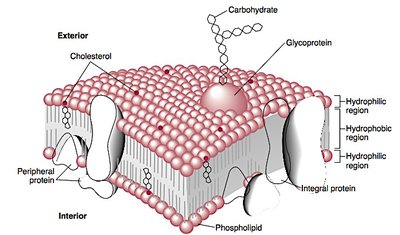
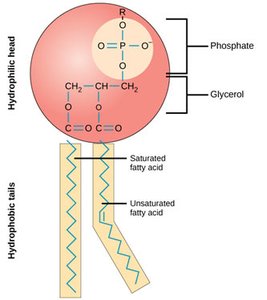
Biologic membranes consist of a bimolecular lipoid layer (phospholipids) covered by protein, with amphipathic molecules and cholesterol.
Small, water-filled pores (~4 Å radius) interrupt the lipid layer.
Pores facilitate passage of water-soluble materials and ions (convective absorption).
Rate of permeation depends on pore size, molecule size, and interactions.
Drug Transfer Across Membranes
Drug transfer involves movement across three phases:
Solution in luminal aqueous phase
Lipid membrane phase
Aqueous phase on the other side of the membrane
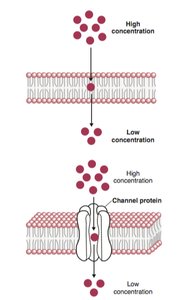
Physiologic Factors Affecting GI Drug Absorption
Key Factors
Properties of epithelial cells
Bowel activity
Degree of vascularity
Effective absorbing surface area
Enzymatic activity in luminal contents
Gastric emptying rate
Mechanisms of Drug Absorption
Overview
Drugs are absorbed via different mechanisms across barrier membranes:
Passive Diffusion
Carrier-Mediated (Active) Transport
Convective Absorption
Passive Diffusion
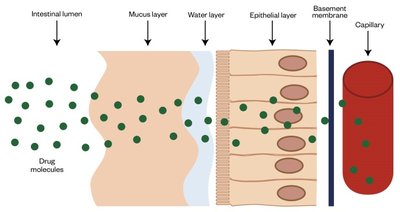
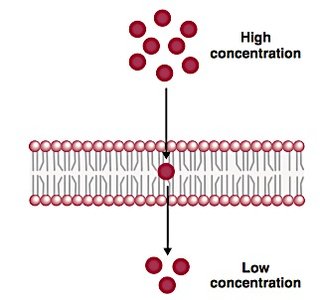
Most common form of drug transfer.
Drug moves from higher to lower concentration due to kinetic energy.
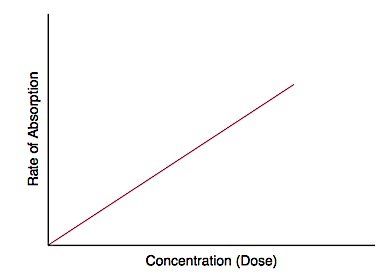
Rate depends on concentration gradient.
First order process: Rate proportional to concentration at absorption site.
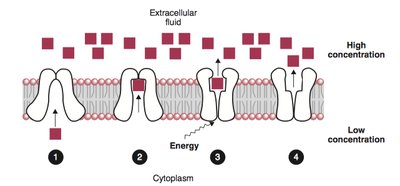
Carrier-Mediated or Active Transport
Drug transported against concentration gradient via membrane carriers (e.g., transporter proteins).
Absorption of amino acids, peptides, glucose, folic acid via this mechanism.
Requires structural similarity between drug and substrate.
Transport can become saturated at high drug concentrations.
Competition among compounds with similar structures.
Capacity-limited mechanism; bioavailability decreases nonlinearly with increasing dose.
Examples: Methyldopa, fluorouracil, penicillamine.
Convective Transport
Absorption of small molecules (radius < 4 Å) through water-filled pores.
Rate determined by sieving coefficient, fluid absorption rate, and solute concentration.
Sieving coefficient depends on relative sizes of pores and molecules.
Summary Table: Mechanisms of Drug Absorption
Mechanism | Direction | Energy Requirement | Saturation | Examples |
|---|---|---|---|---|
Passive Diffusion | High to low concentration | No | No | Most drugs |
Carrier-Mediated (Active) Transport | Against gradient | Yes | Yes | Amino acids, glucose, methyldopa |
Convective Transport | Through pores | No | No | Small molecules |
References
Foye, Lemke, Williams. Principles of Medicinal Chemistry
Katzung. Basic and Clinical Pharmacology
Bently and Driver’s textbook of pharmaceutical chemistry (L.M. Atherden)
