 Back
BackStereochemistry II: Chirality, Enantiomers, and Biological Activity
Study Guide - Smart Notes
 Tailored notes based on your materials, expanded with key definitions, examples, and context.
Stereochemistry: Three-Dimensional Structure and Isomerism
Introduction to Stereochemistry
Stereochemistry is the study of the spatial arrangement of atoms in molecules and its influence on the physical and chemical properties of substances. Understanding stereochemistry is essential for interpreting molecular behavior, especially in biological systems where molecular shape determines function.
3D Representation: Molecules are three-dimensional entities; their spatial arrangement can be depicted using wedge-dash notation to indicate bonds coming out of or going behind the plane of the paper.
Stereochemistry Types: Includes structural isomerism (different connectivity) and stereoisomerism (same connectivity, different spatial arrangement).
Key Terms: Chirality, enantiomers, diastereomers, racemic mixture, meso compounds.
Chirality and Enantiomers
Definition and Properties
A molecule is chiral if it is not superimposable on its mirror image. Such molecules have at least one stereogenic (chiral) center, typically a tetrahedral carbon bonded to four different substituents. The two non-superimposable mirror images are called enantiomers.
Example: Lactic acid exists as a pair of enantiomers, with four different groups (-H, -OH, -CH3, -COOH) attached to the central carbon.
Physical Properties: Enantiomers have identical physical properties (melting point, IR, NMR, density) except for their interaction with plane-polarized light and chiral environments.
Optical Activity: Enantiomers rotate plane-polarized light in opposite directions. Dextrorotatory (+) rotates right; Levorotatory (–) rotates left.
Optical Isomerism and Absolute Configuration
Optical Isomerism
Optical isomers (enantiomers) are distinguished by their effect on plane-polarized light, but this does not reveal their absolute 3D structure. The absolute configuration describes the precise spatial arrangement of groups around a chiral center.
Relative vs. Absolute Stereochemistry: Optical rotation gives relative stereochemistry; absolute configuration requires a systematic description.
Cahn-Ingold-Prelog (CIP) System: R/S Nomenclature
The Cahn-Ingold-Prelog system provides a method for assigning absolute configuration (R or S) to stereogenic centers.
Step 1: Assign Priorities to the four substituents based on atomic number (higher atomic number = higher priority). For isotopes, higher atomic mass takes precedence.
Step 2: Orient the Molecule so the lowest priority group (4) is pointing away from you.
Step 3: Trace a Path from priority 1 → 2 → 3. If the path is clockwise, the configuration is R (rectus, right); if counterclockwise, it is S (sinister, left).
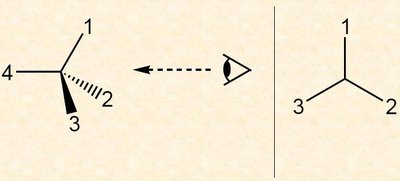
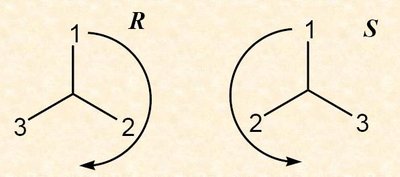
Multiple Bonds: Treat multiply bonded atoms as if they are duplicated or triplicated for priority assignment.
First Point of Difference: If directly attached atoms are identical, move outward until a difference is found.
Example: Lactic Acid
Assigning the stereochemistry of lactic acid enantiomers involves identifying the chiral center, assigning priorities, orienting the molecule, and determining R or S configuration.
Biological Activity of Enantiomers
Enantioselectivity in Biological Systems
Biological receptors are chiral and can distinguish between enantiomers, leading to different biological activities for each enantiomer. The three-point receptor theory explains that only one enantiomer fits optimally into the receptor's binding site, resulting in selective activity.
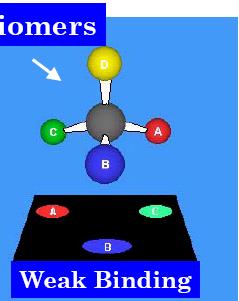
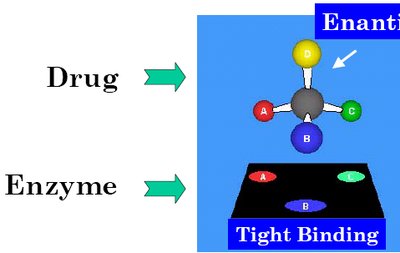
Eutomer: The more active enantiomer.
Distomer: The less active or inactive enantiomer.
Eudismic Ratio (ER): The ratio of activity of eutomer to distomer.
Pharmacological Consequences
Inactive Distomer: If the distomer is inactive and harmless, drugs may be marketed as racemates (e.g., dexetimide).
Independent Therapeutic Benefits: Both enantiomers may have different therapeutic effects (e.g., quinine as an antimalarial, quinidine as an antiarrhythmic).
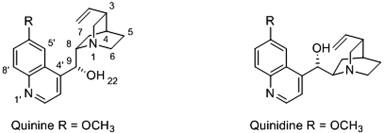
Harmful Distomer: The distomer may have adverse effects (e.g., thalidomide's teratogenicity).
Metabolic Racemization: Some drugs (e.g., ibuprofen) undergo metabolic conversion from inactive to active enantiomer in the body, affecting dosing and efficacy.
Summary Table: Key Stereochemistry Terms
Term | Definition |
|---|---|
Chirality | Property of a molecule that is not superimposable on its mirror image |
Enantiomers | Non-superimposable mirror image isomers |
Diastereomers | Stereoisomers that are not mirror images |
Racemic Mixture | 1:1 mixture of enantiomers |
Meso Compound | Achiral compound with chiral centers due to internal symmetry |
Eutomer | More active enantiomer |
Distomer | Less active or inactive enantiomer |
Eudismic Ratio | Activity ratio of eutomer to distomer |
Key Equations
Eudismic Ratio (ER):
Conclusion
Understanding stereochemistry, especially chirality and enantiomerism, is crucial in organic chemistry and pharmacology. The spatial arrangement of atoms affects not only the physical properties of molecules but also their biological activity, making stereochemical analysis essential for drug design and therapeutic application.
