Back
BackStructural Formulas, Isomerism, Resonance, and Molecular Geometry in Organic Chemistry
Study Guide - Smart Notes
 Tailored notes based on your materials, expanded with key definitions, examples, and context.
Section 1.6: Structural Formulas of Organic Compounds: Isomers
Levels of Organic Structure
Organic molecules can be described at several structural levels, each providing different information about the compound:
Molecular Formula: Indicates the types and numbers of atoms present (e.g., C4H10O).
Structural Formula: Shows how atoms are connected within the molecule.
Constitutional (Structural) Isomers: Compounds with the same molecular formula but different connectivity of atoms.
Example: Ethanol and diethyl ether both have the formula C2H6O but differ in structure and properties.
Constitutional Isomers
Constitutional isomers have identical molecular formulas but differ in the order in which atoms are bonded. This difference leads to distinct physical and chemical properties.
Key Point: Isomers are not interconvertible by simple rotations; their connectivity is fundamentally different.
Condensed and Bond-line Formulas
Organic chemists use various shorthand notations to represent molecules:
Condensed Formulas: Textual representations listing atoms in connectivity order.
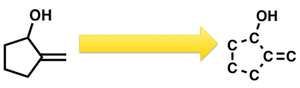
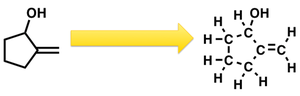
Bond-line Formulas: Lines represent bonds; carbon atoms are implied at line ends and vertices, and hydrogens are omitted if implied by the octet rule.
Expanding a Bond-line Formula
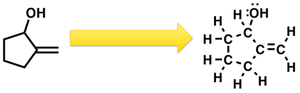
To convert a bond-line formula to a full Lewis structure:
Add all implied carbon atoms at vertices and line ends.
Add enough hydrogens to each carbon to satisfy the octet rule.
Add lone pairs to heteroatoms (e.g., O, N) as needed.
Section 1.7: Resonance and Curved Arrows
Resonance
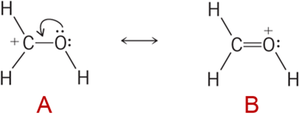
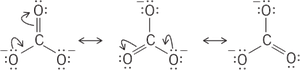
Lewis structures often assume electrons are localized, but in many molecules, electrons are delocalized. Such molecules are best represented by resonance structures—multiple valid Lewis structures differing only in electron placement.
Resonance Hybrid: The actual molecule is a weighted average of all resonance forms, not flipping between them.
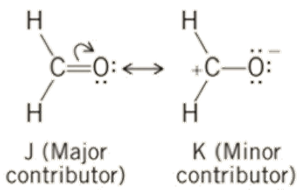
Example: Protonated formaldehyde has two important resonance forms, A and B.
Effects of Resonance
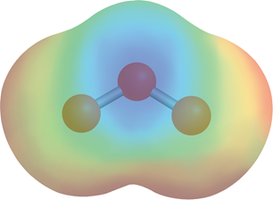
Resonance stabilizes molecules by delocalizing charge and electrons. For example, ozone (O3) has two equivalent resonance forms, resulting in equal bond lengths and charge distribution.
Bond Order: Resonance can result in bond orders between single and double bonds.
Stabilization: Delocalization of charge increases molecular stability.
Rules of Resonance
Valid resonance structures must follow these rules:
Atom Connectivity: Atoms must remain in the same positions; only electrons move.
Electron and Charge Conservation: The number of electrons and net charge must be the same in all forms.
Unpaired Electrons: All forms must have the same number of unpaired electrons.
Octet Rule: Second-row elements (C, N, O, F) must not exceed eight electrons.
Major Contributors: Structures with more covalent bonds, minimal charge separation, and negative charge on electronegative atoms are most important.
The Importance of Resonance
Recognizing resonance is crucial because:
It explains molecular stability (e.g., carbonate anion is stabilized by charge delocalization).
It reveals reactive sites (e.g., formal charges can indicate Lewis acidity/basicity).
Section 1.8: Sulfur and Phosphorus-Containing Organic Compounds and the Octet Rule
Expanded Octets of Third-row Atoms
Elements in the third period (e.g., phosphorus, sulfur) can have more than eight electrons in their valence shells. This is common in compounds like PCl5, phosphates, and sulfates.
Example: Phosphates in ATP and trimethylphosphine oxide exhibit expanded octets.
Section 1.9: Molecular Geometries
Valence Shell Electron Pair Repulsion (VSEPR) Theory
VSEPR theory states that electron pairs around a central atom arrange themselves to minimize repulsion, determining molecular geometry. The arrangement of electron pairs may differ from the observed molecular shape, which considers only atoms.

A Survey of VSEPR Geometries
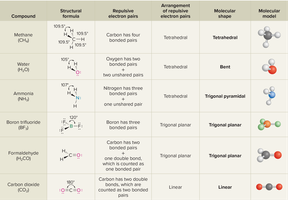
The geometry of a molecule depends on the number of bonding and lone pairs around the central atom. Common geometries include tetrahedral, trigonal planar, and linear.
Compound | Structural formula | Repulsive electron pairs | Arrangement of repulsive electron pairs | Molecular shape | Molecular model |
|---|---|---|---|---|---|
Methane (CH4) | See image | Carbon has four bonded pairs | Tetrahedral | Tetrahedral | See image |
Water (H2O) | See image | Oxygen has two bonded pairs, two unshared pairs | Tetrahedral | Bent | See image |
Ammonia (NH3) | See image | Nitrogen has three bonded pairs, one unshared pair | Tetrahedral | Trigonal pyramidal | See image |
Boron trifluoride (BF3) | See image | Boron has three bonded pairs | Trigonal planar | Trigonal planar | See image |
Formaldehyde (H2CO) | See image | Carbon has three bonded pairs, one double bond counts as one region | Trigonal planar | Trigonal planar | See image |
Carbon dioxide (CO2) | See image | Carbon has two double bonds | Linear | Linear | See image |
Electron Pair Types and Repulsion
There are two types of electron pairs:
Lone pairs: Non-bonding electrons, more repulsive than bonding pairs.
Bonding pairs: Shared between atoms; multiple bonds count as one region of electron density.
Repulsion order (from least to most):
Bonded pair–bonded pair < Unshared pair–bonded pair < Unshared pair–unshared pair

Section 1.10: Molecular Dipole Moments
Applying Geometry and Polarization
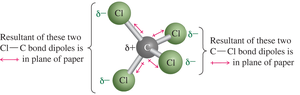
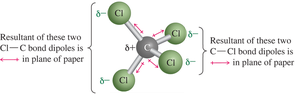
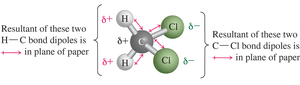
The overall dipole moment of a molecule depends on both the geometry and the polarity of individual bonds. Bond dipoles are vector quantities and must be added accordingly.
Nonpolar Molecules: May contain polar bonds, but their geometry causes dipoles to cancel (e.g., CCl4).
Polar Molecules: Have a net dipole moment due to bond dipoles not canceling (e.g., CH2Cl2).