Back

Substitution and Elimination Reactions in Organic Chemistry: Mechanisms, Properties, and Applications

Study Guide - Learn with Videos

Curated lessons matched to your uploaded material – learn every topic step by step.

Nucleophilic Substitution

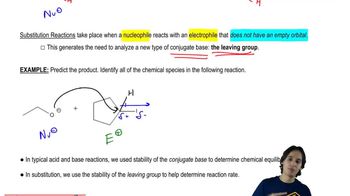
  • Predict the product
    05:55
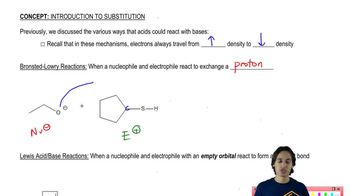
  • Nucleophiles and Electrophiles can react in Bronsted-Lowry Reactions.
    05:01
  • Nucleophiles and Electrophiles can react in Substitution Reactions.
    01:47

SN2 Reaction

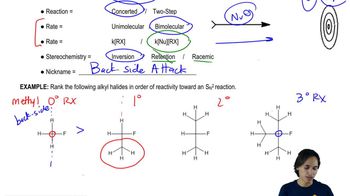
  • Ranking reactivity toward SN2
    04:03
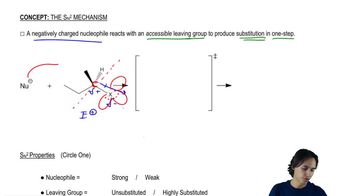
  • Drawing the SN2 Mechanism
    08:33
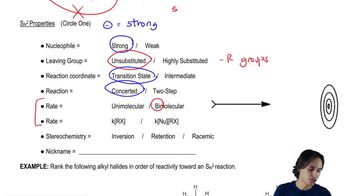
  • Understanding the properties of SN2.
    11:57

SN1 Reaction

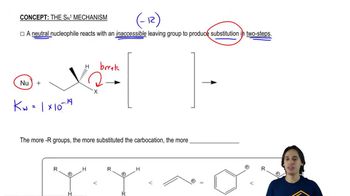
  • Drawing the SN1 Mechanism
    10:49
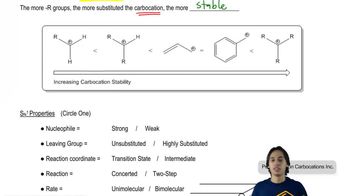
  • Why highly substituted leaving groups favor SN1.
    01:13
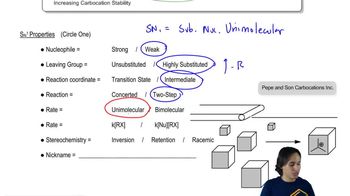
  • Understanding the properties of SN1.
    08:16

Substitution Comparison

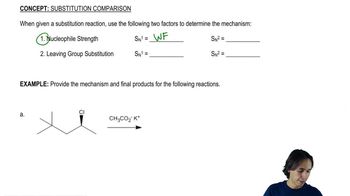
  • How do we predict if the mechanism is SN1 or SN2?
    03:32

E2 Mechanism

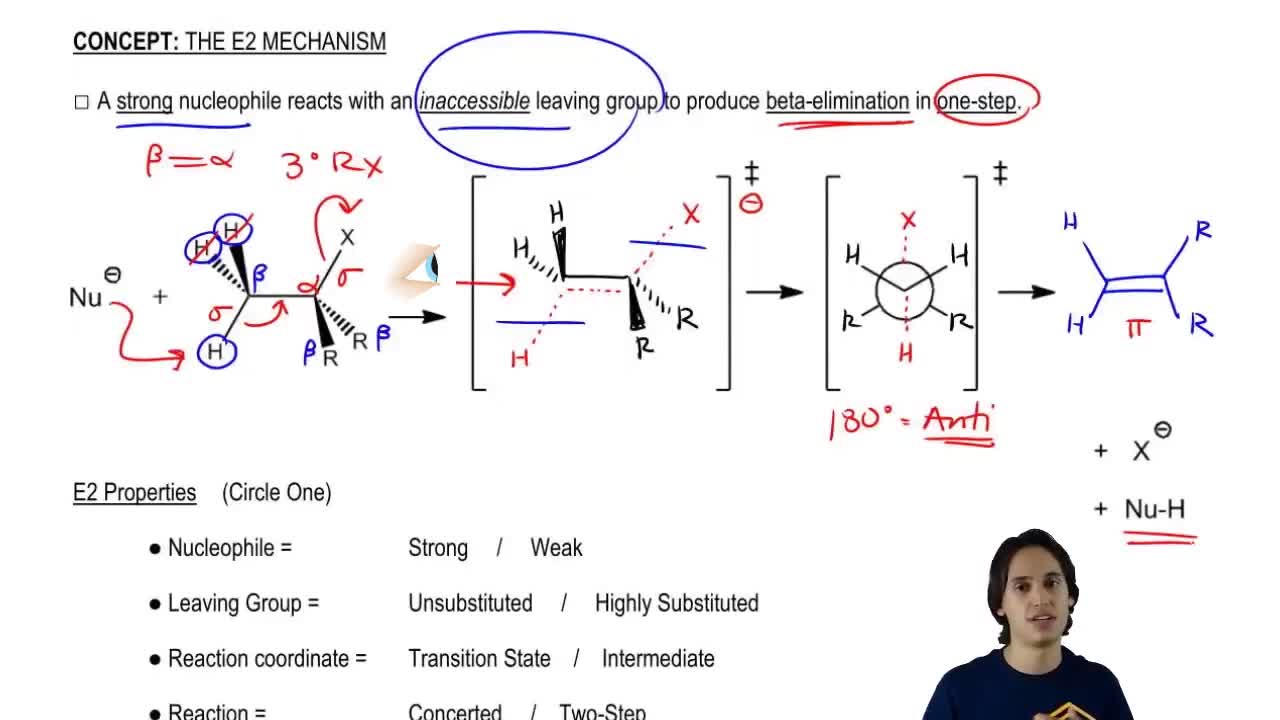
  • Understanding the properties of E2.
    04:42
  • Drawing the E2 Mechanism.
    09:36
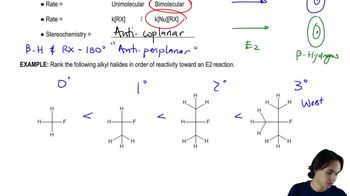
  • Rank reactivity toward E2
    02:03

Beta Hydrogen

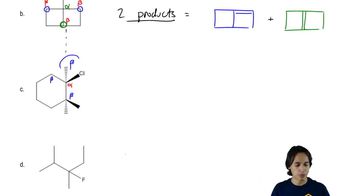
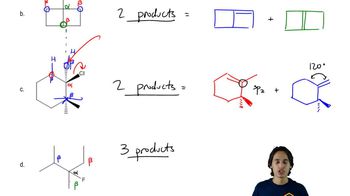
  • Identify the number of unique products
    02:08
  • Identify the number of unique products
    03:19
  • Identify the number of unique products
    02:02

E2 - Anti-Coplanar Requirement

  • The Anti-Coplanar Requirement
    03:19
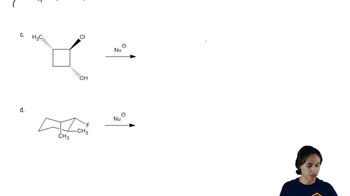
  • Identify the completion of E2 mechanisms
    03:39
  • Identify the completion of E2 mechanisms
    01:09

E1 Reaction

  • Understanding the properties of E1.
    03:32
  • Drawing the E1 Mechanism.
    08:09

Leaving Groups

  • The 3 important leaving groups to know.
    07:22

Nucleophiles and Basicity

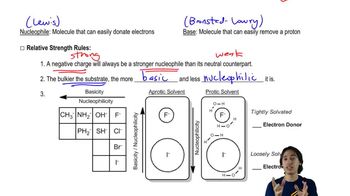
  • Understanding the difference between basicity and nucleophilicity.
    06:21

Alkyl Groups

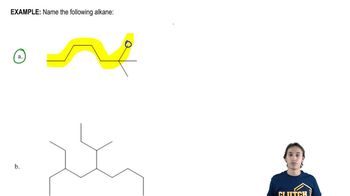
  • Name the following alkane
    02:33
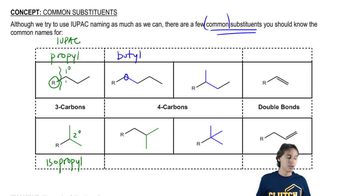
  • Understanding Non-IUPAC Substituents
    06:42
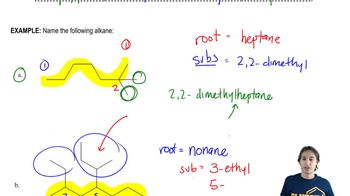
  • Name the following alkane
    03:56

Naming Alkenes

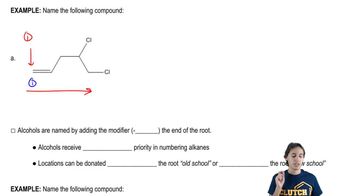
  • Name the following alkene
    02:04
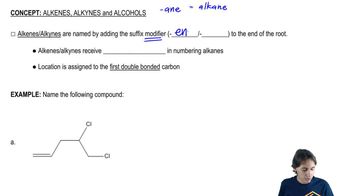
  • How to name alkenes and alkynes
    01:55

Addition Reaction

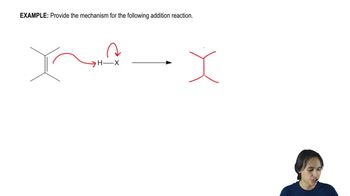
  • Provide the mechanism
    01:15
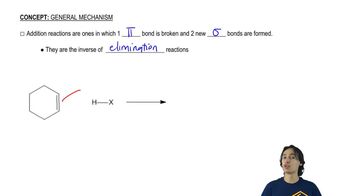
  • Features of Addition Mechanisms.
    05:39