Back

Substitution, Elimination, and Addition Reactions: Study Guide for Organic Chemistry

Study Guide - Learn with Videos

Curated lessons matched to your uploaded material – learn every topic step by step.

The SN2 Mechanism

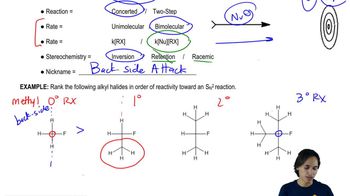
  • Ranking reactivity toward SN2
    04:03
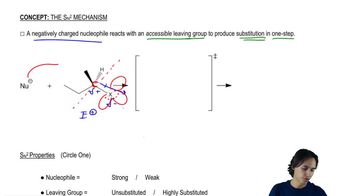
  • Drawing the SN2 Mechanism
    08:33
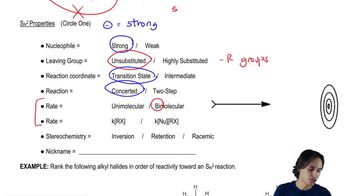
  • Understanding the properties of SN2.
    11:57

SN1 Reaction

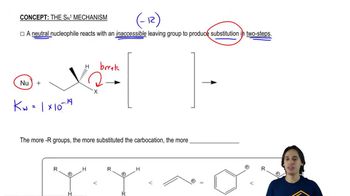
  • Drawing the SN1 Mechanism
    10:49
  • Why highly substituted leaving groups favor SN1.
    01:13
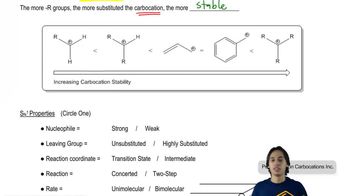
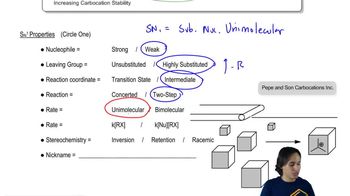
  • Understanding the properties of SN1.
    08:16

E2 Mechanism

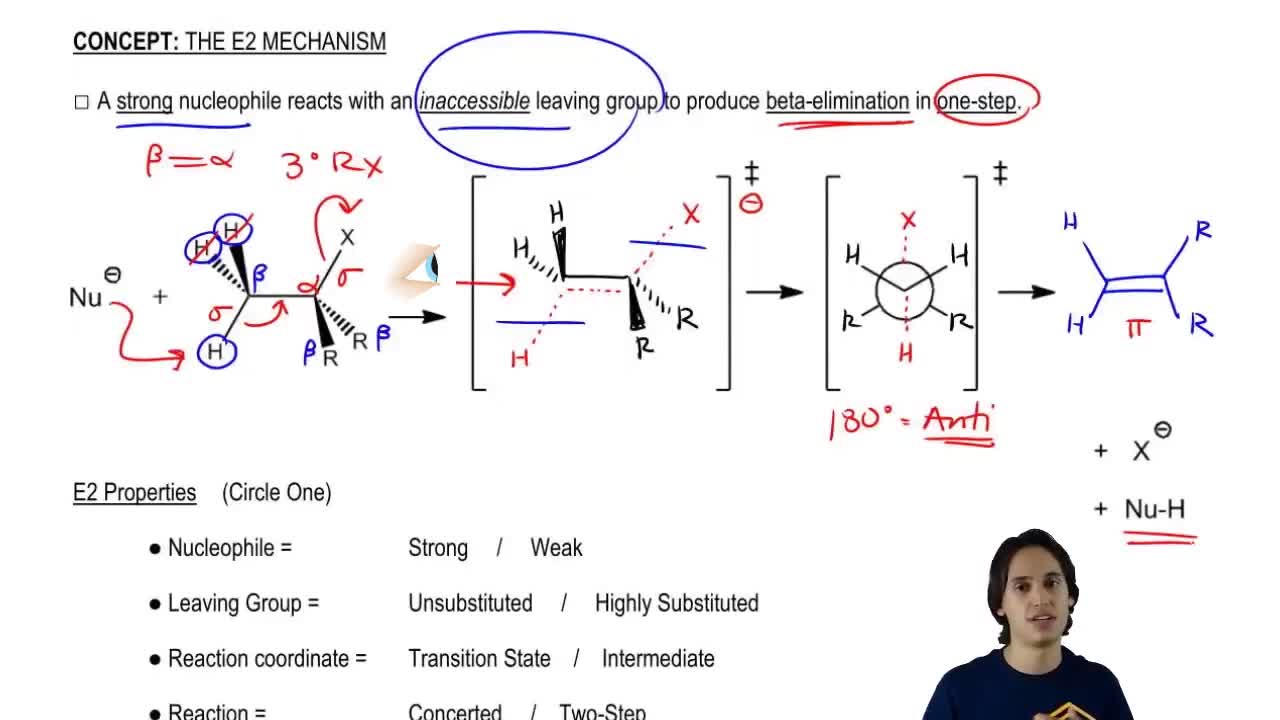
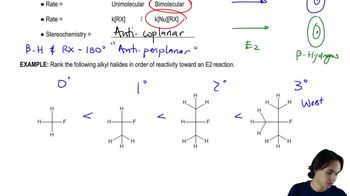
  • Understanding the properties of E2.
    04:42
  • Drawing the E2 Mechanism.
    09:36
  • Rank reactivity toward E2
    02:03

The E1 Mechanism

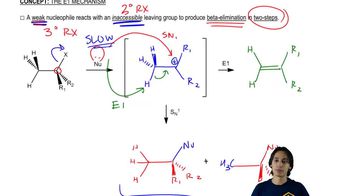
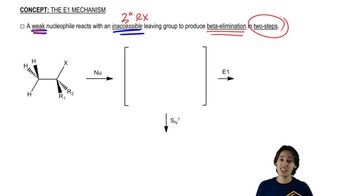
  • Understanding the properties of E1.
    03:32
  • Drawing the E1 Mechanism.
    08:09

Newman Projections

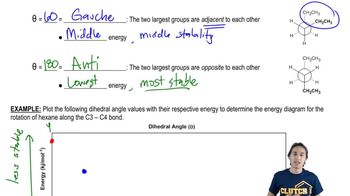
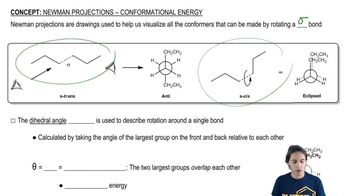
  • How to draw a Newman Projection Energy Diagram.
    07:27
  • How sigma bond rotation is visualized
    03:11
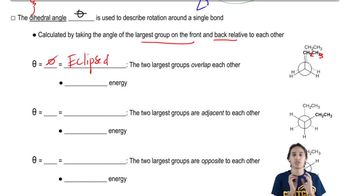
  • The energy states of 3 different Newman Projections.
    03:51

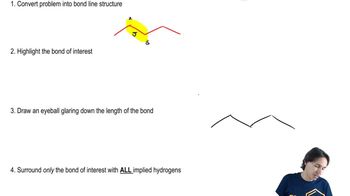
Drawing Newman Projections

  • Step 6 to Drawing Newman Projections
    01:31
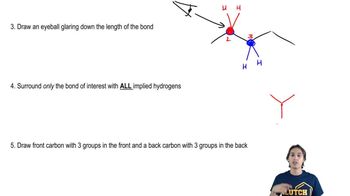
  • Step 5 to Drawing Newman Projections
    01:51
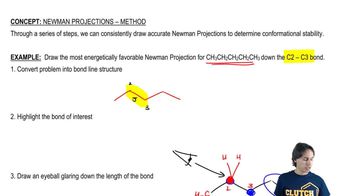
  • Step 3 to Drawing Newman Projections
    00:28

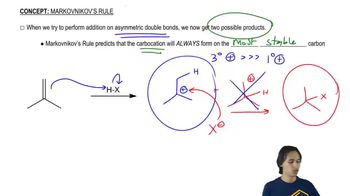
Markovnikov

  • Provide the mechanism
    01:26
  • How to add to asymmetrical double bonds.
    03:38

Anti Markovnikov Addition of Br

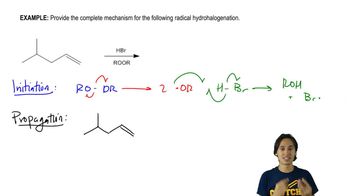
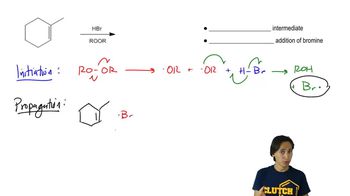
  • Provide the complete mechanism for the following radical hydrohalogenation.
    02:53
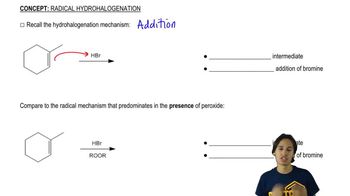
  • How Radical Hydrohalogenation is different from typical Hydrohalogenation.
    07:13
  • Overview of Hydrohalogention.
    01:18

Addition Reaction

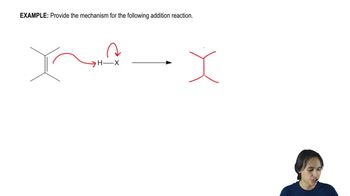
  • Provide the mechanism
    01:15
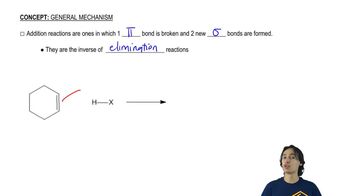
  • Features of Addition Mechanisms.
    05:39

Overview of Chemical Reactions

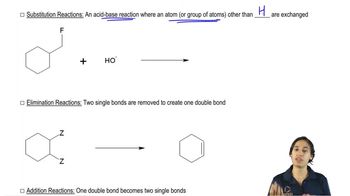
  • Recognizing Substitution Reactions.
    01:34
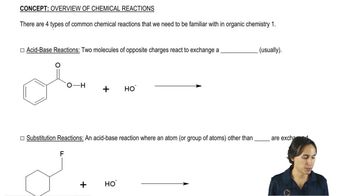
  • Recognizing Acid-Base Reactions.
    02:43
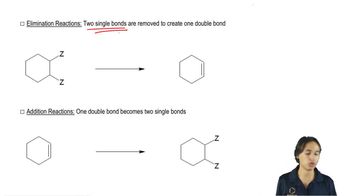
  • Recognizing Elimination Reactions.
    00:40

Reaction Mechanism

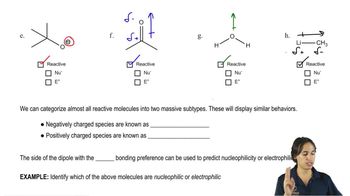
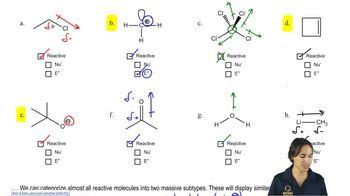
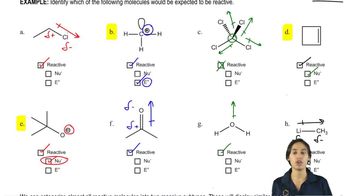
  • How to tell if charged molecules will react as nucleophiles or electrophiles.
    02:39
  • Nucleophile or Electrophile
    01:49
  • How to tell if uncharged molecules will react as nucleophiles or electrophiles.
    02:48

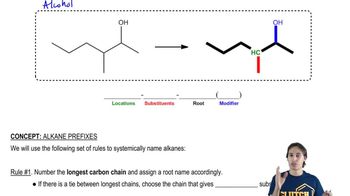
Alkane Nomenclature

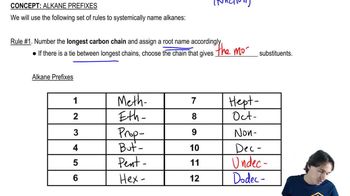
  • Naming the root chain
    01:02
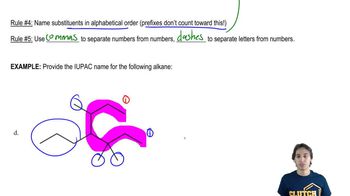
  • Provide the IUPAC name for the following alkane
    07:08
  • The different parts of an IUPAC name
    03:43