Torque & Equilibrium quiz #1 Flashcards

Torque & Equilibrium quiz #1
Control buttons has been changed to "navigation" mode.
1/10
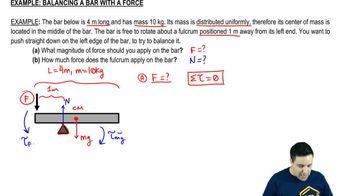
  • When a system is balanced, how do clockwise and counterclockwise torques compare?

    In a balanced system (rotational equilibrium), the sum of clockwise torques equals the sum of counterclockwise torques, so they cancel each other out and the net torque is zero.
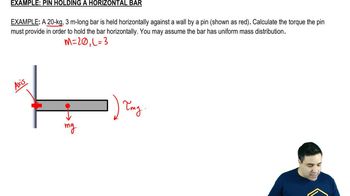
  • How do you calculate the magnitude of the torque about the point where a beam is bolted into place?

    The magnitude of the torque about the point where the beam is bolted is calculated using the formula: torque = force × distance × sin(angle), where the distance is measured from the axis of rotation to the point where the force is applied.
  • When you open a laptop facing you, what is the direction of the applied torque?

    When you open a laptop facing you, the applied torque is counterclockwise relative to the hinge axis.
  • What does a net torque applied to an object cause?

    A net torque applied to an object causes angular acceleration, resulting in rotational motion.
  • How do you determine the magnitude of the torque on a pole about a point due to the tension in a rope?

    The magnitude of the torque on the pole about a point due to the tension in the rope is given by: torque = tension × distance × sin(angle), where the distance is from the point to where the rope applies force, and the angle is between the force and the lever arm.
  • How do you determine the direction of rotation and the sign of angular acceleration for a seesaw based on applied torques?

    The direction of rotation and the sign of angular acceleration for a seesaw depend on the net torque: if the net torque is clockwise, the seesaw rotates clockwise and angular acceleration is negative; if counterclockwise, it rotates counterclockwise and angular acceleration is positive.
  • How do you find the torque about a point due to a force applied by the Achilles' tendon?

    To find the torque about a point due to the force applied by the Achilles' tendon, use: torque = force × distance × sin(angle), where the distance is from the point to where the tendon applies force, and the angle is between the force and the lever arm.
  • What does it mean if the sum of the torques on an object is zero?

    If the sum of the torques on an object is zero, the object is in rotational equilibrium and will not experience angular acceleration.
  • What is the effect on an object's motion if the net force is zero but the net torque is not zero?

    The object will not accelerate linearly but will experience angular acceleration due to the net torque. This means it will start rotating even though it does not move in a straight line.
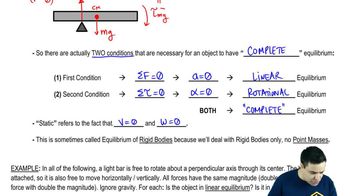
  • In the context of static equilibrium, what does it mean for an object to be in 'complete equilibrium'?

    Complete equilibrium means both the net force and the net torque on the object are zero. As a result, the object has neither linear nor angular velocity and remains at rest.