Skip to main content
Introduction to Psychology
My Course
Learn
Exam Prep
AI Tutor
Study Guides
Flashcards
Explore
Try the app
My Course
Learn
Exam Prep
AI Tutor
Study Guides
Flashcards
Explore
Try the app
Back
Diagnosing Psychological Disorders quiz #9
You can tap to flip the card.
What is true of a person using early-stage dementia communication patterns?
You can tap to flip the card.
👆
What is true of a person using early-stage dementia communication patterns?
They may show mild impairment in communication and cognition.
Track progress
Control buttons has been changed to "navigation" mode.
1/19
Related flashcards
Related practice
Recommended videos
Diagnosing Psychological Disorders quiz #1
Diagnosing Psychological Disorders
38 Terms
Diagnosing Psychological Disorders quiz #2
Diagnosing Psychological Disorders
39 Terms
Diagnosing Psychological Disorders quiz #3
Diagnosing Psychological Disorders
38 Terms
Diagnosing Psychological Disorders
14. Psychological Disorders
7 problems
Topic
Nicole
Perspectives on Psychological Disorders
14. Psychological Disorders
7 problems
Topic
Nicole
14. Psychological Disorders
5 topics
11 problems
Chapter
Nicole
Guided course
01:55
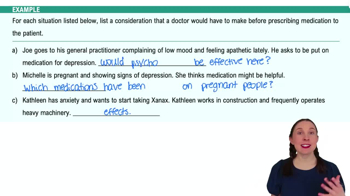
Example 3
580
views
1
rank
Guided course
00:55
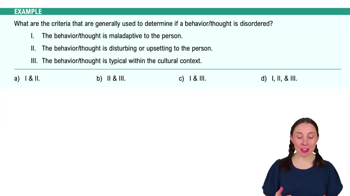
Example 1
477
views
10
rank
Guided course
04:55
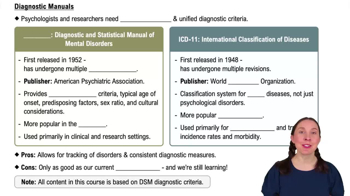
Diagnostic Manuals
491
views
4
rank
Terms in this set (19)
Hide definitions
What is true of a person using early-stage dementia communication patterns?
They may show mild impairment in communication and cognition.
When does a test have a high degree of validity?
When it accurately measures what it is intended to measure.
Is a substance abuser likely to file a worker's compensation claim?
No, substance abusers are less likely to file such claims.
What is not a primary characteristic of ADHD?
Characteristics unrelated to inattention or hyperactivity.
What is not classified as an anxiety disorder in the DSM-5?
Disorders not primarily involving excessive fear or anxiety.
What refers to the simultaneous presence of two or more disorders in one person?
Comorbidity.
Which treatment is most commonly used for phobia?
Exposure-based therapies are commonly used.
What is not a common symptom of generalized anxiety disorder?
Symptoms unrelated to excessive worry or anxiety.
What is not a characteristic of depression?
Characteristics unrelated to mood disturbance.
What is not an example of suicidal ideation?
Thoughts unrelated to self-harm or suicide.
What is true regarding ADHD?
ADHD involves maladaptive patterns of inattention and/or hyperactivity causing impairment.
In the context of abnormal behavior, what is true of deviant behavior?
Deviant behavior is atypical within cultural context and may be considered abnormal if maladaptive and distressing.
What best illustrates a compulsion?
Repetitive behaviors performed to reduce distress.
What is not a symptom of borderline personality disorder?
Symptoms unrelated to emotional instability or maladaptive behavior.
How many U.S. adults were living with a psychological disorder in 2019?
The specific number is not provided; refer to official statistics.
What is one danger of self-report personality measures?
They may be affected by subjective bias or inaccurate reporting.
What is not a type of anxiety disorder?
Disorders not involving excessive fear or anxiety.
What does the etiology for mental disorders describe?
Etiology describes the causes or origins of mental disorders.
What term is defined as the relapse of a chronic condition?
Recurrence or relapse.
 BackBack
 01:55
01:55