Exploring the four Cs: Using future skills to unlock young learners’ potential

Annie Altamirano
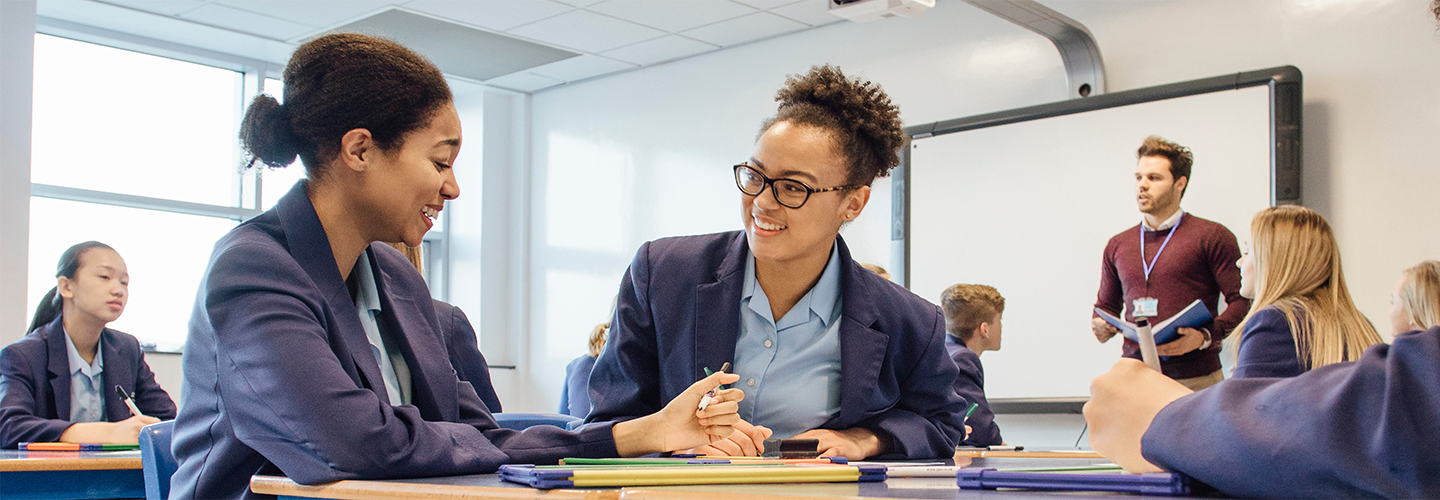
Students sat together in a classroom working together
Reading time: 5 minutes

What do we mean by future skills? 

The skills students will need in their future studies and careers are dramatically different from those required previously. Times are changing rapidly and educational institutions and teachers have a critical role to play in developing those skills in our young learners so that they are able to fulfill their potential and have bright futures ahead of them. 

These skills are referred to as future skills. There is no common consensus on how to define these skills but, broadly speaking, they can be grouped into four categories: 

1. Ways of thinking

Skills in this category include critical thinking, creativity, innovation, problem solving, metacognition and learning skills.

2. Ways of working

Here, we’re talking about the skills of communication and collaboration.

3. Tools for working

Information literacy is an important 21st-century skill, as well as ICT literacy and citizenship, both global and local. 

4. Life skills

The final category covers life and career skills, and is all about personal and social responsibility. 

One way you can encourage young learners to build these skills is through STEAM subjects (that’s science, technology, engineering, arts and math), which will equip them with functional skills such as organizing, planning, cognitive flexibility and self-regulation. 

The four Cs 

The four Cs refer to four important skills for young learners to master: communication, collaboration, critical thinking and creativity. These are essential, not just in an educational context, but in everyday life. 

Falling into the first two categories of future skills (ways of thinking and ways of working), these can help children build confidence and self-esteem. They also encourage healthy emotional development.  

So let’s take a closer look at the theory behind them.

1. Communication

We usually think of communication as speaking and listening, but it’s actually much broader than that. Communication encapsulates telling stories, reading, sharing ideas and experiences, body language, facial expression, eye contact and tone. Children learn to decipher the world around them by learning and practicing these skills.

Strong communication skills, developed early, are directly related to their literacy success. These skills allow children to articulate their thoughts and ideas effectively, and listen to decode meaning. Students then begin to use communication for a range of purposes, and communicate effectively in diverse environments. Furthermore, developing strong patterns of verbal and non-verbal communication also fosters self-esteem and social skills. 

2. Collaboration

Collaboration is how young children begin to build friendships with others. At first, young children will watch what others do and say, before moving on to playing together. As they get older, they become aware of other children’s feelings and ideas. Friendships become motivating and they learn how to make compromises and respect each other’s perspectives and skills. 

Collaboration is enhanced through group work and project-based activities, sharing time with peers. Children thrive when they feel valued by the people around them, not just adults but their peers too. 

3. Creativity

Creativity is a complex concept. Many people think that creativity is being good at painting or drawing, but actually, creativity can manifest itself in a multitude of ways. Some of the key attributes of creative thinking include divergent thinking, imagination, flexibility, and the ability to tolerate ambiguity. 

Children who can express themselves creatively show less frustration and develop a joy of learning. And this expression can take many forms: writing, drama, scientific exploration, and dance and other movement – to name just a few.

Part of creativity is learning to innovate. Innovation is how children test their thinking and how they interact with their world. Creative children are able to create content from their own ideas or other resources. They can use that newly created content to solve problems and participate in creative activities. 

4. Critical thinking

Critical thinking refers to the higher levels of thinking that learners need to enable them to think rationally and effectively about their needs, the best way to do things, identifying links between ideas, analyzing points of view, evaluating arguments, and supporting evidence and reasoning. It’s about thinking in a non-linear, open-ended way, allowing for multiple responses and unspecified answers, and considering issues from various perspectives, challenging assumptions and exploring possible alternatives. 

Critical thinking is not a natural function like sleeping or eating. Children benefit significantly from teaching methods that take the development of their thinking skills seriously. And when children start applying critical thinking skills, they’ll begin to enjoy more challenging tasks. 

Five steps to the four Cs

So how can teachers plan their lessons to develop these four skills in their young learners? There are five steps that provide a framework that challenges and stimulates students: 

1. Determine learning objectives and define behaviors that learners should exhibit

Think about the purpose of your lesson. What new concept or information do you want your students to absorb? And what learning behaviors do you want to elicit from them? Clarifying these aims before your lesson will help you to measure its success afterwards. 

2. Model a new concept and encourage students to think critically and creatively through questioning

It’s important for the teacher to plan significant questions and give students time to respond. Follow up on those responses by asking probing questions and periodically summarizing key points of the discussion. There are various types of questions you can use in class: 

  • Clarification questions, for example, What do you mean? Can you explain that more? Could you put that in another way? 
  • Assumption questions, for example, Why do you think so? Would you make this assumption? 
  • Evidence questions, for example, Can you give me an example? Do you think this is true? 
  • Origin or source questions, for example, Where did you get that idea? Is this your own idea or did you hear it from someone else? 
  • Consequence questions, for example, What effect would that have? What would the implications be? What alternatives could there be? 
  • Viewpoint questions, for example, How are these ideas different? How would different groups of people respond? 

It’s important to include as many students as possible in the discussion. In this way, they are more likely to communicate with each other and discover knowledge on their own. 

3. Choose activities that promote active learning 

One activity that typically receives a positive response is the KWL approach. Create a table with three columns:

  • K = what students know 
  • W = what they want to know 
  • L = what they have learned

Once the class has completed the first two columns, you can put the table aside until the end of the lesson or the topic. Then complete the final column as a way of reviewing everything that has been covered in the lesson. 

Also, try think-pair-share activities. Assign students short tasks to complete individually. Just make sure that they prompt learners to come up with creative responses. Once students have had an opportunity to think critically and creatively about the concept, they can share their ideas with a partner before sharing with the whole class. 

4. Prompt communication and collaboration, and give students an opportunity to review and refine their ideas 

Moving into larger groups, learners can share their work, accept different perspectives and defend their own point of view. Presenting to one another and answering questions will prompt them to review and refine their ideas before the final step in the process.

5. Learners present their work, getting feedback and creating an opportunity for self-assessment 

Depending on the type of work you’re doing, presenting could be as simple as sharing answers to questions or giving a project presentation with a group spokesperson. Encourage the other members of the class to ask questions and provide feedback, as well as giving your own feedback. Then, encourage learners to reflect on their participation in the lesson.

More blogs from Pearson

  • University students sitting outside together smiling
    Which English test should I take? Pearson test comparison
    Di Abi Fordham
    Reading time: 4 minutes

    Searching for the best English test can be challenging with so many options available. How do you choose the one that suits your needs?

    At Pearson, we provide a range of leading English tests, including PTE Academic and the Pearson English Express Test. Both tests are tailored for specific goals, supported by decades of experience, trusted by thousands of institutions worldwide, and designed to help you achieve success.

    Let’s break it down.

    PTE Academic: For global study and migration

    PTE Academic is a leading English proficiency test designed for students and professionals seeking to study or migrate internationally. Recognized by over 3,500 universities and government bodies worldwide, including Australia, New Zealand, Canada and the UK. It offers global acceptance.

    • Test center delivery: Conducted at official Pearson VUE centers for secure and reliable testing.
    • Comprehensive format: A 2-hour exam assessing all four language skills with 20 question types.
    • Global recognition: Perfect for applications related to study, work and migration in various countries.
    • Trusted reputation: Accepted by top universities such as Harvard and Yale, as well as governments worldwide.

    If you are applying to multiple countries or require a recognized English test for visa purposes, PTE Academic is the ideal choice.

    Pearson English Express Test: For fast, flexible US Study

    The Pearson English Express Test is a fast, reliable, and flexible online English proficiency test specifically designed for students applying to universities in the USA. Take the test securely from home, without the stress of travel arrangements or appointments.

    • 100% online: Conveniently complete the test from anywhere, at any time.
    • Quick results: Receive unofficial scores within minutes and official certified results in just 48 hours.
    • Affordable: Priced at a fixed $70 USD, regardless of your location.
    • Smart scoring: Utilizes AI technology and remote security review to ensure fairness and accuracy.
    • Student-focused: Measures real-world academic readiness in just one hour.

    This test is the ideal choice for students seeking a quick, secure and recognized English assessment for US university applications. 

    Why Pearson tests stand out

    Discover why Pearson tests are the top choice for English assessment:

    • Trusted expertise: With over 30 years of education leadership, Pearson is recognized worldwide for research, innovation and global partnerships.
    • Comprehensive support: Access clear score guides, preparation materials and a dedicated support team to help you succeed.
    • Reliable security: Pearson tests are designed with robust security measures, ensuring your results are accurate and trustworthy.

    Which English exam should you choose?

  • Young adult students sat at a desk with notes and papers studying with a teacher stood by them helping out
    5 academic skills to prepare your students for higher education
    Di Richard Cleeve
    Reading time: 4 minutes

    Studying abroad in an English-speaking country is a fantastic opportunity for your students to use their language skills in real-world situations and give their confidence a boost. But how can we help prepare them for success, so that they can really benefit from their experience abroad?

    One way to do this is to develop their academic skills alongside their language skills.

    Why are academic skills important?

    Academic skills encourage students to become more efficient learners. They give students the confidence to participate fully in English-speaking courses and are invaluable outside of the classroom and after they graduate. These skills, which include critical thinking and note-taking, are also highly transferable and, therefore, vital for success in any career.

    Students are expected to have a number of these skills when they start in higher education. The Global Scale of English (GSE) Teacher Toolkit organizes them into five categories:

    1. Academic Discourse: skills for communicating effectively in debates, discussions and presentations
    2. Academic Text Strategies: skills for analyzing academic texts in greater detail
    3. Academic Strategies: skills for understanding and responding critically to lectures
    4. Composition: skills for effective academic writing
    5. Comprehension: skills for understanding academic texts and lectures

    Developing academic skills in the classroom

    Here are five ways to help you build the skills in each of those categories:

    1. Academic Discourse: responding to and asking questions

    Many teachers ask their students to practice presentations in class and this is a great skill to have. However, it’s very easy to overlook the students who aren’t speaking. By asking these students to prepare follow-up questions for the speakers, you can transform this activity into an active listening task. After the presentation has finished, conduct a student-led Q&A session, and provide feedback to the speakers on how they can better deal with difficult questions.

    Give your students extra motivation by offering a prize for the person that asks the most interesting question.

    2. Academic Text Strategies: looking for inferred meaning in texts

    Being able to make inferences is a very important academic reading skill. It not only helps students understand the text, but also encourages students to "read between the lines" and look for deeper meaning.

    How, then, can you strengthen this skill in the classroom? First, try developing this skill without a text. You can use short videos or pictures and ask your students to try and infer the meaning of the photo; the New York Times' "What’s Going On in This Picture?" series is a great source for this. Once students have practiced this several times, move on to short texts. Take the first paragraph of a short story, for example, and have students make inferences about the character, the plot and other aspects of the story using evidence from the text. Provide them with the rest of the story (or a summary if it’s too long) to have them find out whether their guesses were correct or not.

    3. Academic Strategies: writing effective notes

    How many of your students find it difficult to both listen and take notes at the same time when they are watching a video or lecture?

    Effective note-taking is an essential skill for your students to learn before they go on to further education. Using short videos, such as TED Talks, have students take notes while they watch. Then, in pairs or small groups, get your students to combine their notes to "recreate the video" in as much detail as possible. Further extension tasks can then include having the groups summarize their notes into a short social media post, or, if it’s a higher-level group, have them paraphrase their notes into their own words.

    4. Composition: developing a coherent argument

    When having class discussions, how effective are your students’ arguments? Producing coherent arguments is a vital skill for learners in higher education, and one that you can practice in the classroom. Find a model, written argument from the opinion section of a newspaper and cut it up into sections for your learners. Have them reorganize the text, and once correct, analyze the different components that make it coherent. Once students have discussed these, have them write their own coherent arguments on a range of topics that interest them. Then have them recite these arguments to their peers, and provide feedback on how logical their arguments are.

    5. Comprehension: identifying specific ideas in academic texts and lectures

    In the context of further education, it’s not just enough to say what you think the idea of a text is – students need to be able to provide evidence from the text itself. During class reading activities, have students get into the habit of underlining or highlighting parts of the text that they think support their answers, and discuss them during the feedback session after the activity. Encourage them not to highlight large parts of the text; instead, give them a word limit. By reducing the amount of underlined words, learners need to read the content carefully to identify the key words and phrases.

    Resources to help develop your students’ academic skills

    There are many resources that you can use to help prepare your students for university study.

  • A teacher with students working together on electronics
    How adaptive technology can boost student confidence and outcomes
    Di Charlotte Guest
    Reading time: 5 minutes

    Every day, teachers work hard to support diverse learners, juggling different needs and finding creative ways to bring out every student’s best. Adaptive technology is designed to stand alongside that dedication. In simple terms, it’s technology that responds to each learner in real time, adjusting tasks, feedback and pathways, so students get the right level of challenge at the right moment. In today’s classrooms, adaptive tools help teachers personalize instruction without sacrificing precious time, turning data into decisions that lift both confidence and achievement.

    What is adaptive technology in education?

    Adaptive technology uses student performance data to tailor the learning experience. Unlike traditional digital tools that deliver the same sequence for everyone, adaptive tools continuously adjust content, difficulty and pacing based on each learner’s responses and behavior.

    Examples you may already know:

    • Adaptive learning platforms that modify question difficulty and provide targeted practice
    • AI-driven quizzes that adjust based on correctness and confidence
    • Language-learning apps that adapt vocabulary and grammar tasks to proficiency
    • Math practice tools that identify prerequisite gaps and deliver just-in-time support

    Under the surface, adaptive systems gather data – such as correct/incorrect responses, time on task, patterns of misconceptions and even self-reported confidence – and use it to personalize the next step.