How video games help language learning

Charlotte Guest
Charlotte Guest
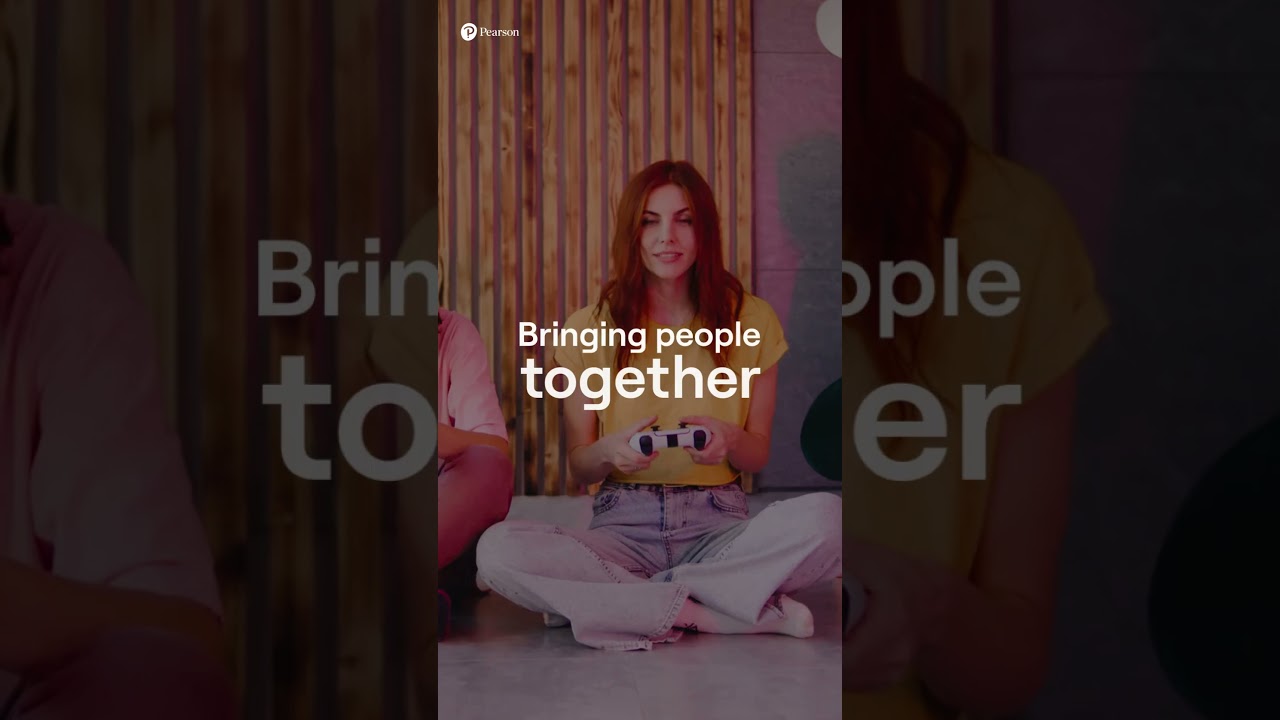
Two people playing video games on the sofa together
Reading time: 6 minutes

The evolution of video games and global connectivity

Video games have come a long way since their inception in the late 20th century. From the simple pixelated screens of 'Pong' and 'Space Invaders', we've entered an era where video games are complex, immersive and incredibly detailed. The evolution of video games has not only been technological but also cultural.

With the rise of the internet and online gaming, players from different corners of the world can now connect, collaborate and compete in real-time. This global connectivity has transformed video games into a social platform, where language barriers are often encountered and interestingly, overcome.

Language learning and video games
Privacy and cookies

By watching, you agree Pearson can share your viewership data for marketing and analytics for one year, revocable by deleting your cookies.

The role of video games in language learning

The traditional methods of language learning—textbooks, classroom instruction and language labs—are being complemented by more interactive and engaging tools. Video games have emerged as a surprisingly effective medium for language acquisition. The immersive nature of video games, combined with their interactive elements, makes them an excellent tool for learning new languages. Here are a few ways in which video games facilitate language learning:

Contextual learning: Unlike traditional methods that often rely on rote memorization, video games provide contextual learning. Players are immersed in a virtual world where they must use language to navigate, solve problems and interact with other characters or players.

Motivation and engagement: The gamified nature of video games keeps players motivated and engaged. The desire to progress in the game encourages players to learn and understand the language used within the game.

Real-time communication: Many online multiplayer games require real-time communication with other players. This necessitates the use of language skills, often in a second language, to coordinate actions and strategies.

Increased outlets for multilingual communication

One of the most significant impacts of video games on global communication is the sheer number of outlets they provide for interacting with speakers of different languages. In the past, opportunities for language practice were often limited to classroom settings, travel, or pen-pal programs. Today, video games have dramatically expanded these opportunities, creating a vibrant, multilingual community where language learning can thrive.

Online multiplayer platforms

Online multiplayer platforms like Xbox Live, PlayStation Network and Steam host millions of players from around the world. These platforms facilitate communication through voice chat, text messaging and in-game interactions.

Games like Fortnite, Overwatch and League of Legends have massive international player bases, meaning that players are frequently paired with teammates or opponents who speak different languages. This constant exposure to diverse linguistic environments encourages players to practice and improve their language skills.

Social media integration

Many video games now integrate with social media platforms, allowing players to share their experiences, form communities and communicate outside of the game. Platforms like Discord, Reddit and various game-specific forums provide additional spaces for multilingual interaction.

These communities often include language-specific channels where players can seek help, share tips, or simply chat in their target language, further enhancing their learning experience.

Esports and streaming

The rise of esports and game streaming has also contributed to the multilingual communication landscape. Professional gamers and streamers often interact with a global audience, providing commentary, tutorials and live interactions in multiple languages. Platforms like Twitch and YouTube Gaming enable viewers to engage with content creators and fellow viewers in real-time.

An example of communication in team-based games

One example of language learning through video games is found in team-based games like 'Sea of Thieves'. This is a multiplayer pirate adventure game that relies heavily on teamwork and communication.

In 'Sea of Thieves' players take on the roles of pirates sailing the high seas, searching for treasure and battling other pirate crews. The game requires players to work together to sail their ship, manage supplies and engage in combat. Effective communication is crucial for success.

Imagine a scenario where a team of players from different linguistic backgrounds must work together to sail their ship. One player speaks Spanish, another speaks English and a third speaks French. To navigate effectively, they must communicate instructions such as "raise the anchor," "lower the sails," or "fire the cannons." This situation creates a natural and urgent need for language skills, pushing players to learn and use new vocabulary in real-time.

Another aspect is the potential for negotiation and diplomacy. When encountering another pirate ship, players may have the option to negotiate rather than engage in combat. This requires players to communicate clearly and effectively, often in a language that is not their first. Phrases like "Let's form an alliance," "We come in peace," or "Do you need supplies?" become essential tools for survival and success.

The benefits of language learning through video games

One of the most compelling reasons why language learning in video games can be more enjoyable and effective is the practical need to communicate clearly and efficiently. Unlike traditional learning environments where the practical application of language skills can sometimes feel abstract or distant, video games provide immediate, tangible reasons to use a new language.

In team-based games, clear communication often directly correlates with success. A well-coordinated team that can effectively communicate is more likely to win than a team that struggles with language barriers. This creates a strong incentive for players to learn and use the language of their teammates.

A team that can communicate clearly will be able to execute complex maneuvers, coordinate attacks and manage more effectively than a team that cannot. This practical, real-world application of language skills makes learning more engaging and rewarding. Players are not just learning for the sake of learning; they are learning to win, to achieve goals and to enjoy the game more fully.

The benefits of learning languages through video games extend beyond the virtual world. Here are a few key advantages:

Improved listening and speaking skills: Real-time communication in multiplayer games enhances listening and speaking skills, as players must quickly understand and respond to their teammates. Studies have found that MMORPGs (Massively Multiplayer Online Role-Playing Games) can significantly improve listening and speaking abilities in a second language.

Cultural awareness: Playing with individuals from different countries exposes players to various cultures and dialects, fostering a sense of global awareness and empathy. Online gaming environments can serve as rich sites for intercultural communication and learning.

Problem-solving and critical thinking: The need to solve problems and strategize in a foreign language enhances cognitive skills, making players more adept at thinking on their feet. Video games promote situated learning, where players develop problem-solving skills within meaningful contexts.

Increased vocabulary and grammar: Regular interaction in a second language helps players build their vocabulary and understand grammatical structures in a practical context. The interactive and immersive nature of video games provides an effective environment for vocabulary acquisition and grammatical development.

The future of language learning and video games

As video games continue to evolve and become even more integrated into our daily lives, their potential as tools for language learning will only grow. The interactive and immersive nature of video games makes them an ideal platform for acquiring new languages in a fun and engaging way.

Certain games demonstrate how real-time communication and teamwork can break down language barriers, fostering a sense of global connectivity and cooperation.

More blogs from Pearson

  • A woman working in a office concentrating on her laptop
    Is AI scoring unreliable?
    Di Alice Bazzi
    Reading time: 2 minutes

    Artificial intelligence has transformed many industries, but in education, one question persists: can you truly trust AI to assess language skills?

    The short answer is yes, and in many cases, AI scoring is more reliable than traditional methods. PTE Express uses advanced machine-learning models trained on hundreds of thousands of real responses to evaluate language proficiency consistently at scale. 

    Unlike human examiners, AI does not experience fatigue, bias, or inconsistency. Every test is assessed using the same criteria, ensuring fairness for all candidates regardless of location or volume. Additionally, AI scoring is not developed in isolation. It is built and continuously refined using input from linguistic experts and large datasets, ensuring that scoring reflects real-world language use and academic expectations. 

  • Woman listening to music with headphones on while lying on sofa
    How to improve your listening skills quickly
    Di Charlotte Guest
    Reading time: 4 minutes

    Listening is an important part of learning a language. It helps you understand conversations, follow instructions and communicate with confidence. But listening can also feel difficult, especially when people speak quickly or use words you do not know.

    The good news is that you do not need to spend hours listening every day to improve. With the right practice, you can make progress in just a few minutes. Here are some ways to improve your listening skills quickly.

    1. Listen to something you understand

    Choose audio or video that is close to your current language level. If you understand almost nothing, it can be difficult to learn from it. If you understand every word, you may not be learning much.

    Start with short conversations, learner podcasts or videos with clear speech. You can also use social media content, including memes, short videos and posts in the language you are learning. These can be a fun way to see and hear everyday language without feeling like you are doing a formal lesson.

    For example, you could look at a meme in your target language and try to understand the joke before using a translation tool. Short videos can also help you hear common expressions and the way people speak naturally.

    Try to understand the main idea before worrying about every word. If you are learning English, you could listen to a short conversation about shopping, travel or daily routines. These topics are useful because you are likely to hear similar language in real life.

  • A group of students sat together smiling outside
    5 team building activities to help break down boundaries
    Di Anna Roslaniec
    Reading time: 4 minutes

    At the beginning of term adolescent learners are often shy, embarrassed and awkward. They are reluctant to speak English in front of their peers or show enthusiasm in class, often suffering from social pressure and lack of self-confidence. It can take weeks or months for students to get to know each other and form bonds. However, don’t despair if your teen learners are like this. There are plenty of team-building games and activities you can do to help students build relationships that will allow them to feel comfortable and relaxed in the classroom.

    Team building activities to help break down boundaries

    Why use team-building activities in the classroom?

    Team building activities can help:

    • Break down boundaries
    • Teens get to know each other
    • Build trust and teamwork
    • Bring 21st-century skills - collaboration, communication, critical thinking, and problem-solving skills - to life

    Team-building games can also be a lot of fun. They require students to work together to reach a common goal and sometimes include a competitive element, which can encourage teenage learners to get really involved. There is a wealth of different team-building games and activities suitable for older children and teens, but here we have chosen five that we think your teenage learners will love.

    1) Human knot

    In this fun physical activity, teamwork is essential. Students form a human knot, which they have to work together to untangle. It will also give you an idea of which students show leadership qualities.

    Materials needed: none

    How to play:

    Have students stand in a circle, making sure they are close together. If you have a large class, having students play in two or more groups may be better. The larger the group, the more complicated the puzzle will be. Tell students to reach across the circle with each arm and hold the hands of two other students. They can't choose the people standing on either side of them. Make sure students hold a left hand with their left hand, and vice versa. Now the human knot is formed.

    Tell students that they have to try to untangle the knot without dropping the hands they are holding. When they have successfully untangled the knot, students will be standing in a regular circle holding hands. Students will need to bend, twist, and move under or step over other students' arms.

    Tip: If one student is reluctant to play, give them the role of "director". This student can walk around the outside of the knot, giving instructions to help the group solve the problem.

    If you are doing this in groups, have them race against each other. The team to solve the problem first - wins.

    2) Magic carpet

    In this game, teams stand on a "magic carpet" which they have to turn over while still standing on it. Teams must decide on a strategy together and carry it out — if they try to do it individually, someone will inevitably fall off.

    Materials needed: rugs, towels, or large pieces of cardboard (one per team)

    How to play:

    Give each team their magic carpet and have them stand on it. Tell students they are on a magic flying carpet high in the sky, but there's a problem — the carpet is upside down. They need to turn the carpet over without anyone falling off.

    They need to devise a strategy for turning the carpet over without anyone touching the floor. Teams can work individually, or they can collaborate to help each other.

    The activity can be set up as a race to see which team flips their carpet first.

    Tip: Encourage students to rethink their strategy if it doesn't appear to be working. Evaluating your decisions and adapting your plan is a useful 21st-century skill that students can use throughout the school year.

    3) Build it

    Teenage students love a practical challenge; in this activity, the element of competition will undoubtedly get them involved. With just basic materials, students have to work together to build the tallest freestanding tower within a time limit.

    Materials needed: balloons (one pack per team), sticky tape, a tape measure, balloon pumps (optional)

    How to play:

    Have students form teams of four and hand out the materials. Tell students to build the tallest freestanding tower using just balloons and sticky tape in ten minutes. Explain that after ten minutes, you will check and measure the structures. If it falls over, that team is eliminated from the challenge.

    Tell students how much time is left after five minutes and again two minutes before the time ends. Have teams stand back from their towers. Inspect each tower, measure it, and record the results. You may wish to give the winning team a prize.

    Tip: Increase the challenge by giving students mixed bags of different-shaped balloons, including modeling balloons.

    4) My eyes, your eyes

    Students will have lots of fun guiding each other or being guided through an obstacle course by their teammates. This activity tests communication skills and builds trust between pairs of students.

    Materials needed: blindfolds or scarves (one per pair) and obstacles, e.g., chairs and boxes.

    Preparation: Before the activity, set up the obstacle course by placing furniture and other items around the classroom. Decide where the route students take will begin and end, marking the finish line.

    How to play:

    Put students in pairs. If possible, have them work with a student they don't know very well. Have one student in each pair cover their eyes with a blindfold. This student is a blinded person and their partner will be their eyes. The guide stands behind their blind partner and places their hands on their partner's shoulders. Their job is to quietly give instructions to guide their partner towards the finish line, navigating the obstacles. The first pair to finish wins.

    Have students swap roles. Move some of the obstacles. Then repeat the activity.

    Tip: If possible, play the game in the playground or in the school gym. The larger the space, the more complex you can make the route.

    5) Scavenger hunt

    This is a longer activity that requires slightly more planning than the others. Teams will complete a set of tasks and challenges as a race. Choose a mixture of fun challenges and serious tasks to turn this activity into a fun diagnostic test to determine students' English levels.

    Materials needed: Worksheet containing a list of tasks and challenges (one per team). Tasks can be both language-related and practical.

    How to play:

    Put students into teams. This activity is ideal for students with different skills and abilities, so try to ensure teams are mixed-ability. Tell students that they are going to race to complete a series of tasks that they will find on their worksheet. The fastest team to complete all tasks correctly wins. Some tasks can be completed by one student.

    Explain that students don't need to complete the tasks in order. Point out that you will monitor them closely to ensure there is no cheating. Remind students that they must use English at all times. You can choose to penalize students by having them repeat or do an extra task if they use L1.

    Tip: If you think students might try to cheat, before you set the teams, nominate students to be team monitors (one per team). They will have the worksheet and make sure that the team fulfills each task. Alternatively, if students have mobile phones or tablets, have them take pictures and videos of their team members completing the task.