Ch. 18 The Cardiovascular System: The Heart
Chapter 17, Problem 10

The refractory period of cardiac muscle is much longer than that of skeletal muscle. Why is this a desirable functional property?

Verified step by step guidance
1
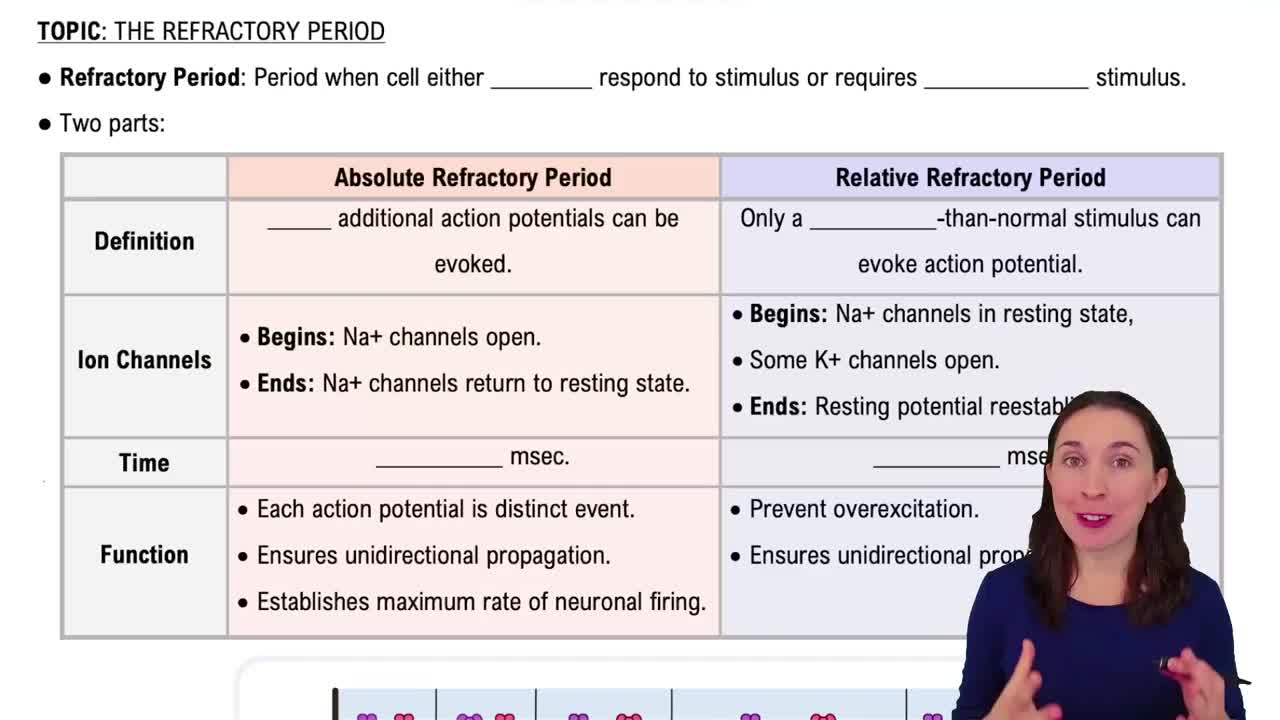
Step 1: Understand what the refractory period is — it is the time during which a muscle cell cannot be re-excited after an action potential has occurred.
Step 2: Recognize that cardiac muscle cells have a much longer refractory period compared to skeletal muscle cells, meaning they remain unresponsive to new stimuli for a longer time.
Step 3: Consider the functional importance of this long refractory period in cardiac muscle — it prevents the muscle from undergoing tetanus, which is a sustained contraction.
Step 4: Realize that preventing tetanus in cardiac muscle is crucial because the heart needs to relax between beats to allow chambers to fill with blood properly.
Step 5: Conclude that the long refractory period ensures rhythmic, coordinated contractions and proper pumping function of the heart, which is essential for maintaining effective blood circulation.

Verified video answer for a similar problem:

This video solution was recommended by our tutors as helpful for the problem above.
Video duration:
2m
Was this helpful?

Key Concepts

Here are the essential concepts you must grasp in order to answer the question correctly.

Refractory Period

The refractory period is the time after an action potential during which a muscle cell cannot be re-excited. It ensures that the muscle has time to contract and relax before the next stimulus, preventing continuous or premature contractions.
Recommended video:
06:26
Refractory Period

Cardiac Muscle Contraction

Cardiac muscle contractions are rhythmic and coordinated to pump blood effectively. A longer refractory period prevents tetanus (sustained contraction), allowing the heart chambers to fill and empty properly during each beat.
Recommended video:
Guided course
4:53
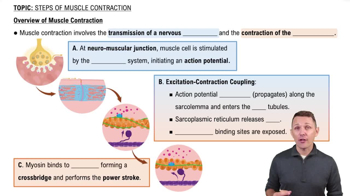
Overview of Muscle Contraction

Functional Differences Between Cardiac and Skeletal Muscle

Skeletal muscle can sustain rapid, repeated contractions for movement, so it has a short refractory period. In contrast, cardiac muscle requires a longer refractory period to maintain a steady heartbeat and avoid arrhythmias, ensuring efficient blood circulation.
Recommended video:
Guided course
2:46
Structure of a Skeletal Muscle Example 2