Pearson+ LogoPearson+ Logo

Biogeochemical Cycles quiz #3 Flashcards

Back
Biogeochemical Cycles quiz #3
Control buttons has been changed to "navigation" mode.
1/20
  • Describe the main reservoirs and processes involved in the water cycle.

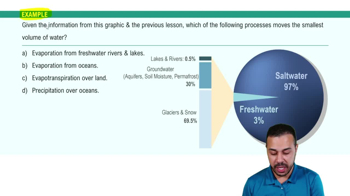
    The main reservoirs in the water cycle are the oceans, atmosphere, land, and groundwater. Key processes include evaporation (mainly from oceans), condensation, precipitation, runoff, infiltration into groundwater, and transpiration from plants (evapotranspiration).
  • Explain the significance of the atmosphere in the nitrogen cycle and how nitrogen becomes available to living organisms.

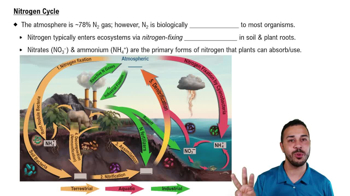
    The atmosphere is the largest reservoir of nitrogen (as N2 gas), but most organisms cannot use it directly. Nitrogen-fixing bacteria in soil or plant root nodules convert N2 into usable forms like ammonium (NH4+) and nitrate (NO3-), which plants can absorb and use.
  • How do human activities impact the carbon and nitrogen cycles?

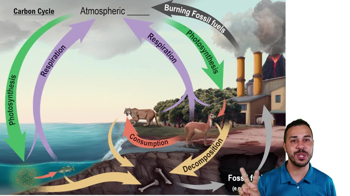
    Humans impact the carbon cycle by burning fossil fuels, increasing atmospheric CO2 and contributing to global warming. In the nitrogen cycle, humans add nitrogen to ecosystems through fertilizers and industrial processes, which can lead to pollution, greenhouse gas emissions, and ecosystem imbalances.
  • What is denitrification, and why is it important in the nitrogen cycle?

    Denitrification is the process by which denitrifying bacteria convert nitrates (NO3-) back into nitrogen gas (N2), returning nitrogen to the atmosphere. It is important because it completes the nitrogen cycle and prevents the accumulation of excess nitrates in ecosystems.
  • How does the process of evapotranspiration contribute to the water cycle?

    Evapotranspiration combines evaporation from land and water surfaces with transpiration from plants, releasing water vapor into the atmosphere. This process is essential for moving water from terrestrial ecosystems back into the atmosphere, maintaining the water cycle.
  • What are the main reservoirs and key processes involved in the water cycle?

    The main reservoirs are oceans, atmosphere, land, and groundwater. Key processes include evaporation, condensation, precipitation, runoff, infiltration, and transpiration (evapotranspiration).
  • How does nitrogen in the atmosphere become available to living organisms in the nitrogen cycle?

    Nitrogen-fixing bacteria in soil or plant root nodules convert atmospheric N2 into usable forms like ammonium (NH4+) and nitrate (NO3-). These forms can then be absorbed and used by plants.
  • In what ways do human activities impact the carbon and nitrogen cycles?

    Humans impact the carbon cycle by burning fossil fuels, increasing atmospheric CO2 and contributing to global warming. In the nitrogen cycle, humans add nitrogen through fertilizers and industrial processes, leading to pollution, greenhouse gas emissions, and ecosystem imbalances.
  • What is denitrification and why is it important in the nitrogen cycle?

    Denitrification is the process by which denitrifying bacteria convert nitrates (NO3-) back into nitrogen gas (N2), returning nitrogen to the atmosphere. It is important because it completes the nitrogen cycle and prevents excess nitrate accumulation in ecosystems.
  • How does evapotranspiration contribute to the water cycle?

    Evapotranspiration combines evaporation from land and water surfaces with transpiration from plants, releasing water vapor into the atmosphere. This process is essential for moving water from terrestrial ecosystems back into the atmosphere, maintaining the water cycle.
  • How is carbon dioxide produced in a cement plant?

    Carbon dioxide is produced in a cement plant primarily through the heating of limestone (calcium carbonate), which releases carbon dioxide gas as it is converted to lime (calcium oxide). This process is a geological activity that contributes to atmospheric CO2.
  • How do nutrients move through an ecosystem?

    Nutrients move through an ecosystem via biogeochemical cycles, which recycle chemical elements between biotic (living) and abiotic (non-living) components through processes such as photosynthesis, consumption, decomposition, and geological activities.
  • How does carbon enter the biotic part of the ecosystem?

    Carbon enters the biotic part of the ecosystem when primary producers, such as plants and phytoplankton, absorb atmospheric carbon dioxide during photosynthesis and incorporate it into organic molecules.
  • What things are recycled during photosynthesis and respiration?

    During photosynthesis and respiration, carbon dioxide and oxygen are recycled between organisms and the atmosphere as part of the carbon and oxygen cycles.
  • What role does photosynthesis play in the carbon cycle?

    Photosynthesis removes carbon dioxide from the atmosphere and incorporates it into organic molecules in primary producers, making carbon available to other organisms in the ecosystem.
  • What is recycled in an ecosystem?

    Elements such as carbon, nitrogen, phosphorus, and water are recycled in an ecosystem through biogeochemical cycles.
  • What is the role of photosynthesis in the carbon cycle?

    Photosynthesis is the process by which primary producers use atmospheric carbon dioxide to create organic molecules, thus transferring carbon from the abiotic to the biotic part of the ecosystem.
  • How does increasing plant biomass affect atmospheric CO2 levels?

    Increasing plant biomass reduces atmospheric CO2 levels because more carbon dioxide is absorbed from the atmosphere during photosynthesis and stored in plant tissues.
  • How do decomposers help other organisms in an ecosystem?

    Decomposers break down dead organic matter, releasing nutrients such as carbon, nitrogen, and phosphorus back into the soil and atmosphere, making them available for uptake by other organisms.
  • How is carbon dioxide produced in a cement plant according to biogeochemical cycles?

    In biogeochemical cycles, carbon dioxide is produced in a cement plant through the geological process of heating limestone, which releases CO2 into the atmosphere, contributing to the carbon cycle.