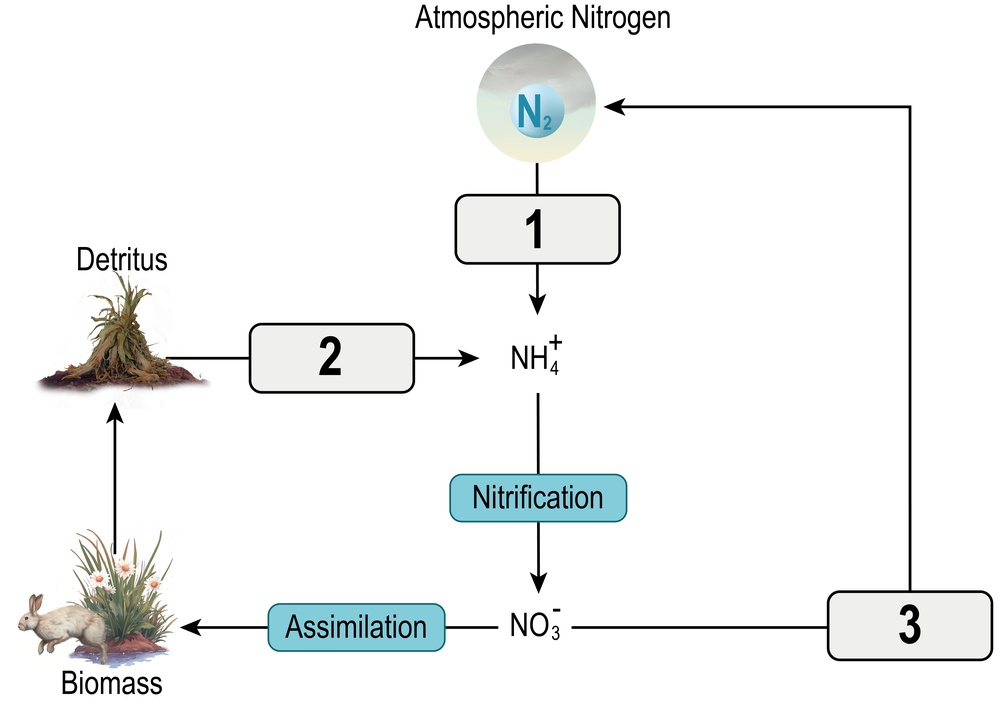
Biogeochemical cycles are essential processes that describe the movement of chemical nutrients and elements between living organisms (biotic components) and the Earth (abiotic components). The term "biogeochemical" combines "bio," meaning life, and "geo," referring to Earth, highlighting the interconnectedness of life and the environment in nutrient cycling.
These cycles play a crucial role in recycling vital elements, ensuring that they are available for various biological processes. Key biogeochemical cycles include the water cycle, carbon cycle, nitrogen cycle, and phosphorus cycle. Each of these cycles involves both biological processes, such as respiration and photosynthesis, and geological processes, like erosion and sedimentation, which facilitate the transfer of nutrients between different reservoirs.
Reservoirs are storage spaces for these chemical elements and nutrients, and they can be found in various forms, such as the atmosphere, oceans, soil, and living organisms. The movement of nutrients between these reservoirs is represented by processes indicated by arrows in diagrams, illustrating how elements are cycled through the ecosystem.
Understanding these cycles is vital for grasping how ecosystems function and maintain balance, as they ensure the continuous availability of essential nutrients necessary for life. As we delve deeper into each specific cycle, we will explore the unique reservoirs and processes involved, enhancing our comprehension of the intricate relationships within ecosystems.