Pearson+ LogoPearson+ Logo
Ch. 37 Communities and Ecosystems
Taylor - Campbell Biology: Concepts & Connections 10th Edition
Taylor, Simon, Dickey, Hogan10th EditionCampbell Biology: Concepts & ConnectionsISBN: 9780136538783Not the one you use?Change textbook
Chapter 37, Problem 2

Fill in the blanks in the table below summarizing terrestrial ­nutrient cycles. Table summarizing terrestrial nutrient cycles for carbon, phosphorus, and nitrogen.

Verified step by step guidance
1
Identify the main abiotic reservoirs for Carbon, Phosphorus, and Nitrogen. For example, the main abiotic reservoir for Carbon is the atmosphere.
Determine the form in which each nutrient exists in its abiotic reservoir. For instance, Carbon is primarily found as CO2 in the atmosphere.
Identify the form of each nutrient that is used by producers. For example, plants use CO2 for photosynthesis.
List human activities that alter each nutrient cycle. For example, burning fossil fuels releases additional CO2 into the atmosphere.
Describe the effects of altering each nutrient cycle. For instance, increased CO2 levels can lead to global warming and climate change.

Verified video answer for a similar problem:

This video solution was recommended by our tutors as helpful for the problem above.
Video duration:
3m
Was this helpful?

Key Concepts

Here are the essential concepts you must grasp in order to answer the question correctly.

Nutrient Cycles

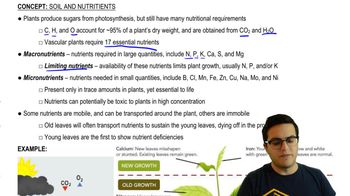
Nutrient cycles refer to the natural processes through which essential elements like carbon, phosphorus, and nitrogen circulate through the environment, including the atmosphere, lithosphere, hydrosphere, and biosphere. These cycles are crucial for maintaining ecosystem health, as they ensure the availability of nutrients necessary for plant growth and overall biological productivity.
Recommended video:
Guided course
03:25
Soil Nutrients

Abiotic Reservoirs

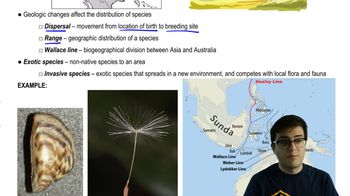
Abiotic reservoirs are non-living components of the environment that store nutrients. For example, carbon is primarily stored in the atmosphere and oceans, phosphorus is found in rocks and soil, and nitrogen is abundant in the atmosphere. Understanding these reservoirs is essential for comprehending how nutrients are cycled and made available to living organisms.
Recommended video:
Guided course
06:59
Biotic and Abiotic Factors

Human Impact on Nutrient Cycles

Human activities, such as agriculture, deforestation, and industrial processes, significantly alter nutrient cycles. For instance, the use of fertilizers can lead to nutrient runoff, affecting water quality and ecosystem balance. Recognizing these impacts is vital for developing sustainable practices that minimize disruption to natural cycles and promote environmental health.
Recommended video:
Guided course
03:25
Soil Nutrients