Pearson+ LogoPearson+ Logo
Ch. 18 The Evolution of Invertebrate Diversity
Taylor - Campbell Biology: Concepts & Connections 10th Edition
Taylor, Simon, Dickey, Hogan10th EditionCampbell Biology: Concepts & ConnectionsISBN: 9780136538783Not the one you use?Change textbook
Chapter 18, Problem 1

The table below lists the common names of the nine animal phyla surveyed in this chapter. For each phylum, list the key characteristics and some representatives.
Table listing nine animal phyla with columns for characteristics and representatives.

Verified step by step guidance
1
Step 1: Begin by identifying the key characteristics of each phylum listed in the table. For example, Sponges (Phylum Porifera) are characterized by their porous bodies, lack of true tissues, and filter-feeding mechanism. Representatives include sea sponges.
Step 2: For Cnidarians, note their radial symmetry, presence of stinging cells (cnidocytes), and a body plan that alternates between polyp and medusa forms. Representatives include jellyfish, corals, and sea anemones.
Step 3: Flatworms (Phylum Platyhelminthes) are characterized by bilateral symmetry, a lack of a body cavity (acoelomates), and a simple digestive system. Representatives include planarians, tapeworms, and flukes.
Step 4: Nematodes (Phylum Nematoda) are roundworms with a complete digestive system, a pseudocoelom, and a tough outer cuticle. Representatives include C. elegans and parasitic roundworms.
Step 5: Continue filling out the table for the remaining phyla (Molluscs, Annelids, Arthropods, Echinoderms, and Chordates) by researching their defining characteristics (e.g., body structure, symmetry, presence of specific organs) and listing common examples (e.g., snails for Molluscs, earthworms for Annelids, insects for Arthropods, sea stars for Echinoderms, and mammals for Chordates).

Verified video answer for a similar problem:

This video solution was recommended by our tutors as helpful for the problem above.
Video duration:
3m
Was this helpful?

Key Concepts

Here are the essential concepts you must grasp in order to answer the question correctly.

Animal Phyla

Animal phyla represent the major taxonomic groups in the animal kingdom, each characterized by distinct structural and functional traits. Understanding these phyla is essential for classifying animals based on their evolutionary relationships and biological characteristics, such as body symmetry, tissue organization, and developmental patterns.
Recommended video:
Guided course
05:58
Overview of Animals - 1

Key Characteristics

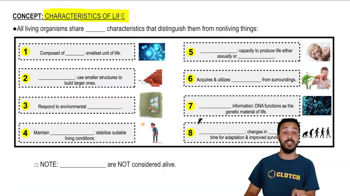
Key characteristics of each phylum include specific anatomical features, reproductive strategies, and ecological roles. For example, sponges are characterized by their porous bodies and lack of true tissues, while arthropods possess an exoskeleton and jointed appendages. Recognizing these traits helps in identifying and differentiating between the various animal groups.
Recommended video:
Guided course
09:26
Characteristics of Life

Representatives

Representatives of each phylum are specific organisms that exemplify the characteristics of that group. For instance, jellyfish are representatives of Cnidarians, while humans belong to the Chordates. Identifying these representatives aids in understanding the diversity within each phylum and the ecological niches they occupy.
Recommended video: