Pearson+ LogoPearson+ Logo
Ch. 17 The Evolution of Plant and Fungal Diversity
Taylor - Campbell Biology: Concepts & Connections 10th Edition
Taylor, Simon, Dickey, Hogan10th EditionCampbell Biology: Concepts & ConnectionsISBN: 9780136538783Not the one you use?Change textbook
Chapter 17, Problem 11

How do animals help flowering plants reproduce? How do the animals benefit?

Verified step by step guidance
1
Understand the concept of mutualism: Mutualism is a type of symbiotic relationship where both organisms involved benefit. In this case, animals and flowering plants have a mutualistic relationship during reproduction.
Learn about pollination: Animals such as bees, butterflies, birds, and bats help flowering plants reproduce by transferring pollen from the male structures (anthers) of one flower to the female structures (stigma) of another flower. This process is essential for fertilization and the production of seeds.
Explore how animals benefit: Animals benefit from this interaction by obtaining food, such as nectar or pollen, from the flowers. Nectar is a sugary liquid that provides energy, while pollen can be a source of protein.
Understand seed dispersal: Some animals also help flowering plants by dispersing seeds. For example, animals may eat fruits and later excrete the seeds in a different location, aiding in the spread of the plant species.
Recognize the ecological importance: This mutualistic relationship is crucial for maintaining biodiversity and ecosystem stability, as it ensures the survival and reproduction of both plants and animals.

Verified video answer for a similar problem:

This video solution was recommended by our tutors as helpful for the problem above.
Video duration:
2m
Was this helpful?

Key Concepts

Here are the essential concepts you must grasp in order to answer the question correctly.

Pollination

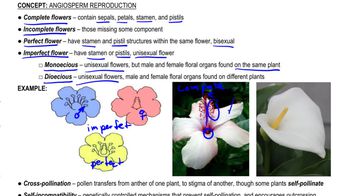
Pollination is the process by which pollen from the male part of a flower (anther) is transferred to the female part (stigma). Animals, particularly insects like bees and butterflies, play a crucial role in this process by moving pollen as they feed on nectar. This interaction not only facilitates the fertilization of plants but also enhances genetic diversity among plant populations.
Recommended video:

Mutualism

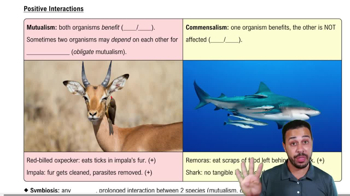
Mutualism is a type of symbiotic relationship where both species involved benefit from the interaction. In the context of flowering plants and animals, plants provide food resources, such as nectar and pollen, while animals assist in the plant's reproduction by pollinating flowers. This relationship is essential for the survival and reproduction of many plant species and supports biodiversity.
Recommended video:
Guided course
02:56
Positive Interactions

Seed Dispersal

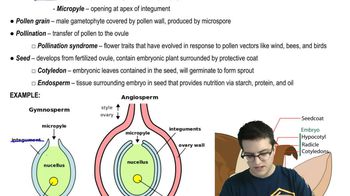
Seed dispersal is the process by which seeds are spread away from the parent plant to reduce competition and promote colonization of new areas. Animals contribute to this process by consuming fruits and excreting the seeds at different locations. This not only aids in the propagation of flowering plants but also allows animals to benefit from the nutritional value of the fruits.
Recommended video:
Guided course
06:26
Seed Plants - 1
Related Practice
Textbook Question

Under a microscope, a piece of a mushroom would look most like

a. Jelly.

b. A tangle of string.

c. Grains of sugar or salt.

d. Foam.

1330
views
Textbook Question

Which of the following groups is made up exclusively of fungi that form symbioses with plant roots?

a. Ascomycetes

b. Basidiomycetes

c. Glomeromycetes

d. Zygomycetes

1340
views
Textbook Question
Compare a seed plant with an alga in terms of adaptations for life on land versus life in the water.
751
views
Textbook Question
What characters support the classification of fungi and plants in different kingdoms?
1435
views
Textbook Question

Truffles (the fungi, not the chocolates) are the reproductive bodies of ascomycetes that form mycorrhizae with certain tree species. They are highly prized by gourmets for the delicious scent they add to food. Because truffles grow underground, they are difficult to find—human noses are not sensitive enough to locate them. Many animals, however, are excellent truffle hunters and eagerly consume the fungi. Why would these fungi produce a scent that attracts fungus-eating animals?

1057
views
Textbook Question

In April 1986, an accident at a nuclear power plant in Chernobyl, Ukraine, scattered radioactive fallout for hundreds of miles. In assessing the biological effects of the radiation, researchers found mosses to be especially valuable as organisms for monitoring the damage. Radiation damages organisms by causing mutations. Explain why it is faster to observe the genetic effects of radiation on mosses than on plants from other groups. Imagine that you are conducting tests shortly after a nuclear accident. Using potted moss plants as your experimental organisms, design an experiment to test the hypothesis that the frequency of mutations decreases with the organism's distance from the source of radiation.

1410
views