Pearson+ LogoPearson+ Logo
Ch. 17 The Evolution of Plant and Fungal Diversity
Taylor - Campbell Biology: Concepts & Connections 10th Edition
Taylor, Simon, Dickey, Hogan10th EditionCampbell Biology: Concepts & ConnectionsISBN: 9780136538783Not the one you use?Change textbook
Chapter 17, Problem 1

In this abbreviated diagram, identify the four major plant groups and the key terrestrial adaptation associated with each of the three major branch points. Diagram showing four major plant groups and their adaptations from ancestral green algae.

Verified step by step guidance
1
Identify the four major plant groups in the diagram: (a) Bryophytes, (b) Seedless vascular plants, (c) Gymnosperms, and (d) Angiosperms.
Determine the key terrestrial adaptation associated with the first major branch point (1): The development of a cuticle and stomata, which allowed plants to reduce water loss and exchange gases.
Determine the key terrestrial adaptation associated with the second major branch point (2): The development of vascular tissue (xylem and phloem), which allowed plants to transport water and nutrients more efficiently and grow taller.
Determine the key terrestrial adaptation associated with the third major branch point (3): The development of seeds, which provided a protective environment for the plant embryo and allowed for greater dispersal and survival in various environments.
Summarize the adaptations: (1) Cuticle and stomata, (2) Vascular tissue, (3) Seeds.

Verified video answer for a similar problem:

This video solution was recommended by our tutors as helpful for the problem above.
Video duration:
2m
Was this helpful?

Key Concepts

Here are the essential concepts you must grasp in order to answer the question correctly.

Plant Evolution

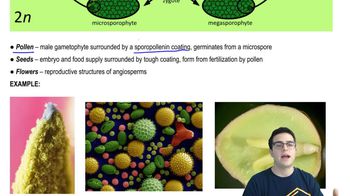
Plant evolution traces the transition from ancestral green algae to the diverse groups of plants we see today. This process involves significant adaptations that allowed plants to thrive in terrestrial environments, leading to the emergence of major plant groups such as bryophytes, ferns, gymnosperms, and angiosperms.
Recommended video:
Guided course
06:17
Land Plants - 4

Major Plant Groups

The four major plant groups include bryophytes (mosses), pteridophytes (ferns), gymnosperms (conifers), and angiosperms (flowering plants). Each group represents a branch point in plant evolution, characterized by unique adaptations such as vascular tissue, seeds, and flowers that facilitate reproduction and survival in terrestrial habitats.
Recommended video:
Guided course
06:04
Functional Groups

Terrestrial Adaptations

Terrestrial adaptations are key evolutionary changes that enable plants to survive and reproduce on land. These adaptations include the development of a cuticle to prevent water loss, vascular tissues for efficient nutrient transport, and reproductive structures like seeds and flowers that enhance reproductive success in diverse environments.
Recommended video:
Guided course
01:55
Introduction to Terrestrial Biomes