Pearson+ LogoPearson+ Logo
Ch. 17 The Evolution of Plant and Fungal Diversity
Taylor - Campbell Biology: Concepts & Connections 10th Edition
Taylor, Simon, Dickey, Hogan10th EditionCampbell Biology: Concepts & ConnectionsISBN: 9780136538783Not the one you use?Change textbook
Chapter 17, Problem 15

As you learned in Module 17.18, symbiotic relationships with mycorrhizal fungi are found in almost all present-day plant lineages. Mosses are a major exception—most mosses lack mycorrhizal associations. Assuming that mycorrhizae were a key factor in the colonization of land by plants, propose an explanation for the absence of mycorrhizae in present-day moss lineages.

Verified step by step guidance
1
Understand the role of mycorrhizal fungi: Mycorrhizae are symbiotic associations between fungi and plant roots. They help plants absorb water and nutrients, particularly phosphorus, from the soil. This relationship was likely crucial for early plants to colonize land, where nutrient availability was limited.
Recognize the characteristics of mosses: Mosses are non-vascular plants, meaning they lack specialized tissues (xylem and phloem) for transporting water and nutrients. Instead, they rely on direct absorption of water and nutrients through their surfaces and are typically found in moist environments.
Propose a hypothesis: Since mosses are adapted to moist environments where water and nutrients are readily available, they may not require the additional nutrient absorption provided by mycorrhizal fungi. This could explain why most mosses lack mycorrhizal associations.
Consider evolutionary history: Mosses are among the earliest land plants and may have evolved before the widespread development of mycorrhizal associations. Alternatively, they may have lost the association over time due to their adaptation to specific ecological niches where mycorrhizae were unnecessary.
Relate to ecological context: The absence of mycorrhizae in mosses could also be due to competition or incompatibility with other soil organisms in their habitats. Mosses may have developed alternative strategies for survival that do not rely on fungal symbiosis.

Verified video answer for a similar problem:

This video solution was recommended by our tutors as helpful for the problem above.
Video duration:
3m
Was this helpful?

Key Concepts

Here are the essential concepts you must grasp in order to answer the question correctly.

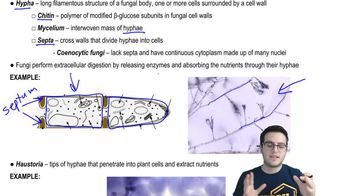
Mycorrhizal Fungi

Mycorrhizal fungi form symbiotic relationships with the roots of most plants, enhancing nutrient and water uptake. These fungi extend the root system's reach, allowing plants to access more resources, which is crucial for survival and growth, especially in terrestrial environments. Understanding this relationship is essential to explain how plants adapted to land.
Recommended video:

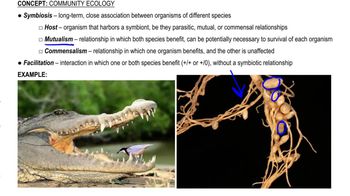
Symbiotic Relationships

Symbiotic relationships involve interactions between two different organisms that can be beneficial, neutral, or harmful. In the case of mycorrhizae, the relationship is mutualistic, where both the fungi and the plants gain benefits. Recognizing the nature of these interactions helps explain the evolutionary advantages that mycorrhizal associations provided to early land plants.
Recommended video:

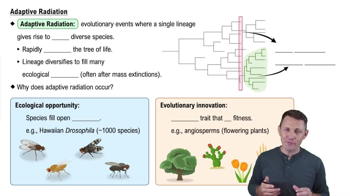
Evolutionary Adaptations

Evolutionary adaptations are traits that have evolved in organisms to enhance their survival and reproduction in specific environments. The absence of mycorrhizal associations in mosses suggests that these plants may have adapted to different ecological niches or conditions where such relationships were not necessary. Understanding these adaptations is key to explaining the evolutionary history of mosses compared to other plant lineages.
Recommended video:
05:24
Adaptive Radiation