
Textbook Question
Fill in the blanks in this concept map to help you tie together key concepts concerning transport in plants.
1448
views


 Verified step by step guidance
 12:33
12:33
 06:31
06:31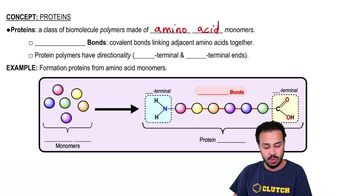 02:50
02:50Fill in the blanks in this concept map to help you tie together key concepts concerning transport in plants.
Plants require the smallest amount of which of the following nutrients?
a. Oxygen
b. Phosphorus
c. Carbon
d. Iron
Which of the following activities of soil bacteria does not contribute to creating usable nitrogen supplies for plant use?
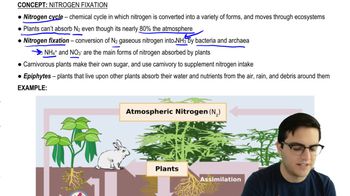
a. The fixation of atmospheric nitrogen
b. The conversion of ammonium ions to nitrate ions
c. The decomposition of dead animals
d. The assembly of amino acids into proteins
An advantage of using fertilizers derived from natural sources is that these fertilizers
a. Have different minerals than artificial fertilizers.
b. Are retained in soil longer.
c. Are more soluble in water.
d. Are more concentrated.
Transpiration is fastest when humidity is low and temperature is high, but in some plants it seems to increase in response to light as well. During one 12-hour period when cloud cover and light intensity varied frequently, a scientist studying a certain crop plant recorded the data in the table (top right). (The transpiration rates are grams of water per square meter of leaf area per hour.)
Do these data support the hypothesis that the plants transpire more when the light is more intense?
If so, is the effect independent of temperature and humidity?
Explain your answer. (Hint: Look for overall trends in each column, and then compare pairs of data within each column and between columns.)