
Pearson+ LogoPearson+ Logo
Ch. 29 The Senses
Taylor - Campbell Biology: Concepts & Connections 10th Edition
Taylor, Simon, Dickey, Hogan10th EditionCampbell Biology: Concepts & ConnectionsISBN: 9780136538783Not the one you use?Change textbook
Chapter 29, Problem 12

Have you ever felt your ears ringing after listening to loud music? Can this permanently impair your hearing? Should manufacturers of music devices and producers of concerts be required to warn consumers? What effect might warnings have?

Verified step by step guidance
1
Understand the concept of noise-induced hearing loss (NIHL), which occurs when loud sounds damage the hair cells in the inner ear. Prolonged exposure to sounds above 85 decibels (dB) can lead to permanent hearing loss.
Recognize that the ringing in the ears after listening to loud music is called tinnitus, a symptom that can be temporary or may indicate the onset of NIHL if exposure to loud noise is frequent or prolonged.
Discuss the responsibility of manufacturers and concert producers in informing consumers about the risks of loud sounds. This includes providing warnings on devices and at venues about potential hearing damage from high volume levels.
Explore the potential effectiveness of warnings. Consider how warnings might make consumers more aware of the risks and encourage them to take preventive measures such as lowering the volume or using hearing protection like earplugs.
Evaluate the broader implications of such warnings on public health and consumer behavior, including whether they could lead to changes in industry standards and practices regarding sound levels at public events and in consumer audio products.

Verified video answer for a similar problem:

This video solution was recommended by our tutors as helpful for the problem above.
Video duration:
1m
Was this helpful?

Key Concepts

Here are the essential concepts you must grasp in order to answer the question correctly.

Tinnitus

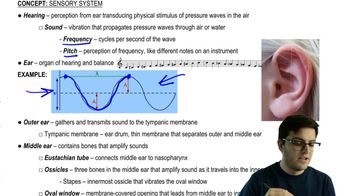
Tinnitus is the perception of noise or ringing in the ears when no external sound is present. It often occurs after exposure to loud sounds, such as music at high volumes, and can be a temporary or chronic condition. Understanding tinnitus is crucial as it highlights the potential immediate effects of loud music on auditory health.

Hearing Loss

Hearing loss can result from prolonged exposure to loud sounds, leading to damage in the hair cells of the inner ear. This damage can be temporary or permanent, depending on the intensity and duration of the noise exposure. Recognizing the risk of hearing loss emphasizes the importance of protective measures in environments with high sound levels.
Recommended video:

Consumer Warnings and Regulations

Consumer warnings and regulations are essential for informing the public about potential risks associated with loud music and hearing damage. Implementing warnings on music devices and at concerts can raise awareness and encourage safer listening practices. This concept underscores the responsibility of manufacturers and event producers to protect consumers' auditory health.
Recommended video:
Guided course
03:31
Cell Cycle Regulation