Pearson+ LogoPearson+ Logo
Ch. 19 - Control of Gene Expression in Eukaryotes
Freeman - Biological Science 7th Edition
Freeman7th EditionBiological ScienceISBN: 9783584863285Not the one you use?Change textbook
Chapter 19, Problem 5

Compare and contrast the items in each pair: (b) promoter-proximal elements and the operator of the lac operon

Verified step by step guidance
1
Understand the role of each element: Promoter-proximal elements are regulatory DNA sequences located close to the promoter of a gene. They are typically found in eukaryotic cells and help in the binding of transcription factors that regulate the transcription of nearby genes. The operator of the lac operon, on the other hand, is a specific DNA sequence in prokaryotic cells (specifically in the E. coli bacterium) that interacts with a repressor protein to control the transcription of the genes involved in lactose metabolism.
Identify the location and interaction with proteins: Promoter-proximal elements are situated just upstream of the promoter and within about 200 base pairs of the transcription start site. They bind various transcription factors that can either enhance or repress the transcription of the gene. The operator of the lac operon is located downstream of the promoter and upstream of the lacZ gene, and it specifically binds the lac repressor protein, which regulates the operon's transcription in response to lactose availability.
Consider the functional implications: The function of promoter-proximal elements is to fine-tune the expression of genes in response to various internal and external signals, allowing for precise control over gene expression in different environments and developmental stages. The operator of the lac operon functions as a switch that turns on or off the transcription of the operon based on the presence or absence of lactose, thus enabling the bacteria to adapt to changes in nutrient availability.
Examine the evolutionary aspect: Promoter-proximal elements are a feature of eukaryotic organisms and reflect the complexity of their gene regulation, which involves multiple layers of control and the integration of diverse signaling pathways. The operator sequence in the lac operon exemplifies a more straightforward, though highly efficient, form of gene regulation seen in prokaryotes, which allows for rapid responses to environmental changes.
Summarize the comparison: While both promoter-proximal elements and the operator of the lac operon are involved in regulating gene expression, they differ in their location, the mechanisms by which they interact with regulatory proteins, their roles in cellular function, and their evolutionary significance in different types of organisms.

Verified video answer for a similar problem:

This video solution was recommended by our tutors as helpful for the problem above.
Video duration:
54s
Was this helpful?

Key Concepts

Here are the essential concepts you must grasp in order to answer the question correctly.

Promoter-Proximal Elements

Promoter-proximal elements are regulatory DNA sequences located close to the core promoter of a gene. They play a crucial role in enhancing the transcription of associated genes by providing binding sites for transcription factors. These elements can influence the efficiency and rate of transcription initiation, allowing for precise control of gene expression in response to cellular signals.
Recommended video:
Guided course
02:37
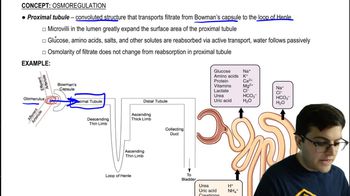
Proximal Tubule

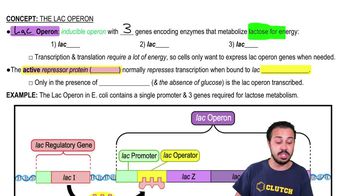
Lac Operon Operator

The operator of the lac operon is a specific DNA sequence located within the operon that acts as a binding site for the repressor protein. When the repressor is bound to the operator, it prevents RNA polymerase from transcribing the downstream genes involved in lactose metabolism. The lac operon is a classic example of gene regulation in prokaryotes, demonstrating how environmental conditions can influence gene expression.
Recommended video:
Guided course
07:06
The Lac Operon

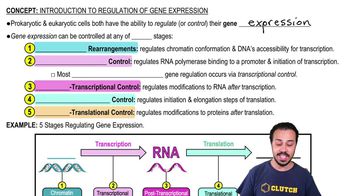
Gene Regulation

Gene regulation refers to the mechanisms that control the expression of genes, determining when and how much of a gene product is produced. This process is essential for cellular function and adaptation, allowing organisms to respond to internal and external stimuli. Both promoter-proximal elements and operators are integral to gene regulation, albeit in different contexts, highlighting the complexity of transcriptional control.
Recommended video:
Guided course
06:40
Introduction to Regulation of Gene Expression