Pearson+ LogoPearson+ Logo
Ch. 19 - Control of Gene Expression in Eukaryotes
Freeman - Biological Science 7th Edition
Freeman7th EditionBiological ScienceISBN: 9783584863285Not the one you use?Change textbook
Chapter 19, Problem 3

In eukaryotes, what allows only certain genes to be expressed in different types of cells?

Verified step by step guidance
1
Understand that eukaryotic cells contain the same DNA in all cell types, but different cells express different genes.
Learn about gene regulation, which is the process that controls which genes are turned on or off in the genome.
Identify the role of transcription factors, which are proteins that bind to specific DNA sequences, thereby controlling the transfer (or transcription) of genetic information from DNA to messenger RNA.
Explore the concept of epigenetic modifications, such as DNA methylation and histone modification, which alter the physical structure of DNA and can turn genes on or off without changing the DNA sequence.
Examine how signaling pathways can affect gene expression by activating or inhibiting transcription factors and other proteins involved in gene regulation.

Verified video answer for a similar problem:

This video solution was recommended by our tutors as helpful for the problem above.
Video duration:
35s
Was this helpful?

Key Concepts

Here are the essential concepts you must grasp in order to answer the question correctly.

Gene Regulation

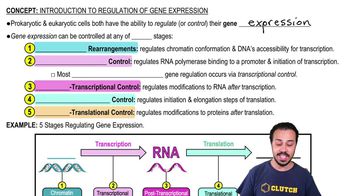
Gene regulation refers to the mechanisms that control the expression of genes, determining when and how much of a gene product is made. In eukaryotic cells, this involves various processes, including transcription factors, enhancers, and silencers, which can activate or repress gene expression in response to specific signals or conditions.
Recommended video:
Guided course
06:40
Introduction to Regulation of Gene Expression

Cell Differentiation

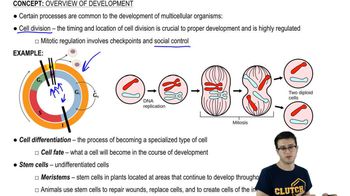
Cell differentiation is the process by which a less specialized cell becomes a more specialized cell type. This process is crucial in multicellular organisms, as it allows for the development of diverse cell types, each with specific functions, by selectively expressing certain genes while silencing others.
Recommended video:
Guided course
05:28
Cell Division and Differentiation

Epigenetics

Epigenetics involves heritable changes in gene expression that do not involve changes to the underlying DNA sequence. Factors such as DNA methylation and histone modification can influence gene accessibility and expression, playing a significant role in determining which genes are active in different cell types, thus contributing to cellular identity.